



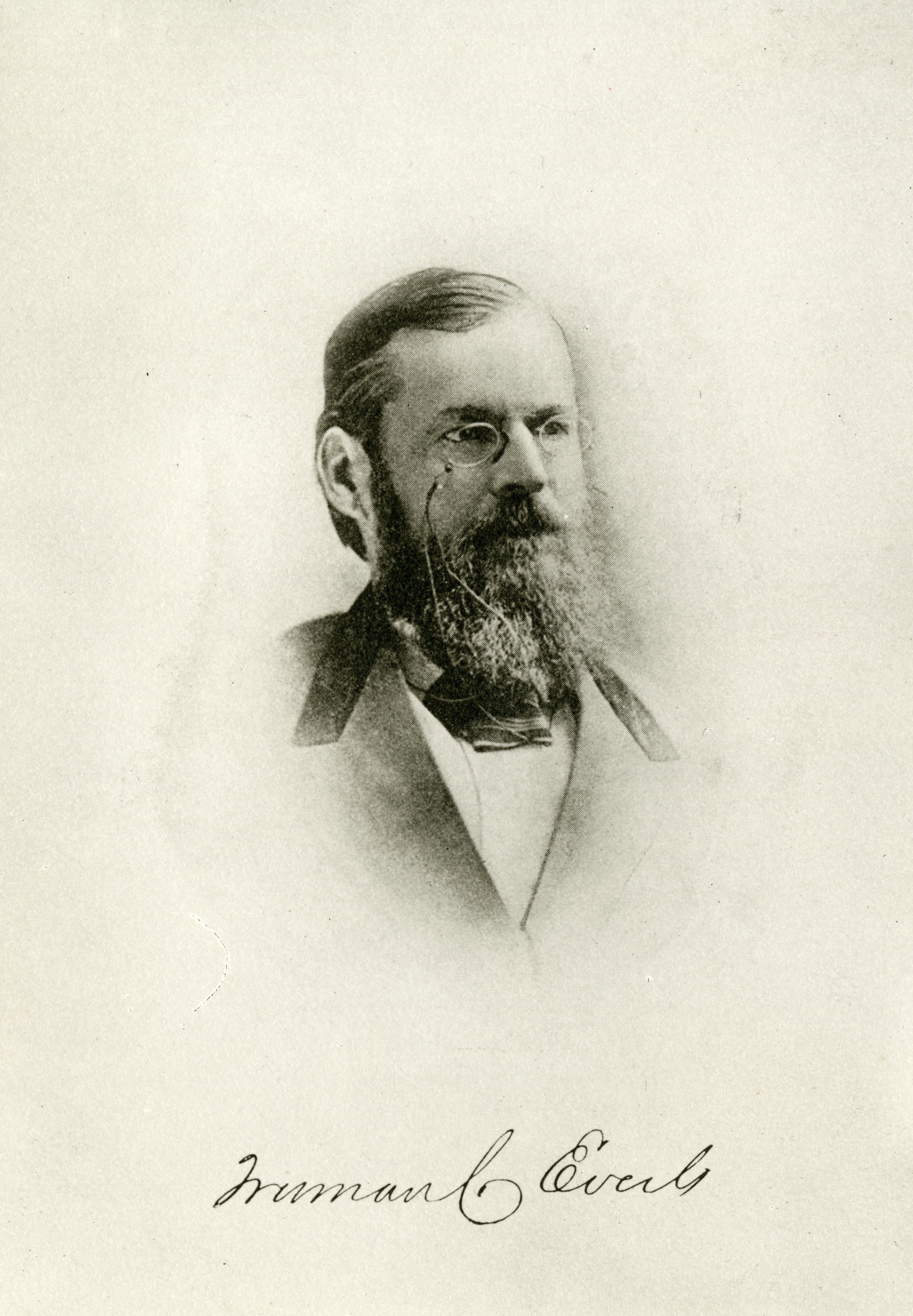
When Truman C. Everts of Helena, Montana, joined the Washburn-Langford-Doane expedition to Yellowstone in August 1870, he couldn’t have imagined the ordeal ahead. Little is known about Everts before this journey—born in 1816, he worked as an assayer for the early Internal Revenue Service but had no background as an outdoorsman. He volunteered for the expedition out of curiosity and served as a scout, often exploring with a partner, though sometimes alone. On one such solo outing, he discovered the mountain that now bears his name—Mt. Everts. Just days later, he became separated from his partner and never rejoined the group.
Everts spent 37 days alone in Yellowstone’s unforgiving wilderness. Though not a frontiersman, he had spent nearly a month with seasoned explorers by the time he got lost. In his account, he describes trying to return to the last known camp, but his horse spooked and ran off early on. He aimed for a nearby lake, hoping to reunite with the expedition along the shore, leaving notes along the way. When that failed, he sought warmth in a thermal area, sleeping in steam vents until he fell through a crust and severely burned his hip.
Eventually, Everts reached the group’s former camp, only to find it abandoned. Snow had forced the expedition to retreat, leaving food behind for him—food he never found. He then tried to reach Madison but couldn’t cross the Madison Range. Shifting strategy, he made camp near Tower Falls on the Blacktail Deer Plateau, hoping rescuers would find him.
On October 6, 1870, Jack Baronett and George A. Pritchett—hired by Judge Lawrence of Helena—found Everts crawling along a hillside. He weighed just 50 pounds, was barefoot, badly burned, and dressed in rags. They carried him to a hunter’s cabin, fed him broth and bear fat, and eventually brought him back to Helena, where he made a full recovery.
Everts is often portrayed as a hapless wanderer. Erin H. Turner, in It Happened in Yellowstone, describes him as “frantic” and “blindly wandering.” But Everts’ own narrative tells a different story. Despite losing all his tools and his horse, he survived by ingenuity—starting fires with a glass lens, eating thistle roots (now known as Everts Thistle), and even catching birds without gear. His creativity and persistence kept him alive where many would have perished. His story is not just one of misadventure, but of remarkable survival.
“I had lost both knives since parting from the company, but I now made a convenient substitute by sharpening the tongue of a buckle which I cut from my vest. With this I cut the legs and counters from my boots, making of them a passable pair of slippers, which I fastened to my feet as firmly as I could with strips of bark.”
His narrative, 37 Days of Peril: A Narrative of the Early Days of the Yellowstone, is available at the Yellowstone Research Library under the call number 917.87 EV93.
Erin H. Turner’s book, It Happened in Yellowstone, is also available at the Yellowstone Research Library under the call number 978. 752 T945.