


What is a herbarium?
Some of you might ask, “what is a herbarium?”, and for those of you new to the term, it’s a facility that preserves dried, pressed plant specimens to document flora. Pressing and preserving plants is nothing new to people; in fact, this process has been around since the 16th century, when Luca Ghini became the first person to press and preserve plants and then contain them within a book. Carl Linnaeus, the “Father of Taxonomy”, took this Italian practice and created a system where only a single plant specimen would be placed on a piece of paper, and then organized the plants near other related plants in cabinets, which functioned as a filing cabinet, a practice that is still used today.
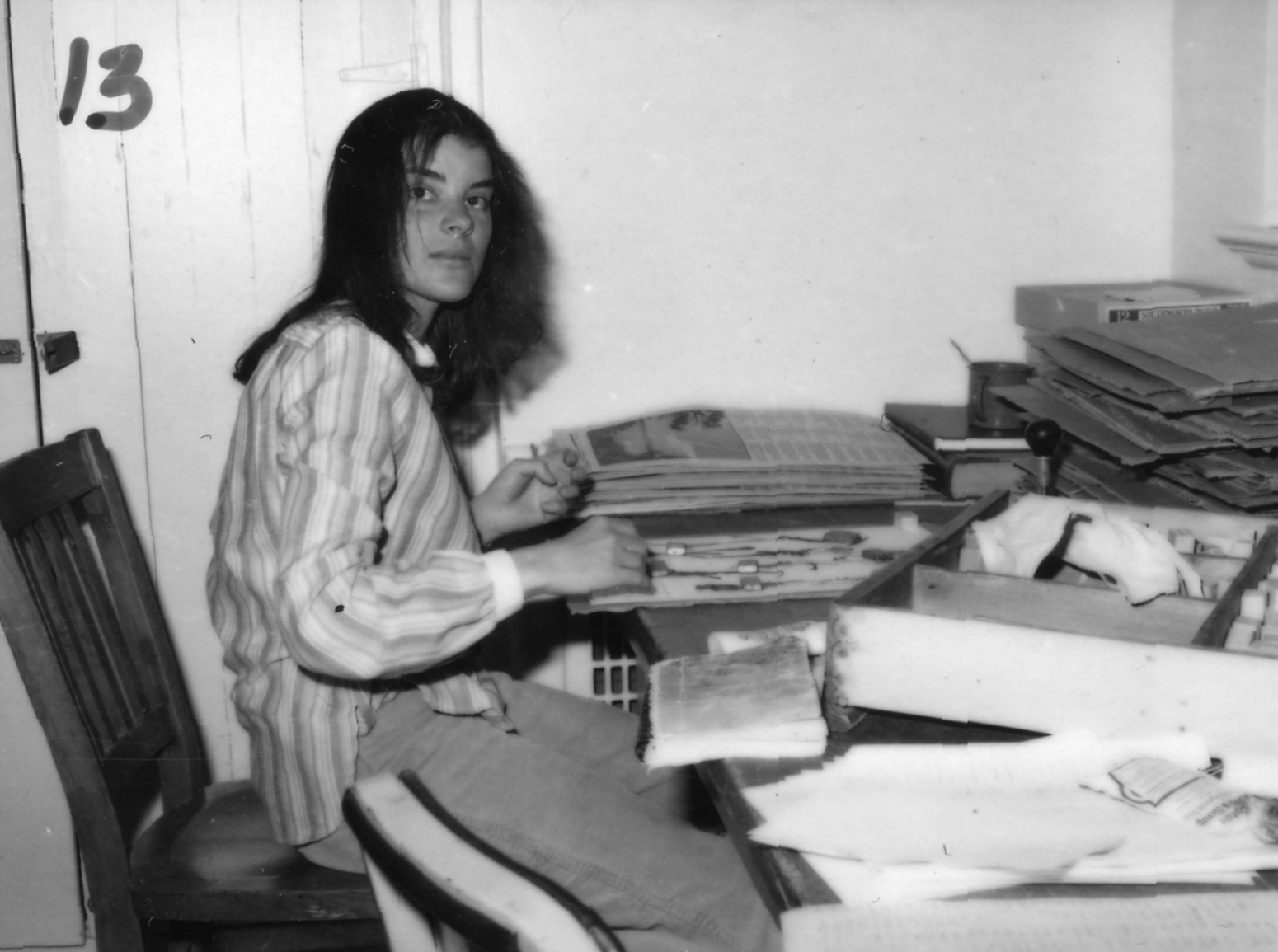
YELL 42641: Kathy Halada working in the Herbarium in 1980.
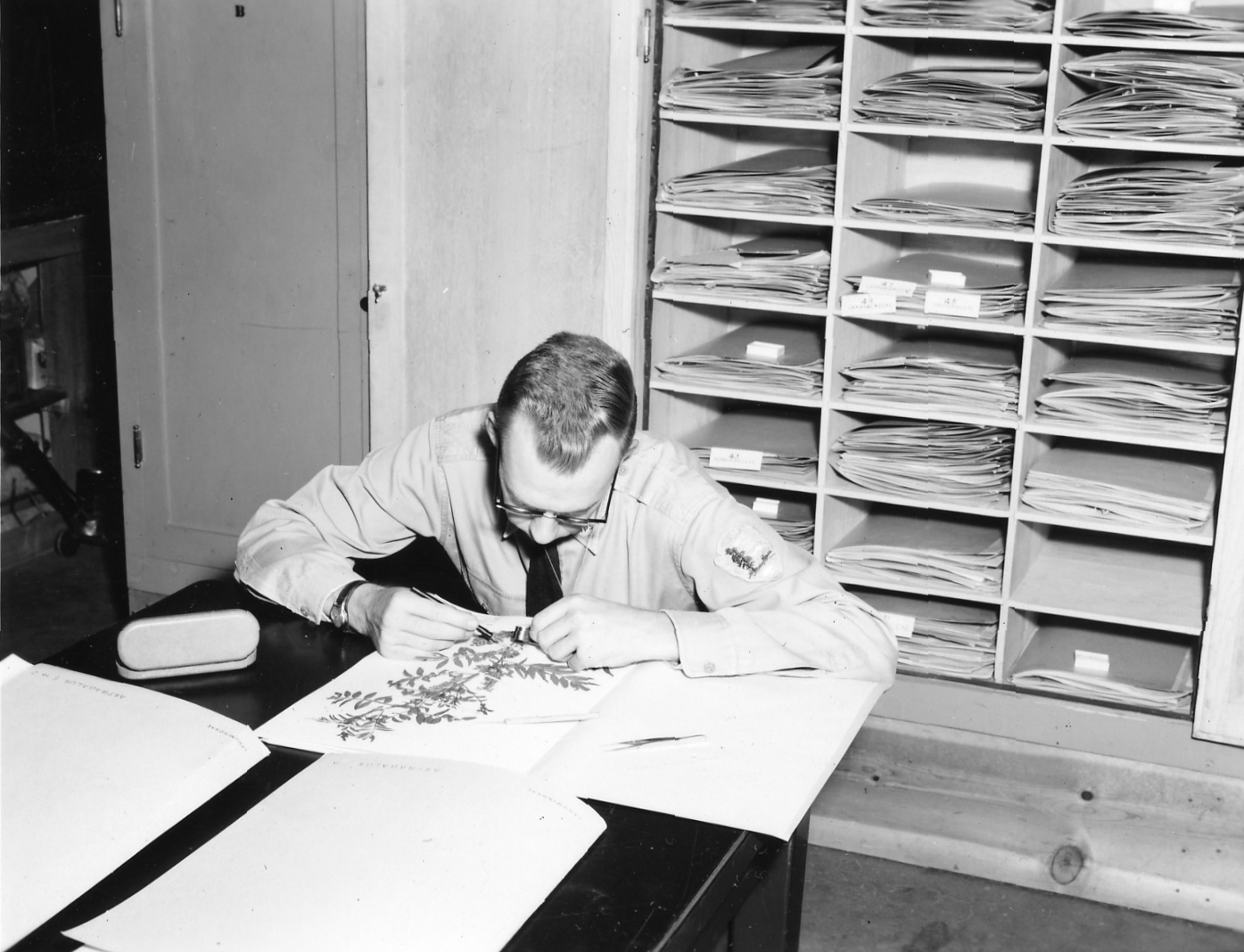
YELL 20043: Park Ranger-Naturalist Dave Beal in the Herbarium, 1958.
Here at Yellowstone National Park, the herbarium collection consists of over 21,000 plant specimens and documents the presence of plants in the park over time, as well as the history of collecting plants in the park. Our oldest specimens date to 1899 and even travelled to the World's Fair in 1904!
What’s the importance of studying and preserving these plants? Well, plant specimens can be used to track distribution, habitat condition, changes in population size, and assess the risk of invasive species, which can be impacted by human activities or biological factors.
How do you preserve plant specimens?
The method of preparation and storage depends on the type of plant being processed.
As seen in the image above, many plants can be flattened in a press! The traditional plant presses consist of two wooden boards with straps. The plants are separated between layers of blotting paper and cardboard, allowing for at least a few days to completely dry before removing for storage or mounting. For large or shapely plant parts that can’t be flattened (looking at you, pinecones), an archival box made of pH neutral, acid-free materials can be created to hold the specimens.
Dried, pressed plants are then mounted on 11 x 17-inch herbarium sheets composed of either 100% alpha cellulose or cotton rag paper that is acid free and pH neutral. All sheets have a label attached with the pertinent collection details, accession and catalog numbers. It’s recommended that the specimens are attached to the paper with a safe adhesive.
As with any new addition to a collection, the new specimens should be quarantined to prevent any pest, fungi, or other infestation from damaging the historic collection.
For anyone trying this at home, you can be your own botanist and press flowers between books or pages of books, and use a little dab of glue to attach them to a paper.
What plants are unique to Yellowstone?
Yellowstone National Park is home to three endemic plant species, at least two of which depend on the unusual habitat created by the park’s thermal features. Most vegetation management in the park is focused on minimizing human-caused impacts on their native plant communities to the extent feasible.
- Ross’s Bentgrass (Agrostis rossiae): only grows in the geyser basins in the Firehole River drainage and at Shoshone Geyser Basin.
- Yellowstone Sand Verbena (Abronia ammophilia): occurs along the shore of Yellowstone Lake.
- Yellowstone Sulphur Flower (Eriogonum umbellatum var. cladophorum): only found in the Firehole River drainage.
What are the current challenges to plants in the park?
Management issues in the park include nonnative species threatening native species, whitebark pine and forest insect pests, and facility construction. Currently, there are 229 nonnative species documented in the park, like the Dalmatian toadflax, yellow sweetclover, and ox-eye daisy.
To make an appointment to see the herbarium, please contact the park botanist, Heidi Anderson, at 307-344-2564, e-mail us or stop by. We have multiple scopes and reference material that are available to use during the hours the herbarium is open.
For more information about the Heritage and Research Center, please email us or give us a call at (307) 344-2264.