An official website of the United States government
Here's how you know
Official websites use .gov A
.gov website belongs to an official government
organization in the United States.
Secure .gov websites use HTTPS A
lock (
) or https:// means you've safely connected to
the .gov website. Share sensitive information only on official,
secure websites.
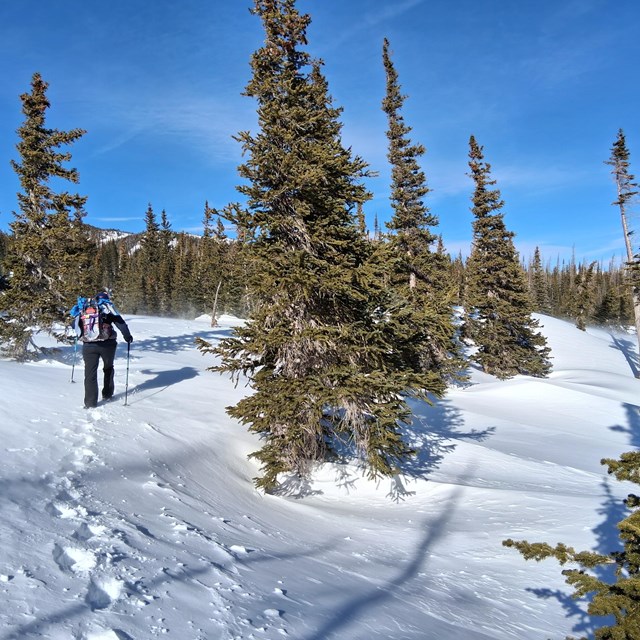
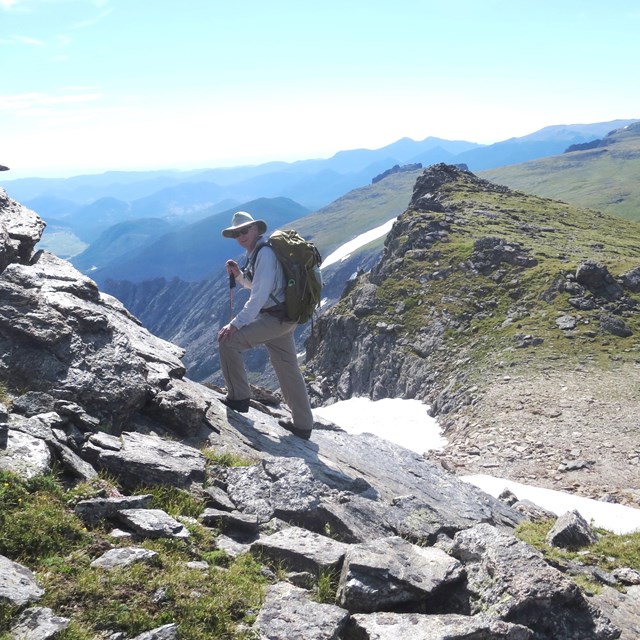
With the elevation ranging from 7,800 feet to over 14,000 feet above sea level, weather and conditions can change quickly any time of the year in Rocky Mountain National Park. One thing to be aware of year-round is hypothermia.
Hypothermia is the "progressive physical collapse and reduced mental capacity resulting from the chilling of the inner core of the human body." Exposure to frigid bodies of water or sudden mountain storms can turn a pleasant day into a bitterly cold and life-threatening experience.
A person can experience hypothermia year-round, even on nice sunny days.
How to Prevent Hypothemia?
The best way to prevent hypothermia is to avoid getting chilled and wet when recreating.
Dress for the conditions you may encounter and dress in wicking layers, so that you can take off and add layers of clothing as needed. Avoid clothing that will absorb and hold water, like cotton and jeans.
Always pack an appropriate jacket for the anticipated conditions - remember conditions at 12,000 feet will be considerably colder and more windy than those at 7,000 feet. Even during the summer season, pack a warm winter hat, warm gloves and extra wool socks. Always pack a waterproof/rainproof layer.
It is easy to slip and fall, especially on mountain trails and near bodies of water. Never walk, play, or climb on slippery rocks or logs, especially near waterfalls.
What are the warning signs of Hypothermia?
Uncontrolled shivering
Slow or slurred speech
Memory lapses and incoherence
Lack of coordination, such as immobile or fumbling hands
Stumbling, drowsiness, and exhaustion
If you or someone around you is experiencing symptoms, seek shelter from the weather and get the subject into dry clothes. Ensure they have a barrier between the ground and themselves. Keep the subject awake, and give them warm, non-alcoholic drinks.
Work to get professional medical help immediately.
Explore tips for staying safe while recreating during the heat this summer.
Last updated: March 6, 2026
Park footer
Contact Info
Mailing Address:
1000 US Hwy 36
Estes Park,
CO
80517
Phone:
970 586-1206
The Information Office is open year-round.
During summer, the office is open from 8 am to 4 pm daily. During the winter season, the office is open from 8 am to 4 pm Monday - Friday, and from 8 am to noon on Saturdays and Sundays.
For information on Trail Ridge Road, the recorded Trail Ridge Road status line is available 24 hours a day: (970) 586-1222.