



Last updated: February 27, 2026
Article
The Siege of Boston: An Overview
From 1775-1776, Boston took center stage in the first major campaign of what would become the War for American Independence. The Siege of Boston lasted eleven months, following the battles at Lexington and Concord on April 19, 1775, until the British Evacuation of Boston on March 17, 1776.
During this siege, British forces—trapped in Boston—engaged colonial forces in a series of battles, skirmishes, and raids throughout greater Boston and Boston Harbor. Soldiers and civilians alike suffered and persisted under harsh siege conditions. Food and supplies were scarce, and the fear of an escalated conflict remained ever present.
Read on for a general timeline overview of the Siege of Boston and opportunities to learn more about both military happenings and civilian experiences.
Unrest in the Colony (1765 – 1775)
Following the Seven Years’ War, British Parliament began instituting taxes on the American colonies to pay down a growing national debt. Citizens of the Massachusetts Bay Colony responded with anger towards this increased oversight. For a decade, tensions grew in Boston. Specific flashpoints—including the 1765 Stamp Act, the 1770 Boston Massacre, and the 1773 Boston Tea Party—drove a growing number of colonists towards revolutionary ideas of freedom and self-determination from Britain.

Britain Begins Taxing the Colonies
Learn about Britain's taxation of the colonies through the Sugar and Stamp Acts.
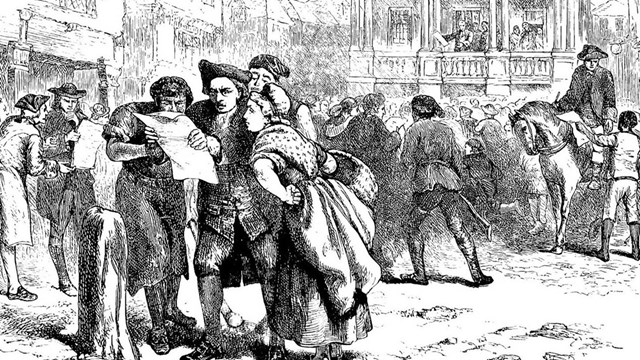
Anger and Opposition to the Stamp Act
Reacting through the written word and physical violence, Bostonians played a significant role in the repeal of the Stamp Act.
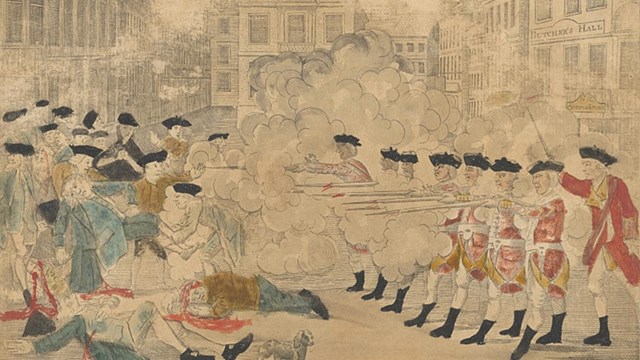
The Boston Massacre
On March 5, 1770, seven British soldiers fired into a crowd of volatile Bostonians killing five, wounding six, and angering an entire colony
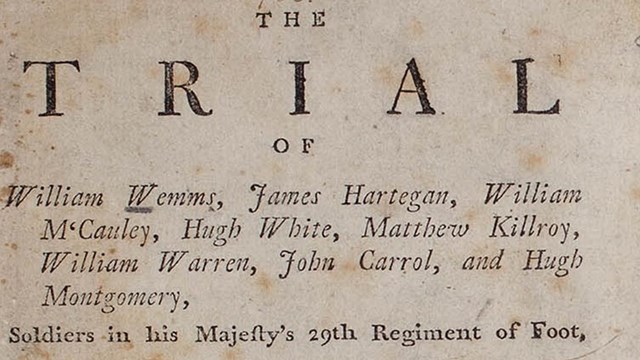
Boston Massacre Trial
The Boston Massacre trials showed how fair and just trials could be held in the American colonies even during a time of tension.
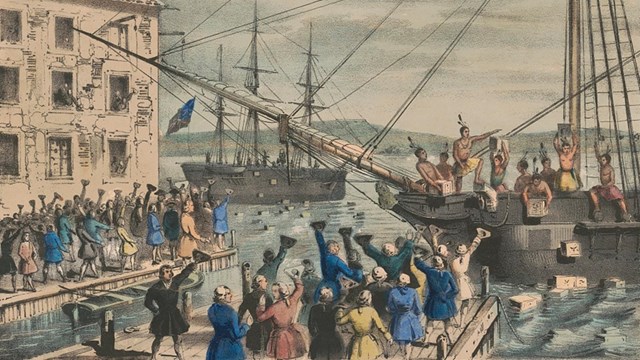
Boston Tea Party Timeline
Read about the events leading to the destruction of tea in Boston Harbor on the night of December 16, 1773.
A Rebellion Begins (April & May 1775)
By 1775, British authorities had closed Boston Harbor in response to the town’s continued political defiance. Patriot leaders started their own government in the countryside and began to prepare for war. The first armed conflict occurred on April 19, 1775, when British soldiers from Boston clashed with colonial militia at Lexington and Concord. British forces retreated into Boston, allowing New England colonial militia to establish defensive lines surrounding Boston. Loyalist and Patriot residents of Boston either hunkered down in this town under siege or fled to the countryside as refugees.
With the Siege of Boston now underway, both British and American leaders looked to the surrounding hills of Boston, as well as Boston Harbor and its islands, as key to victory. As a result, skirmishes on Grape Island and at Chelsea Creek occurred in May.
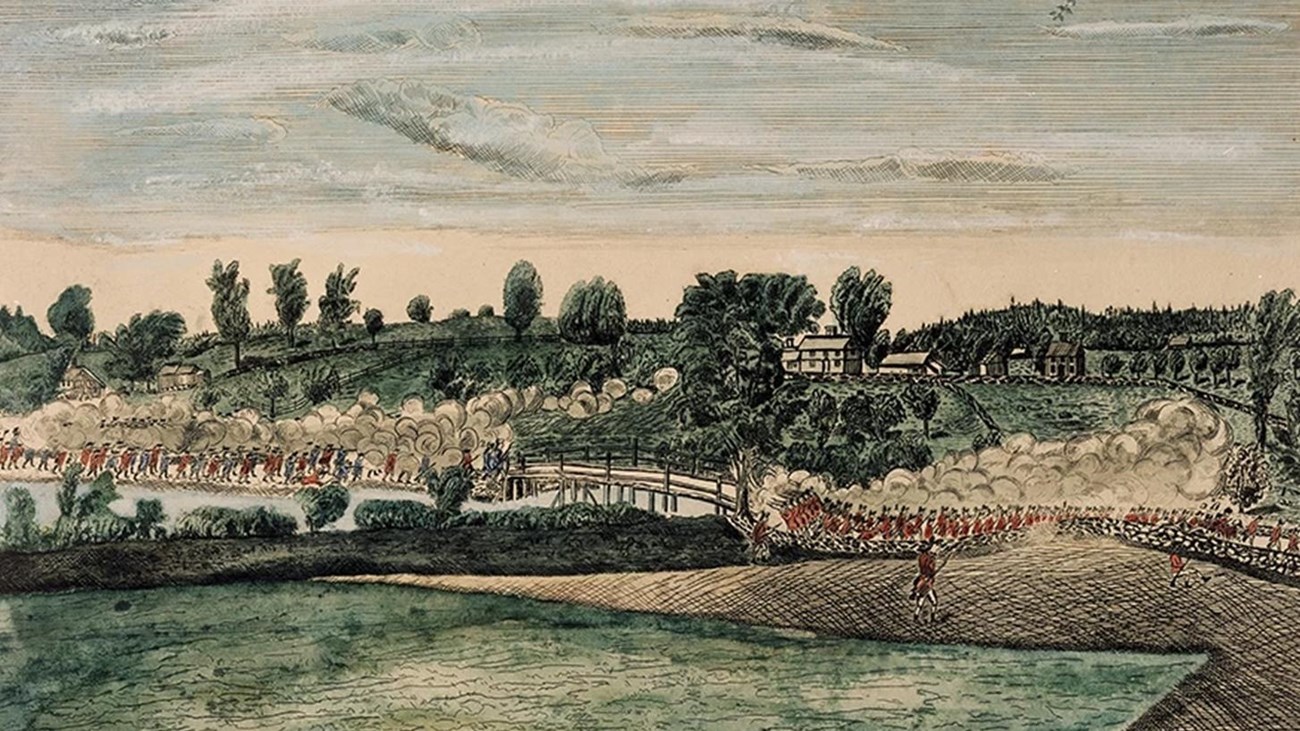
April 19, 1775
The events of April 19, 1775, have been popularized as the "shot heard 'round the world." Learn about the Battles of Lexington and Concord.
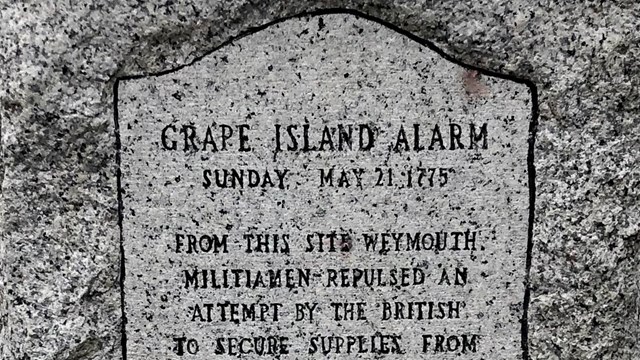
The Battle of Grape Island
On May 21, 1775, a small skirmish between British forces and colonial militia at Grape Island.
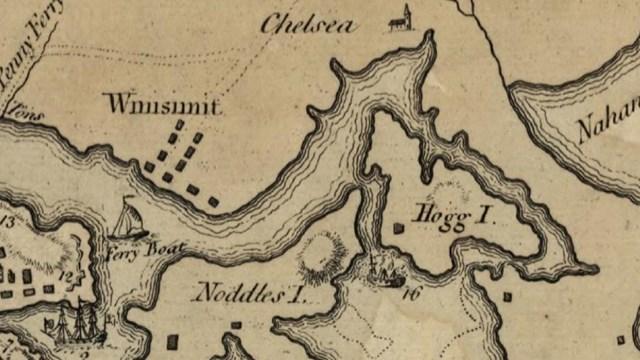
The Battle of Chelsea Creek
Over May 27-28, 1775, a series of land and sea skirmishes occurred on Hog and Noddle's Island and the surrounding tidal flats.
The Battle of Bunker Hill (June 1775)
Knowing the strategic importance of controlling Boston’s hills, colonial leaders decided to take the high ground on Breed’s Hill. On the night of June 16, roughly 1,200 New England colonial militia fortified the hill. When British commanders saw the fortifications on the morning of June 17, they looked to respond with a crushing assault. That afternoon, 2,400 British soldiers landed on the Charlestown waterfront for a two-hour bloody battle, destroying the town in the process.
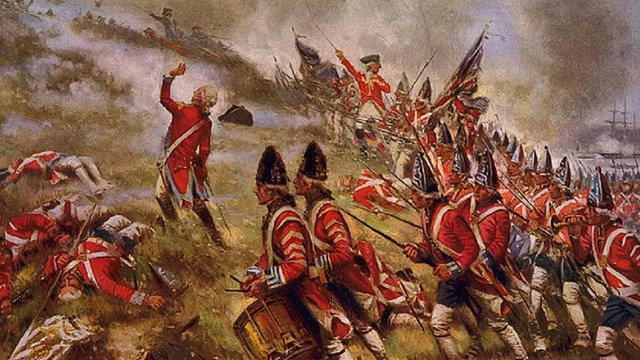
Battle of Bunker Hill
Learn about this "Decisive Day" through this video series and article.
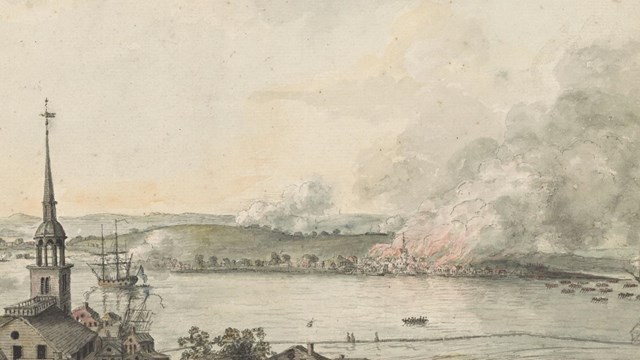
The Burning of Charlestown
During the Battle of Bunker Hill, the British set fire to Charlestown, destroying the town. Learn how residents dealt with the aftermath.
Washington Takes Command at Boston (July 1775)
On June 15, 1775, the Second Continental Congress in Philadelphia assembled the Continental Army and appointed George Washington as commander-in-chief. Washington arrived in Cambridge to establish a headquarters and formally take command on July 3. He looked to solidify the colonial positions around greater Boston while addressing logistical challenges and turning undisciplined colonial militia into a unified fighting force.
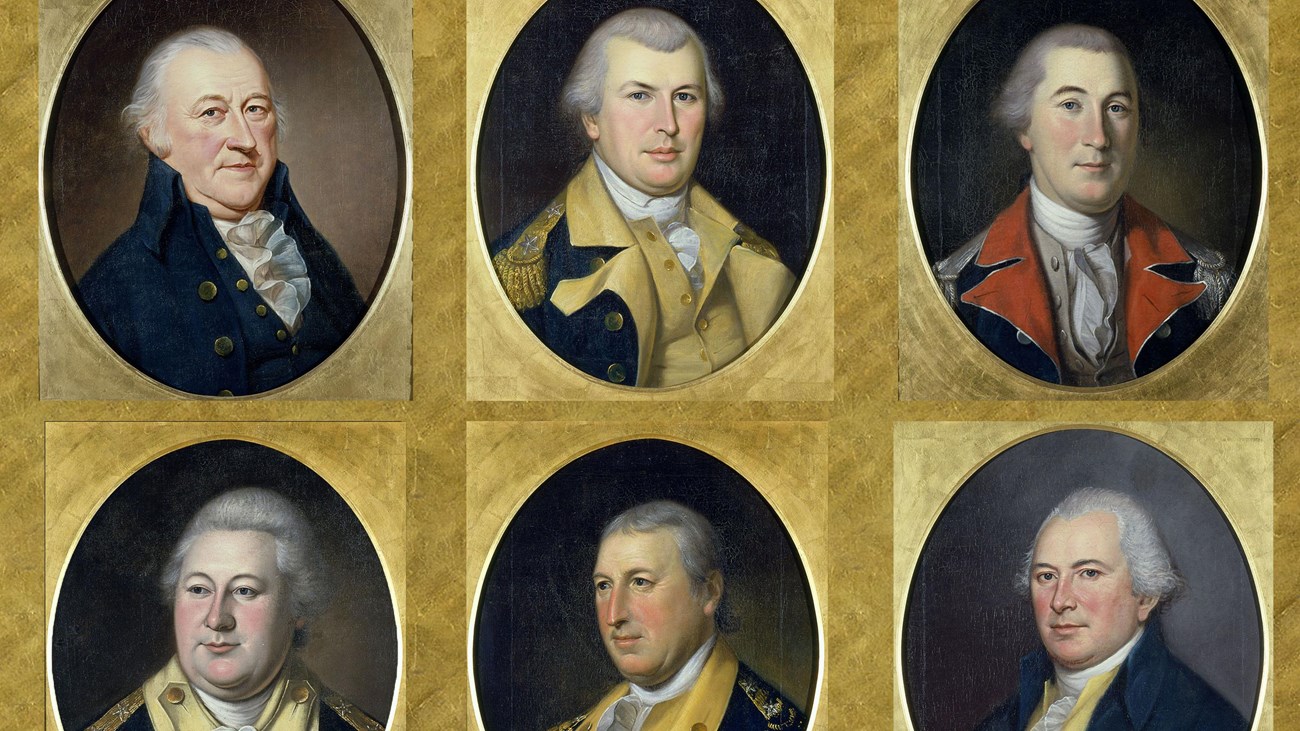
Washington's Staff at Cambridge
Learn about the generals and staff stationed at the military headquarters in Cambridge during the Siege of Boston.
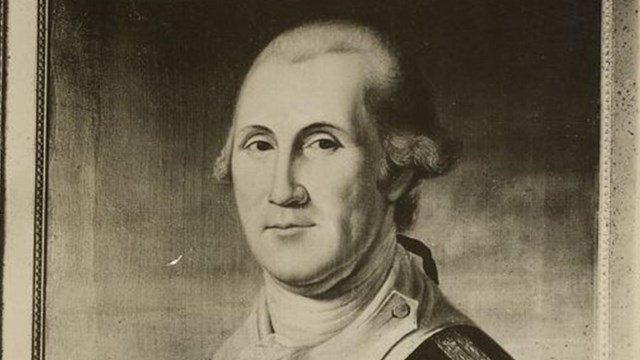
Washington's Struggles in Command
During the Siege of Boston, Washington faced many logistical and strategic challenges.
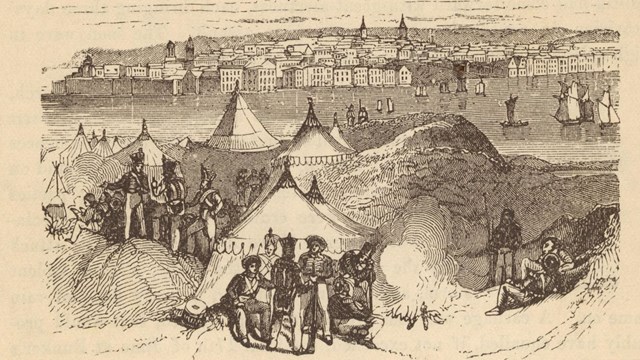
Siege Story: Nathaniel Ober
Learn more about life as a soldier during the Siege of Boston from Continental Army soldier Nathaniel Ober.
Raids & Skirmishes in Boston Harbor (July – September 1775)
While British and colonial forces continued to fortify along the siege lines on the mainland, both sides looked to the harbor islands as contested territories. Throughout the summer, a series of raids and skirmishes occurred across several islands that had been identified as strategically significant.
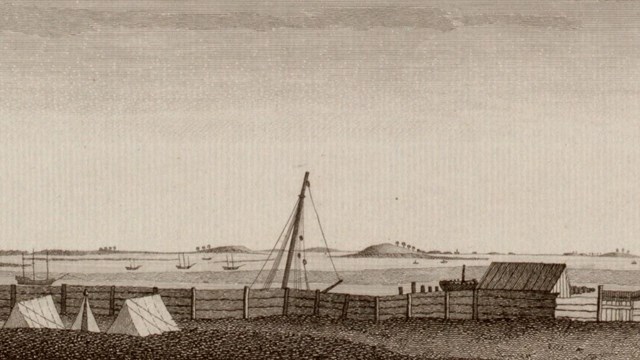
Island Raids in Boston Harbor
Colonial and British forces clashed in island skirmishes and raids throughout the summer of 1775.
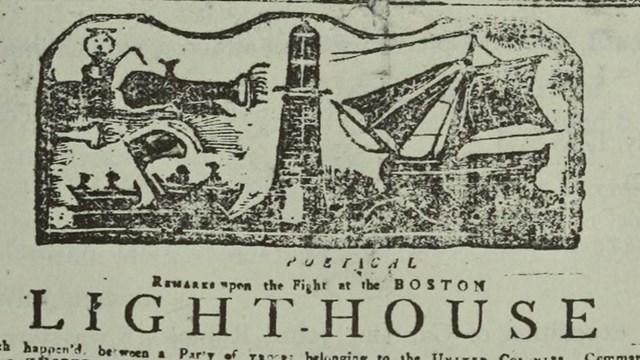
Boston Light Raids, 1775
Boston Light held strategic importance during the Siege of Boston. As a result, two raids occurred here in July 1775.
The Siege in Winter (October 1775 – February 1776)
While cannon fire and small skirmishes continued throughout the fall and winter, both sides remained at a stalemate. During the harsh winter, civilians and British soldiers in Boston struggled with scarce resources and supplies. Colonial soldiers outside Boston faced similar harsh conditions. Meanwhile, Washington and his generals sought a plan to finally break the siege.
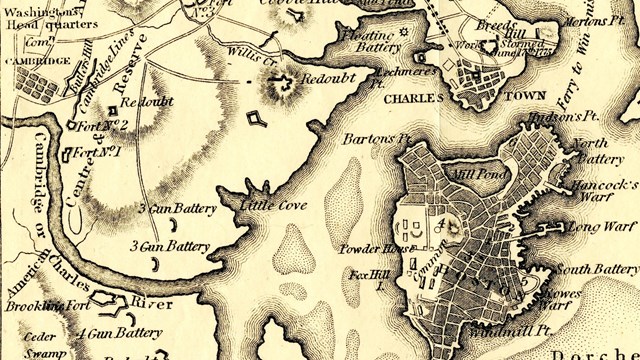
Looking to Break the Siege
Months into the siege, colonial and British forces remained at a stalemate. Washington had to decide how to break the deadlock or endure it.
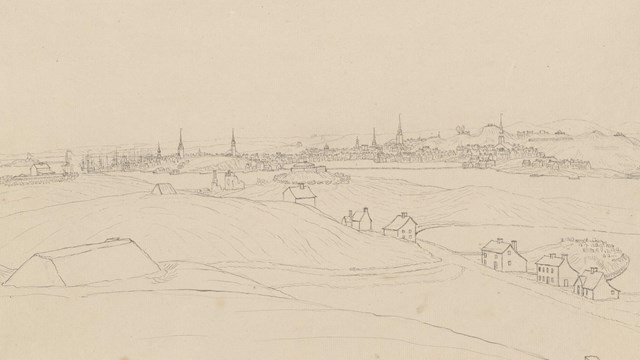
Conditions Under the Siege of Boston
The civilians who stayed in Boston, as well as the British military, faced harsh conditions while under siege.
Dorchester Heights & Evacuation Day (March 1776)
Washington and his generals returned to Boston’s hills as the answer to end the siege. They chose to stealthily fortify Dorchester Heights, a strategically located elevation to the south of Boston. On the morning of March 5, 1776, British military woke up to fortifications on the heights and planned to respond with an attack. However, a major winter storm thwarted their attempt. With colonial forces towering over Boston and the main shipping routes of Boston Harbor, the British had no choice but to abandon the town.
On March 17, over 8,000 British troops and more than a thousand Loyalist refugees evacuated Boston and departed for Halifax, Nova Scotia. To the great relief of the Bostonians who remained, the Continental Army marched victoriously into Boston, ending the siege.
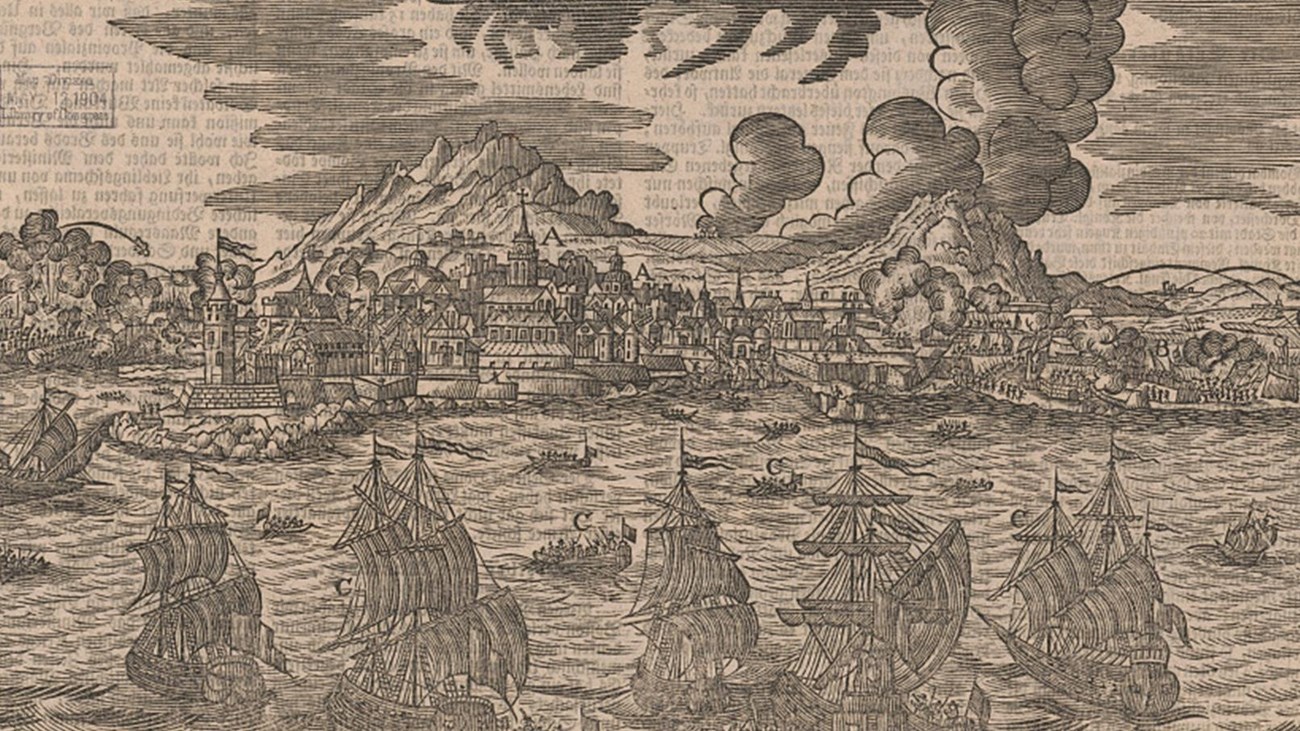
The British Evacuation of Boston
With the rapid completion of American fortifications at Dorchester Heights, the British decided to evacuate from Boston on March 17, 1776.
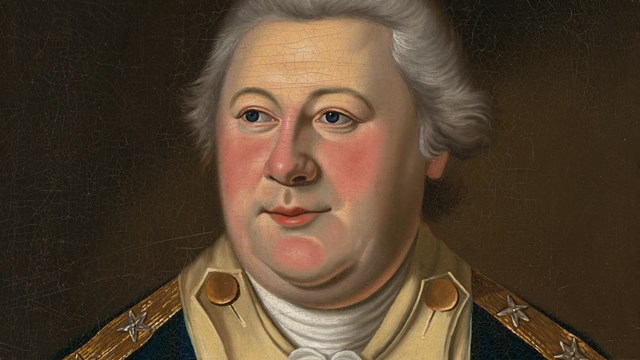
Henry Knox
Henry Knox was known for his military science expertise and crucial roles in the Siege of Boston and the Battle of Yorktown.
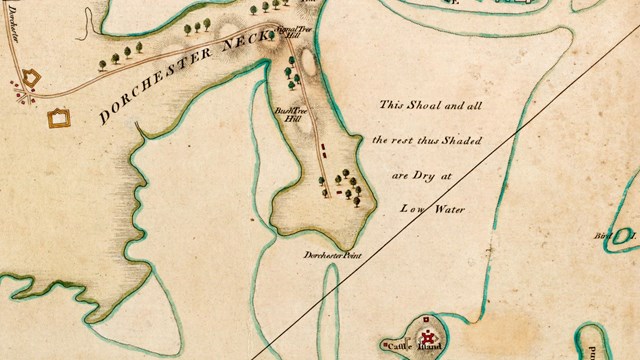
The Seizure of Dorchester Heights
By winter 1775, Dorchester Heights remained undefended. Learn how colonial soldiers fortified the Heights to force an end to the siege.
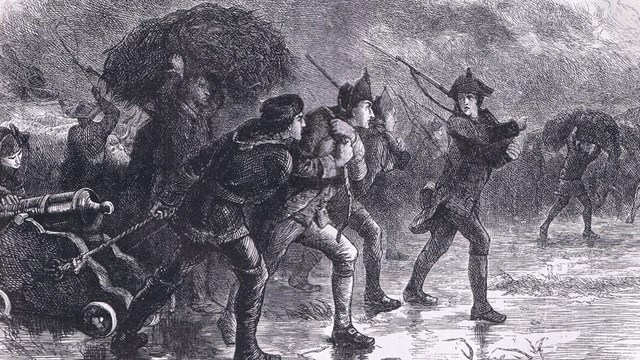
Siege Story: Gen. Thomas & Son
As Continental Army General John Thomas oversaw the fortification of Dorchester Heights, his son slipped past sentries to join him.
After the Siege (1776 – 1783)
Although the Siege of Boston had formally ended, several ships of the British naval fleet remained in the outer harbor. Naval skirmishes continued until colonial forces landed on some of the islands to fully expel the British from the harbor in June. Boston saw this final victory one month before the American colonies officially declared independence from Great Britain.
Boston and its harbor remained strategically vital to the cause of American independence. Over the next seven years, the French traveled through Boston, bringing aid and helping to fortifying the harbor against a future attack. Boston served as the largest open harbor in North America for allied merchant ships, American warships, and large French naval fleets through the end of the war.
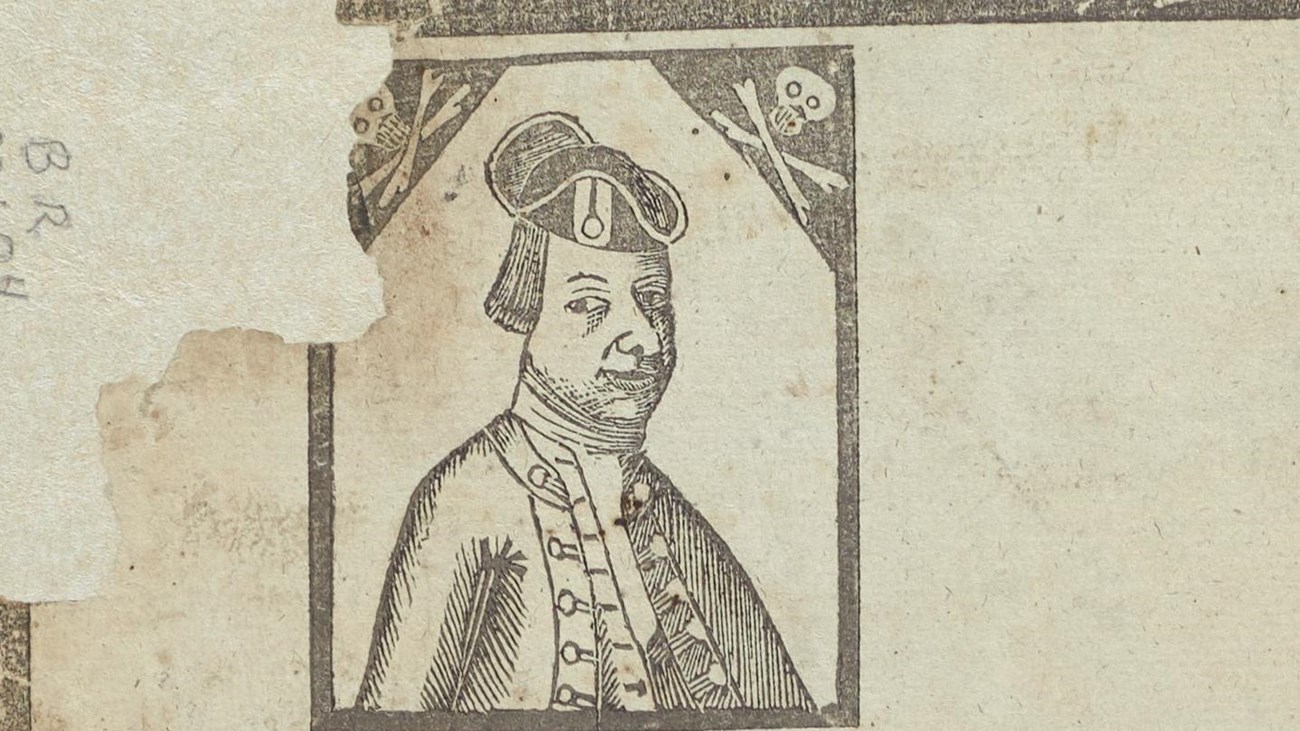
Post Siege: Harbor Happenings
After evacuating Boston, a few British ships remained in the outer harbor, causing continued tension between Americans and the British.
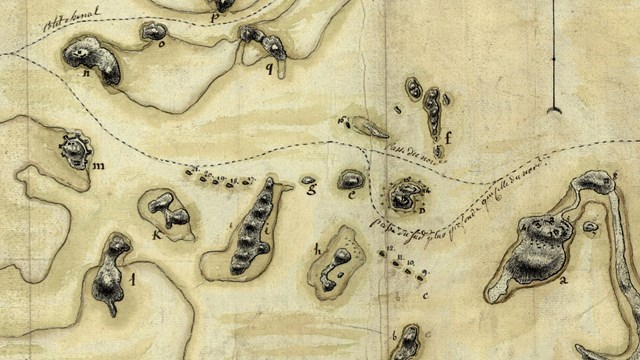
The French in Boston
During the American Revolutionary War, Boston proved integral to the relationship between the French and American colonists.
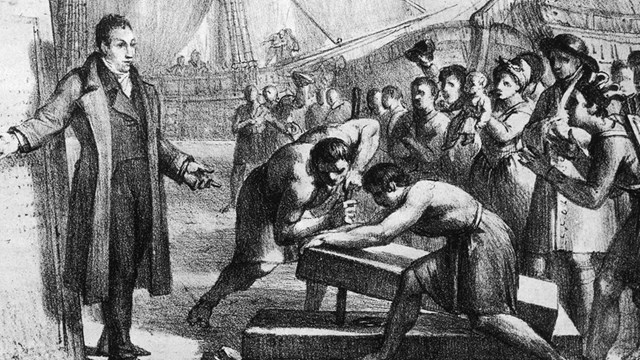
Lafayette in Boston
Throughout his life, Lafayette visited Boston numerous times in his many capacities. Learn about this Revolutionary hero's ties to Boston.
Tags
- boston national historical park
- boston harbor islands national recreation area
- longfellow house washington's headquarters national historic site
- siege of boston
- siege of boston hub
- boston harbor
- boston harbor islands
- boston
- charlestown
- bunker hill
- battle of bunker hill
- dorchester heights
- cambridge
- washingtons headquarters
- boston light