New Snow: none
Settled Snow Depth: 35 inches
High Temperature: 60°F (January 14)
Low Temperature: 11°F (January 20)
Ski Conditions and Weather
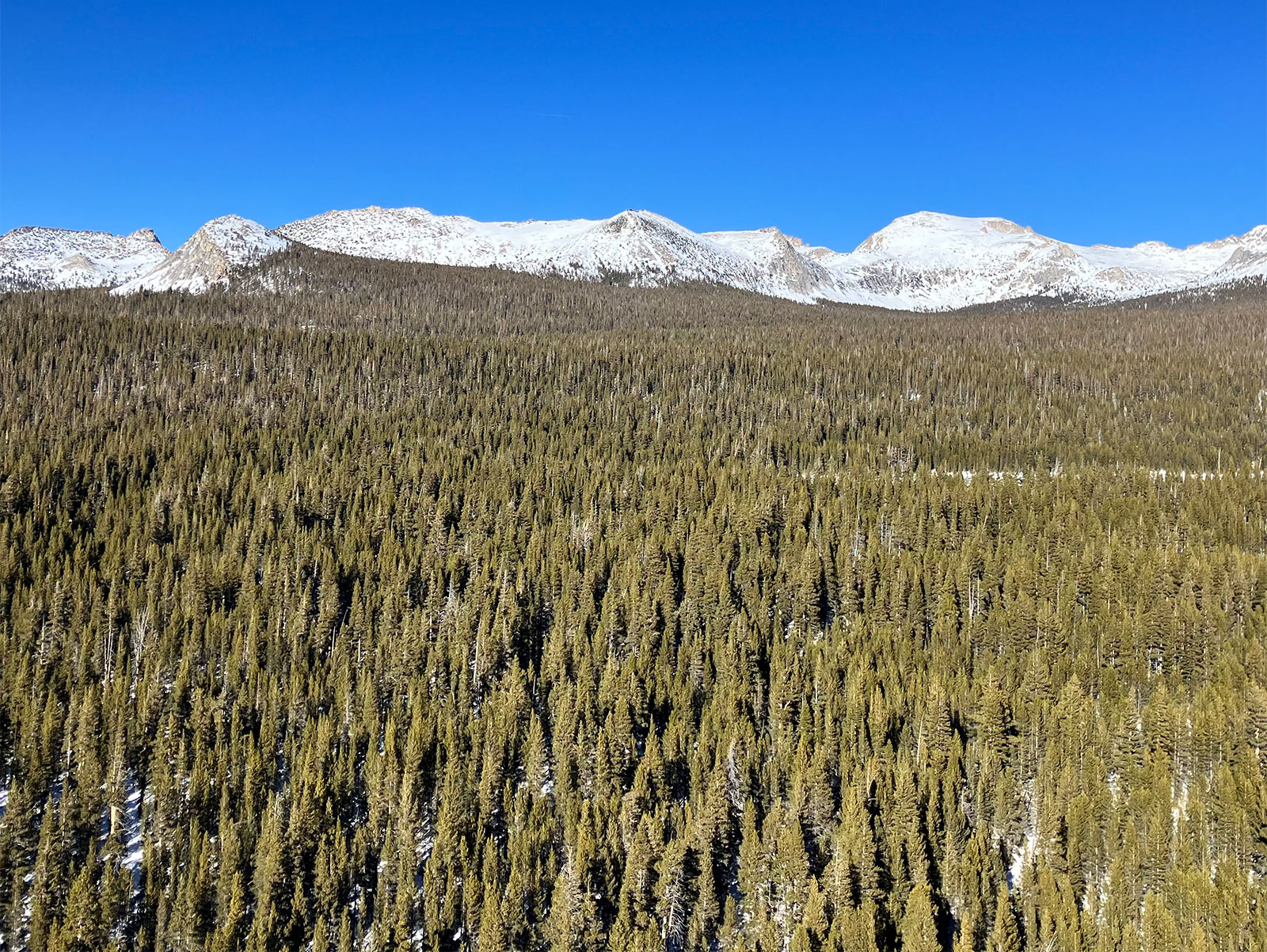
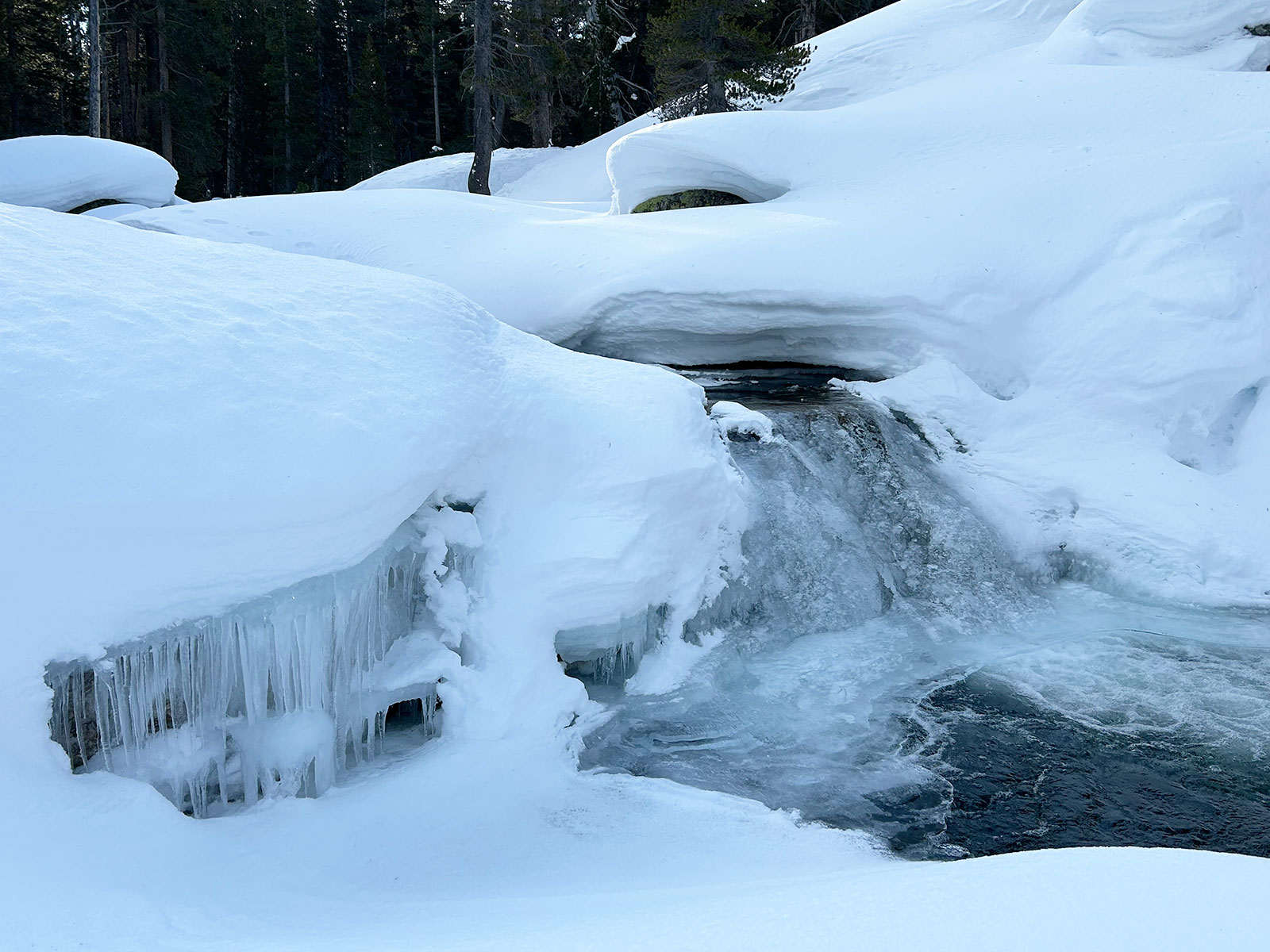
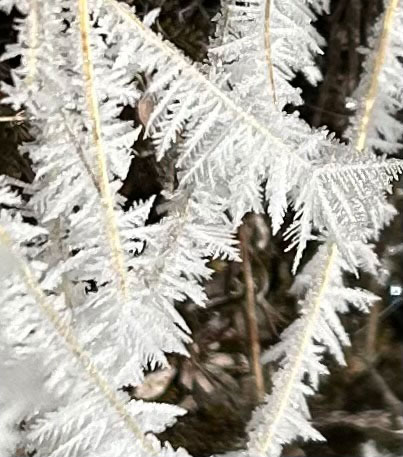
It was a quiet weather week across the Tuolumne Meadows area. The average high temperature was a balmy 56 degrees, which is 16 degrees above the January average. Other than some NE ridgetop winds, it was mostly calm.If it was March, we would be talking about the melt/freeze cycle and the impending corn harvest. But alas, the calendar reminds us that it is still January. Although we were able to find some spring-like snow on open solar aspects at the middle elevations, the shady places still hold cold and dry winter snow. Despite daytime temperatures being well above freezing, the snow remains cold and dry due to short days and low humidity. Although there are variable snow surface conditions out there, coverage and ski conditions are excellent.
Snowline still extends to the gate in Lee Vining Canyon.
Avalanche and Snowpack Conditions
Please refer to the Eastern Sierra Avalanche Center (ESAC) and the Bridgeport Avalanche Center for the avalanche advisories for this part of the park.
The avalanche hazard is presently low across the Tuolumne Meadows area. We observed a few small wet point-release avalanches on solar aspects along the Tioga Road, but nothing else noteworthy. Although there has been a reliable freeze each night this week, wilderness travelers should exercise more caution following any nights without freezing temperatures. There are some complexities to the present snowpack and our partners at ESAC are doing an excellent job of tracking and posting this information daily.
Wildlife
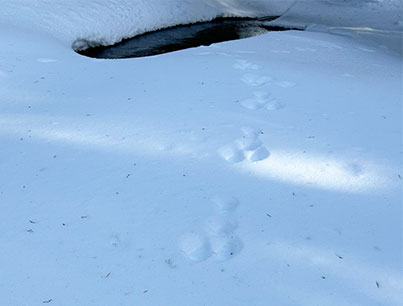
We have observed many hare tracks this winter. One set of tracks took an adventurous line off the cornice on Lembert Dome! The most common hares found in the high Sierra Nevada are the snowshoe hare and the white-tailed jackrabbit both in the Leporidae family. Like other critters suited for travel over deep-snow, hares have large feet (the front ones resembling snowshoes).Questions
The Tuolumne Meadows Ski Hut is open! And, thanks to the hard work of the Historic Preservation Crew, renovation is complete and it looks so warm and cozy! This primitive cabin is the campground reservation office in the summer and is located along the Tioga Road at the entrance to the campground. It is marked with a sign. There is firewood and 10 bunks that are available on a first-come, first-served basis. For those visiting the Tuolumne Meadows Ski Hut from the east (only) permits are self-issued at the Ski Hut. For those entering from other areas, please see Yosemite’s website: https://www.nps.gov/yose/planyourvisit/wildfaq.htm#winter or you may contact the wilderness office at 209/372-0740. Do not rely on electricity or phone service at the ski hut.
Come prepared, and please make good decisions while traveling in the wilderness!
Read through the following three pages before embarking on any day or overnight snow travel within this park:
You may contact us with any additional winter Tuolumne Meadows related questions but response times may vary if we are away on patrol.
Happy Juneuary!
Laura and Rob Pilewski - Tuolumne Meadows winter rangers