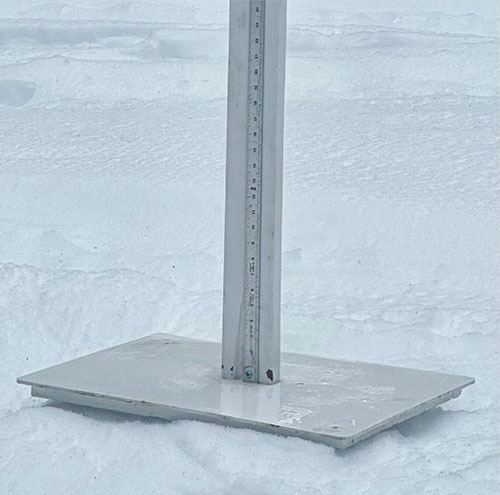
New Snow: 16 inches
Settled Snow Depth: 54 inches
High temperature: 51°F (February 23)
Low temperature: -6°F (February 21)
Ski Conditions and Weather
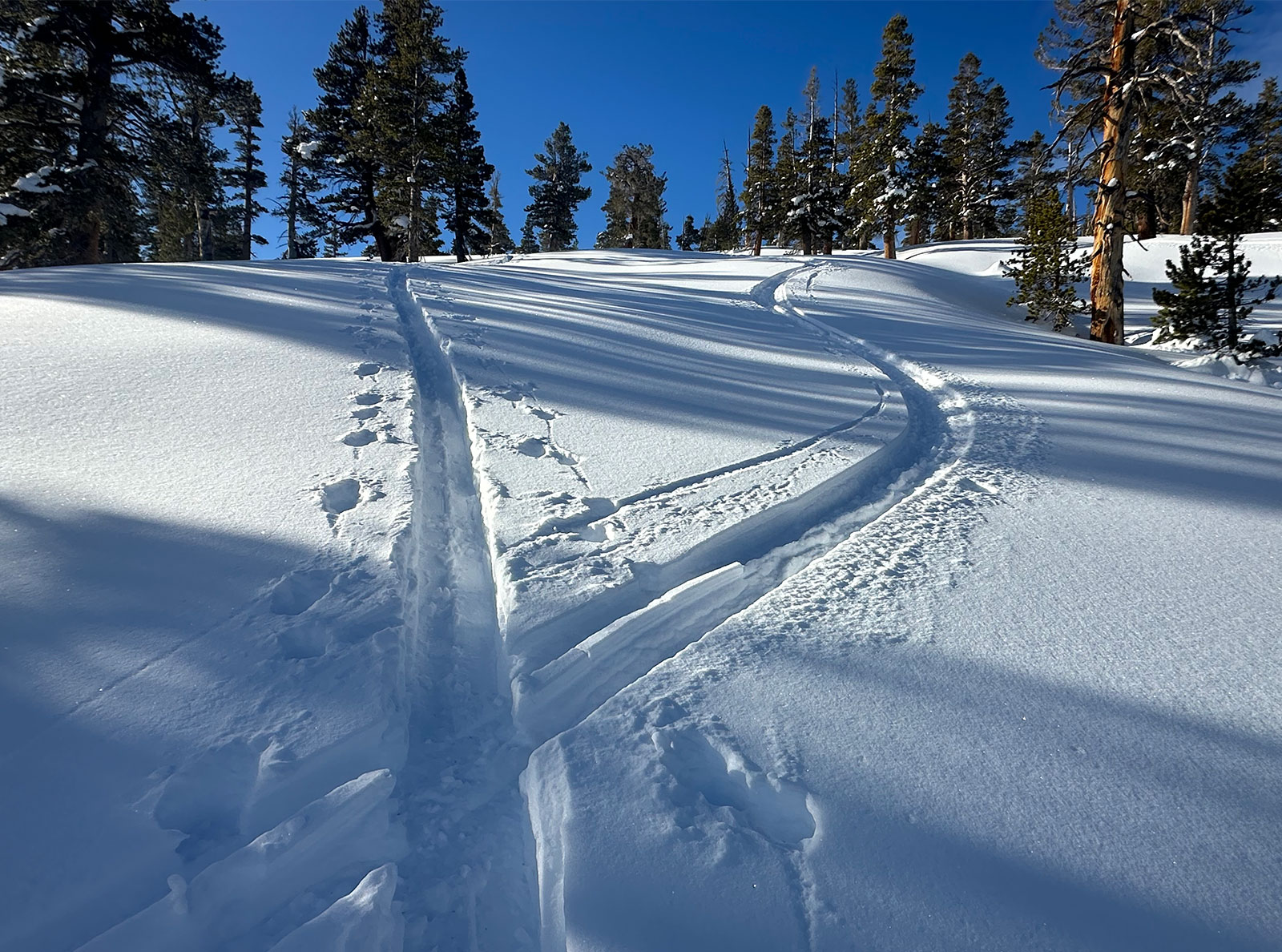
The week started out with 16 inches of low-density snow and cold temperatures. Now it is raining. Snow level for the current weather disturbance is over 10,000 feet. We are on the southern end of this atmospheric river and new precipitation amounts should be less than one inch. This will add water to the existing snowpack but not actively melt the snow. Last week’s big storm had an average snow density of 6%. That results in plenty of room to absorb the present rain.
The snow surface and ski conditions are, of course, a different story. The wintery snow surface is being replaced with a wet, textured, and waterlogged one. Further changes will occur when the new snow surface goes through melt-freeze cycles. That is the nature of snow. Snow is such a dynamic medium that conditions can change dramatically over very short periods. This seems to be truer than ever this winter. The propensity for weather extremes, and warmer temperatures, this winter have resulted in wild swings in ski conditions. But hey, it’s still skiing. If you are lucky enough to be on skis, then you are lucky enough!
Avalanche and Snowpack Conditions
Please refer to the Eastern Sierra Avalanche Center (ESAC) and the Bridgeport Avalanche Center for the avalanche advisories for this part of the park.
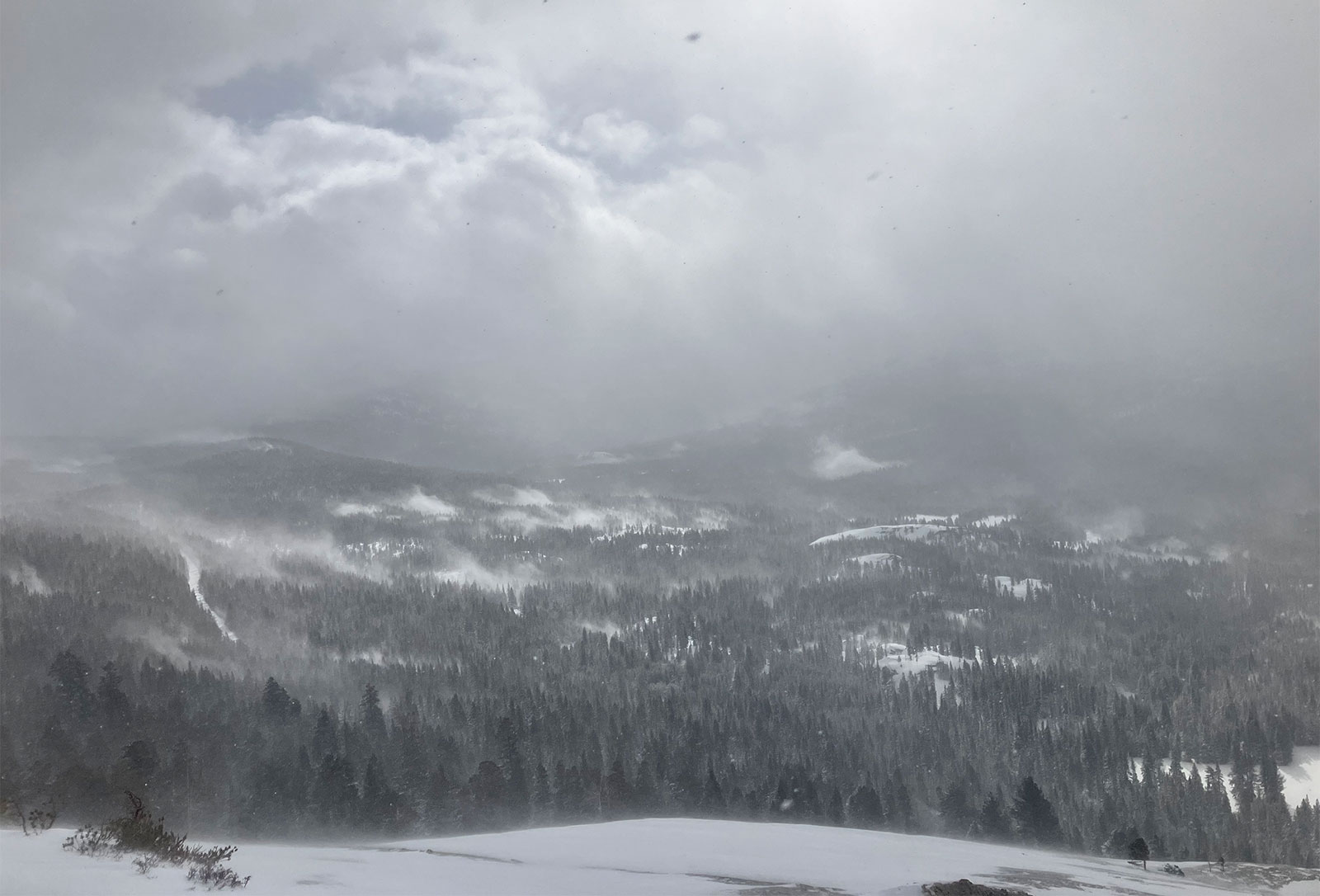
Dynamic IS the name of the game here. At the time of this post, ESAC is highlighting “persistent slab” as problem number one and “wet loose” as number two. In the wake of the most recent snowstorm, we did see evidence of old avalanching especially on north-facing slopes around tree line. Some appeared to be storm slab and some possibly persistent. All were too far away and wind affected to determine. With increasing temperatures and overnight lows hovering around the freezing mark, there may be increasing risk of glide avalanches in granite slab land, as well.
Wildlife
Even in the middle of a snow or rainstorm, the cheery “kip, kip; kip, kip kip” sounds of Loxia Curvirostra bring a smile to our faces. Rather quiet compared to previous winters, the red crossbills’ flight calls are unmistakable. In fact, according to recent studies, there are at least eleven different types of red crossbills in North America based upon these distinct vocalizations. According to Ebird (Crossbills of North America: Species and Red Crossbill Call Types - eBird), the ponderosa type 2 and lodgepole type 5 are the most common in the Sierra Nevada. Even though the forest is primarily lodgepole in Tuolumne Meadows, we find the ponderosa type to be the one that we typically hear.
Questions
The Tuolumne Meadows Ski Hut is open! And, thanks to the hard work of the Historic Preservation Crew, renovation is complete and it looks so warm and cozy! This primitive cabin is the campground reservation office in the summer and is located along the Tioga Road at the entrance to the campground. It is marked with a sign. There is firewood and 10 bunks that are available on a first-come, first-served basis. For those visiting the Tuolumne Meadows Ski Hut from the east (only) permits are self-issued at the Ski Hut. For those entering from other areas, please see Yosemite’s website: https://www.nps.gov/yose/planyourvisit/wildfaq.htm#winter or you may contact the wilderness office at 209/372-0740. Do not rely on electricity or phone service at the ski hut.
Come prepared, and please make good decisions while traveling in the wilderness!
Read through the following three pages before embarking on any day or overnight snow travel within this park:
You may contact us with any additional winter Tuolumne Meadows related questions but response times may vary if we are away on patrol.
Kip-kip!
Laura and Rob Pilewski - Tuolumne Meadows winter rangers