


In 2024, the Heritage and Research Center (HRC) at Yellowstone National Park welcomed two distinguished paper conservation experts for a hands-on training that brought new life to some of the park’s most fragile historical documents. Angela Campbell, Conservator with the National Park Service, and Lisa Conte, professor at New York University and former Head of Conservation at the 9/11 Memorial and Museum, led a multi-day workshop for Archives and Museum staff focused on the delicate art of paper-mending.
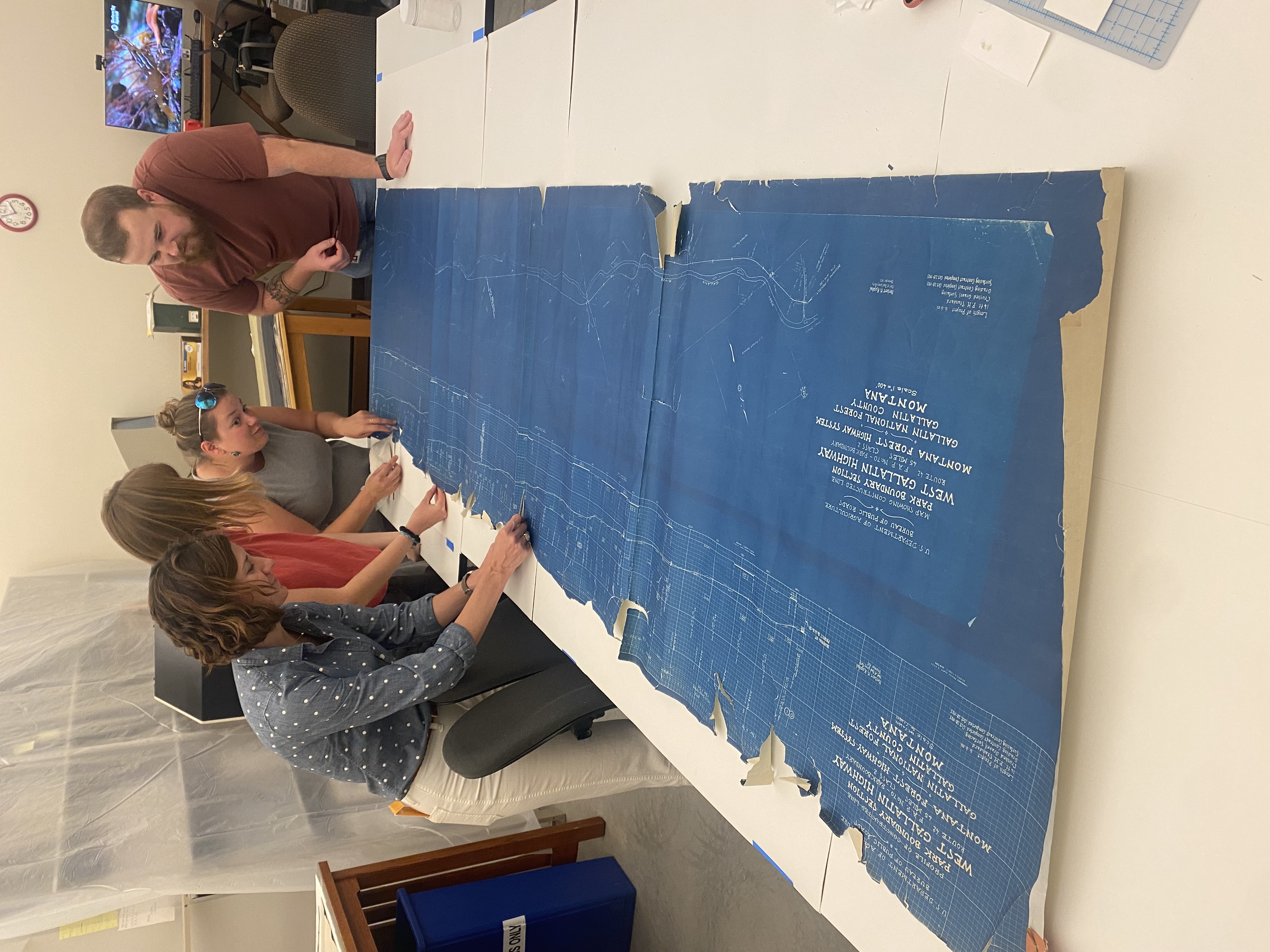
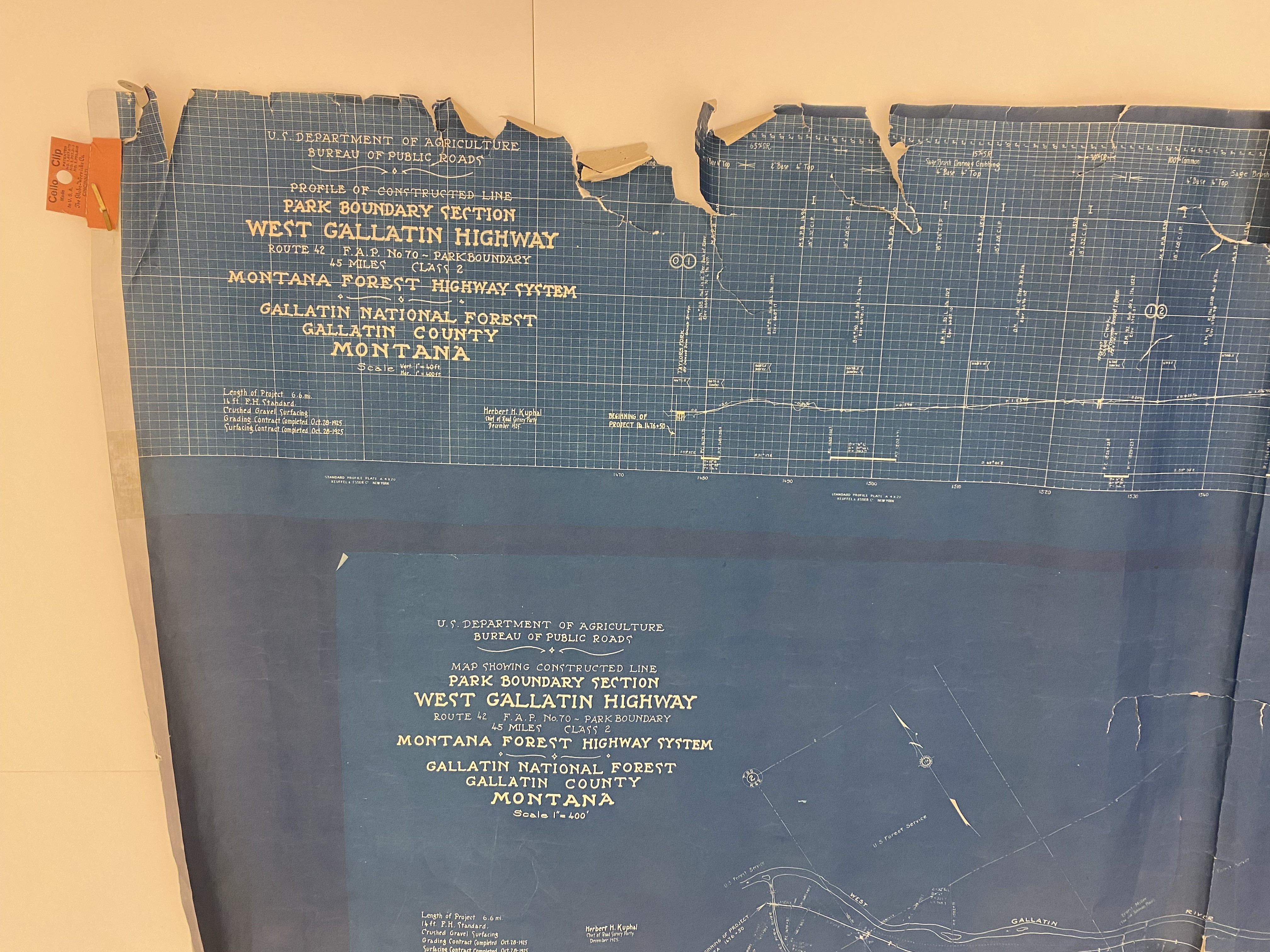
The training centered on repairing torn and folded blueprints from the late 19th century—documents that detail early park hotels and boundary lines. These blueprints, worn by time and handling, are vital records of Yellowstone’s early development. The goal: stabilize their condition so they can be safely accessed by archivists and researchers for years to come.
The process began with dry-cleaning, where staff used soft makeup brushes and tiny eraser bits to gently lift away decades of dirt and grime. Next came flattening small folds near tears—a meticulous step involving light brushing with water and pressing the paper under weights to ease out creases.
The final and most transformative step was mending. Using a paste made from wheat starch, Campbell and Conte demonstrated how to apply thin, flexible strips of Japanese paper to the backs of tears. This technique not only reinforces the damaged areas but also preserves the blueprint’s original appearance. Staff also learned how to safely remove old tape using a heated spatula and how to humidify and flatten entire prints.
For many participants, this was their first experience with paper conservation. Yet by the end of the first day, they were confidently working on their own—restoring documents that had once seemed beyond repair. In one striking example, a blueprint torn completely in half was seamlessly reunited.
But the training went beyond technique. Campbell and Conte emphasized the ethical dimensions of conservation work. They encouraged staff to consider the purpose of each project—whether to stabilize a document for handling or to prepare it for display. In some cases, they explained, visible damage or dirt should be preserved, as these marks tell part of the object’s story and offer insight into its use and history.
This training marks the beginning of an ongoing effort at the HRC to conserve and protect Yellowstone’s paper-based heritage. Thanks to the expertise and guidance of Campbell and Conte, the Archives team is now equipped with the skills—and the perspective—to carry this important work forward.
On the final day of the visit, Campbell gave a lecture on the technical engraving process used by German Renaissance painter and printmaker Albrecht Dürer in his Meisterstiche (“master prints”), one of her areas of specialty.
Some may be surprised to learn that gloves are typically not used when handling historic paper materials because it is important for conservators to be able to feel the delicate material and decrease the risk of tears.