
Flash Floods

The Virgin River flowing through Zion Canyon The Virgin River flowing through Zion Canyon

Left image
Credit: NPS Photo / Anne Winters

Right image
Credit: NPS Photo / Anne Winters

The river can change dramatically as shown in these photos taken in March of 2019.


What are flash floods?

Flash floods are sudden increases in the depth and speed of water in rivers, streams, or washes due to heavy rain. Floodwater can be deep and full of sediment, often making crossing/navigating the water impossible. Rushing water can also carry debris like rocks, branches, tree trunks, and even boulders.

  • Flash floods are unpredictable.
    • Flash floods can happen even with sunny skies overhead.
    • There is never a "0% chance" of flooding.
  • Slot canyons are particularly dangerous during inclement weather.
  • You can’t outrun a flash flood.
  • Flash floods can be deadly, and death most often occurs by blunt force trauma from rocks/debris in the water.

When do flash floods occur?

Flash floods can occur at any time in Zion National Park and the desert southwest. All narrow canyons are potentially hazardous. Flash floods, often caused by storms miles away, pose real danger and can be life threatening. Have a back-up plan in case of inclement weather.

By entering a narrow canyon, dry wash, or stream, you are assuming a risk:

  • Check the weather forecast and stop by a visitor center for up-to-date Flash Flood Potential information.
    • Take note of areas that are likely to flood and avoid those areas.
    • Watch for changing weather or a buildup of clouds.
  • Leave an itinerary with someone and check in when you are done.
  • Bring extra food or water in case flooding blocks your path.
 
Example of a Flash Flood Potential rating in southern Utah.
Above is an example of a National Weather Service Flash Flood Forecast for southern Utah. Note how the forecast changes by day and location.

NWS

Flash Flood Potential Rating System

Flash flood potential ratings are issued by the National Weather Service based on expected rainfall and other conditions. They are broken down into 4 categories:

  • NOT EXPECTED: Flash flooding is not expected. Your safety is your responsibility.
  • POSSIBLE: Some slot canyons, dry washes, and small streams may experience flash flooding.
  • PROBABLE: Some slot canyons, dry washes, and small streams are expected to experience flash flooding.
  • EXPECTED: Many slot canyons, dry washes, and small streams are expected to experience flash flooding.

"Possible," "probable," and "expected" flash flood potential ratings should be a serious cause for concern. If you see any of these ratings, consider making alternative plans that avoid narrow canyons, dry washes, or small streams.

At the same time, keep in mind that flash floods can still occur during periods when they are not expected. When the National Weather Service states that there is a "30 percent chance of rain," they are not stating that there is a 30 percent chance that it will rain. They are stating that 30 percent of the forecast area will be affected by measurable precipitation. Continuously evaluate weather conditions during your trip.

During a flash flood, the water level rises quickly, within minutes or even seconds. A wall of water and debris can rush down the canyon 12 feet high or more. Watch for these indications of a possible flash flood:

  • Any deterioration in weather conditions
  • Buildup of clouds or sounds of thunder
  • Sudden changes in water clarity from clear to muddy
  • Floating debris
  • Rising water levels or stronger currents
  • Increasing roar of water upstream

If you encounter a flash flood:

Do not waste time picking up gear or packing up tents/equipment. Reach higher ground as quickly as possible. Water can rise to dangerous levels in minutes or seconds.
  • Do not attempt to cross or enter floodwaters.
    • 6 inches of water can knock a person off their feet and cause loss of vehicle control.
    • 12-24 inches of water can pick up a vehicle and carry it off.
  • Stay as high up as you can and be patient. It can take hours for water to recede to safe levels.
 
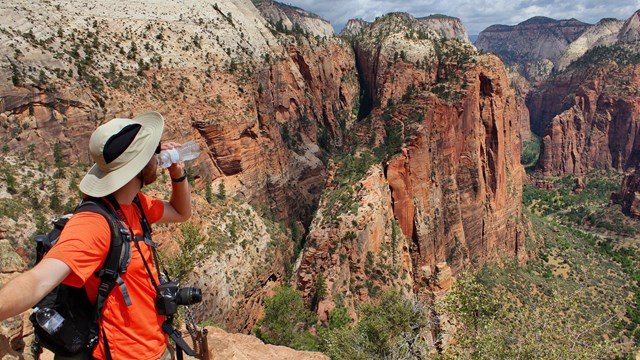
A hiker drinks water from a bottle as they gaze into Zion Canyon.
Safety

Your safety is your responsibility! Learn about common hazards and how to avoid them.
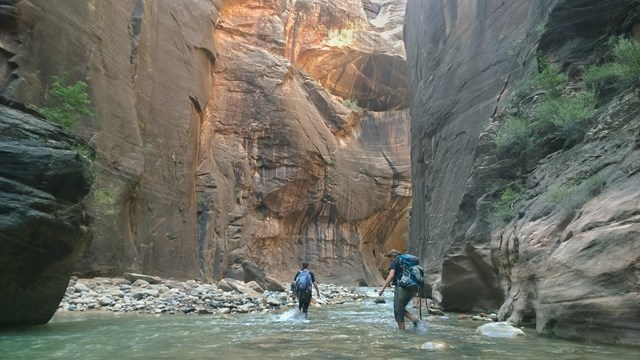
Two hikers walk through a raver between towering walls.
The Narrows

Plan your hike into the Virgin River Narrows. Hiking options include day hikes from the bottom-up and top-down, and overnight from top-down.
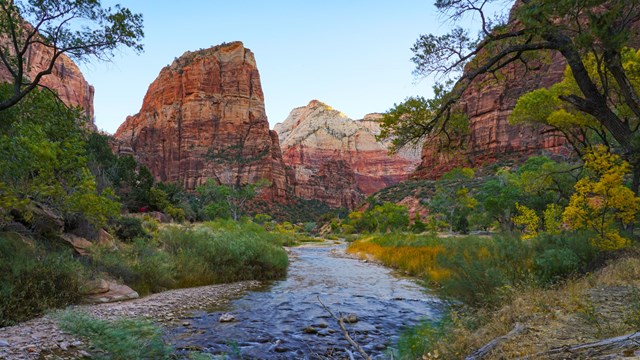
A tall sandstone peak stands above a blue, flowing river in a deep canyon. Trees line the river.
Plan Your Visit

Make your ideal visit a reality! Explore fun activities, places to stay, and trip-planning advice.

Last updated: May 15, 2026

Park footer

Contact Info

Mailing Address:

Zion National Park
1 Zion Park Blvd.

Springdale, UT 84767

Phone:

435-772-3256
If you have questions, please email zion_park_information@nps.gov. Listen to recorded information by calling anytime 24 hours a day. Rangers answer phone calls from 10 a.m. to 5 p.m. MT, but a ranger may not answer if they are already speaking with someone else.

Contact Us