



NPS Photo Young greenbacks require food, space, and protection from non-native predators and competitors, like brook trout, which outcompete greenbacks. Removal of brook trout is a key factor for recovery success. First, non-native fish must be removed from the Grand Ditch and associated upstream and downstream tributaries inside RMNP before the water reaches the Greenback recovery area, which starts at La Poudre Pass Creek. 
Image Credit: Colorado Parks and Wildlife 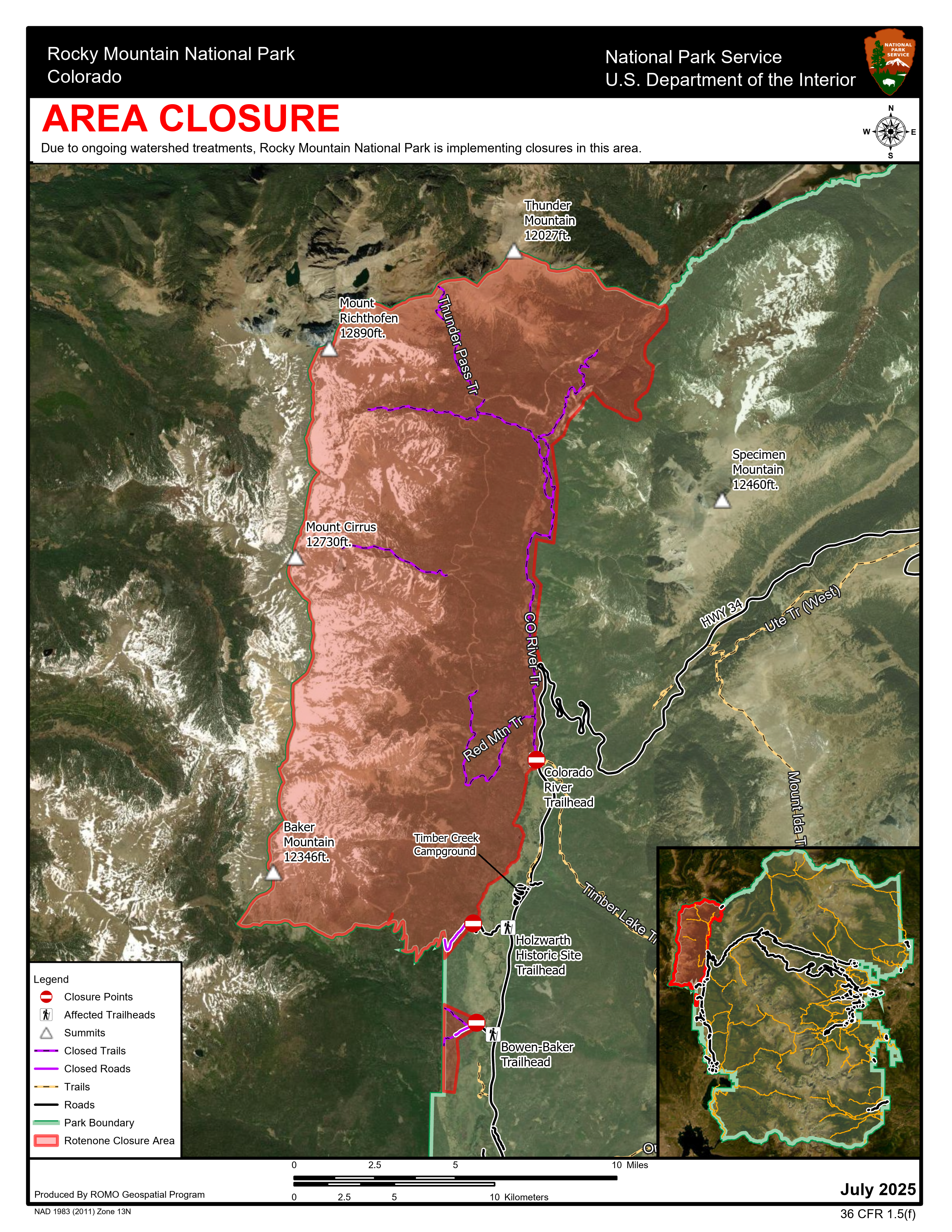
NPS Map This project takes place on the west side of Rocky Mountain National Park and involves the removal of all non-native fish from the Grand Ditch and upstream and downstream tributaries inside the park. Once removed, native Greenback cutthroat trout will be reintroduced into its native range in the headwaters of the Cache la Poudre River.
Poudre Headwaters Project: Frequently Asked Questions and Answers
The Grand Ditch is 14.3-miles long. This water diversion project diverts water in the Never Summer Mountains on the west side of the Continental Divide in RMNP and delivers that water into Long Draw Reservoir and the headwaters of the Cache la Poudre River, located on the east side of the Continental Divide.
For the protection of native Greenback cutthroat trout downstream, non-native fish must be removed from the Grand Ditch and its associated tributaries. Non-native fish like brook trout outcompete and hinder the ability of native trout from surviving in the same waters.
No. This project is specifically designed to not impact the habitat and recreational fishing opportunities in the Colorado River. While this project is underway, fishing access will remain open along the Colorado River in all areas south of the Colorado River Trailhead. You may see water brown in color. This is water that has been detoxified upstream.
Rotenone is an EPA-approved piscicide specifically formulated for the removal of fish. This botanical compound is derived from the roots of tropical plants in the bean family. At the concentration level that affects fish, rotenone poses minimal risk to humans and wildlife. Within days of application it is naturally broken down and rendered inert.
Rotenone is a tool that is routinely used by fish and wildlife managers for the restoration of native fish populations.
The presence of non-native fish in the same waterways prevents the successful reintroduction of native Greenback cutthroat trout. Rotenone is the most effective and efficient method to completely remove all of the non-native fish from the project area. The steep and remote locations make other means of removal, like hook and line or electrofishing and netting infeasible, ineffective, and impractical.
Rotenone-treated water is detoxified using potassium permanganate. The potassium permanganate mixes with the flowing, treated water in a stream to neutralize the effects of rotenone.
No. If a mammal or a bird eats a dead or live fish that has been in rotenone-treated waters, at the concentration used the rotenone will not harm the wildlife.
While generally safe at the concentration that will be used during this project, for your safety do not wade in, swim, or drink rotenone-treated waters. Do not collect dead fish or consume fish that have been in rotenone-treated waters.

Poudre Headwaters Project To learn more and see videos focused on the native Greenback cutthroat trout, visit the Poudre Headwaters Project webpage hosted by the Rocky Mountain Flycasters Chapter of Trout Unlimited. |
Last updated: August 5, 2026