On May 30, 1881, Frederick Douglass delivered a memorable oration on the subject of John Brown at the Fourteenth Anniversary of Storer College. Especially notable was the presence among the platform guests of Andrew Hunter, the District Attorney of Charles Town who had prosecuted Brown and secured his conviction. In his oration, Douglass extolled Brown as a martyr to the cause of liberty, and concluded with the following passages:
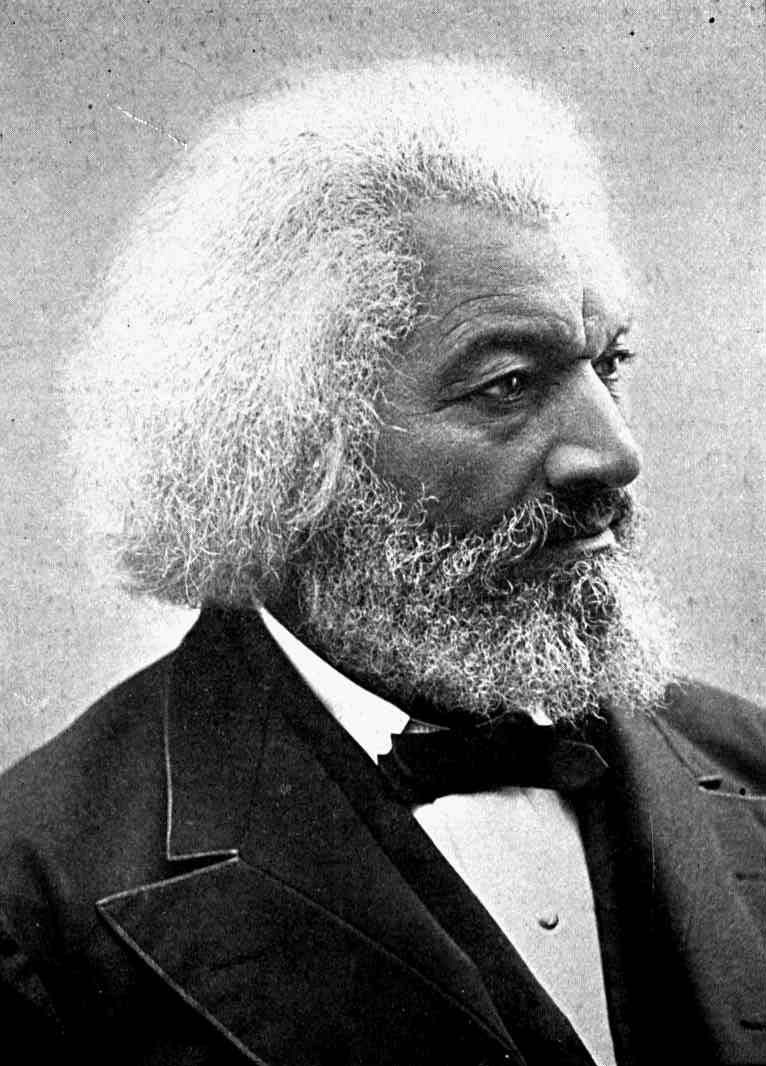
Frederick Douglass
|
"But the question is, Did John Brown fail? He certainly did fail to get out of Harpers Ferry before being beaten down by United States soldiers; he did fail to save his own life, and to lead a liberating army into the mountains of Virginia. But he did not go to Harpers Ferry to save his life.
"The true question is, Did John Brown draw his sword against slavery and thereby lose his life in vain? And to this I answer ten thousand times, No! No man fails, or can fail, who so grandly gives himself and all he has to a righteous cause. No man, who in his hour of extremest need, when on his way to meet an ignominious death, could so forget himself as to stop and kiss a little child, one of the hated race for whom he was about to die, could by any possibility fail.
"Did John Brown fail? Ask Henry A. Wise in whose house less than two years after, a school for the emancipated slaves was taught.
"Did John Brown fail? Ask James M. Mason, the author of the inhuman fugitive slave bill, who was cooped up in Fort Warren, as a traitor less than two years from the time that he stood over the prostrate body of John Brown.
"Did John Brown fail? Ask Clement C. Vallandingham, one other of the inquisitorial party; for he too went down in the tremendous whirlpool created by the powerful hand of this bold invader. If John Brown did not end the war that ended slavery, he did at least begin the war that ended slavery. If we look over the dates, places and men for which this honor is claimed, we shall find that not Carolina, but Virginia, not Fort Sumter, but Harpers Ferry, and the arsenal, not Col. Anderson, but John Brown, began the war that ended American slavery and made this a free Republic. Until this blow was struck, the prospect for freedom was dim, shadowy and uncertain. The irrepressible conflict was one of words, votes and compromises.
"When John Brown stretched forth his arm the sky was cleared. The time for compromises was gone - the armed hosts of freedom stood face to face over the chasm of a broken Union - and the clash of arms was at hand. The South staked all upon getting possession of the Federal Government, and failing to do that, drew the sword of rebellion and thus made her own, and not Brown's, the lost cause of the century."
The address was subsequently published, with proceeds of its sale earmarked for the endowment of a John Brown Professorship at Storer College.