


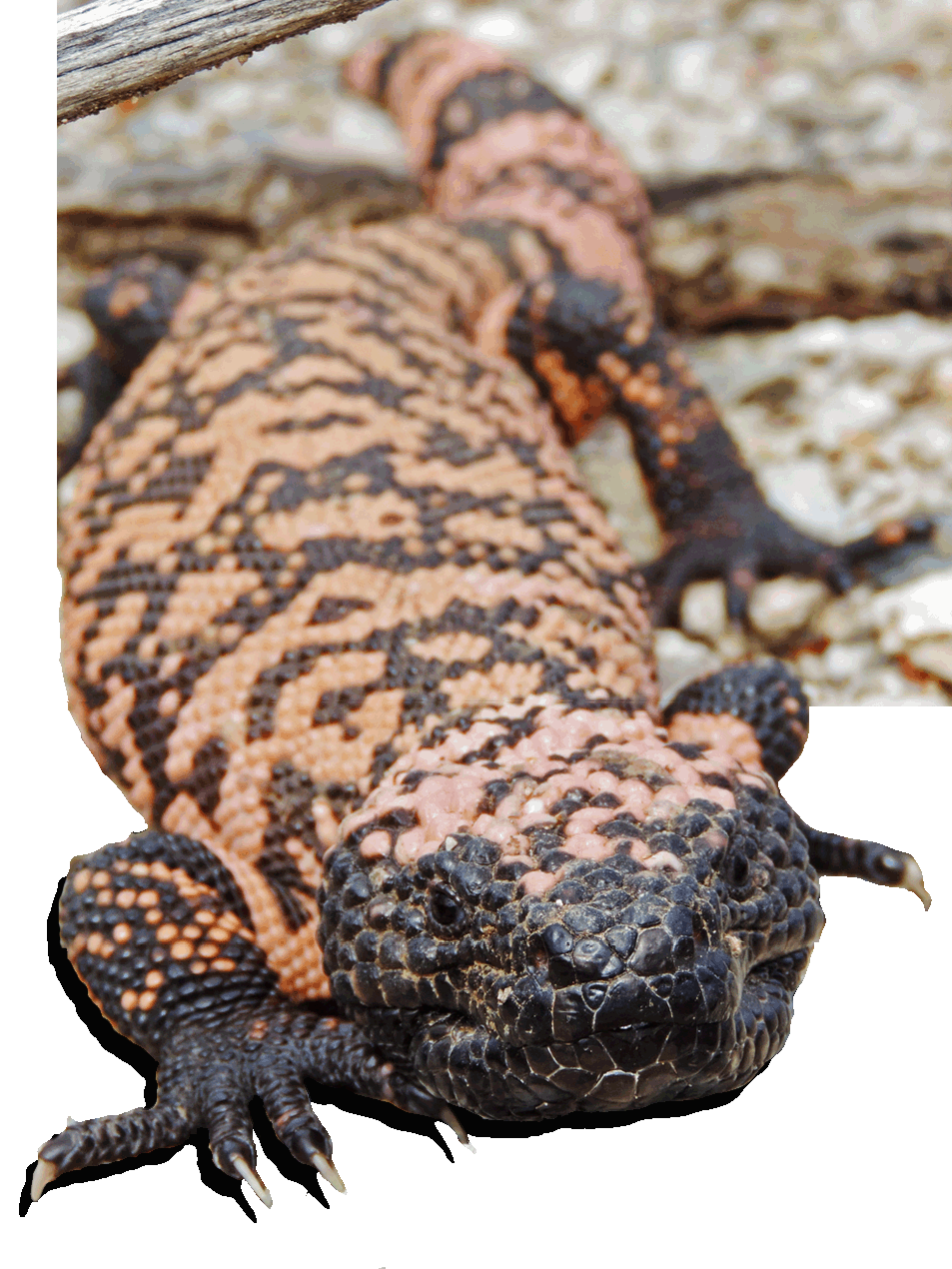
N. Perkins Help Saguaro Monitor the MonstersYou can help Saguaro National Park by sending us photographs of Gila monsters you may see while hiking or driving in the park. Because Gila monsters are venomous and protected by law, we ask that you do not disturb the animal and only take its photo from a safe distance of at least several feet. If possible, take photos from overhead and each side. Why report a sighting?Once a photograph is received, it is placed into a database and embedded with information such as the location and date of the sighting. This information is used to try and match the photo with known individuals in the area. If a match is found, then we have additional information about the home range of that Gila monster. If there is not a match for the photo, then it will be labeled as a new individual. All photos within and near the park boundaries are valuable in gaining more insight about the species! About the ProjectThe Gila monster project at Saguaro National Park was started in 2008 by Dr. Kevin Bonine of the University of Arizona to learn more about this elusive lizard. Students tracked Gila Monsters using radio telemetry and (carefully and safely) collected data on genetics, behavior, and habitat features to help us better understand them. What have we learned so far?Based off photographs, observations and genetic analysis, Gila monsters are more common in the park than what was once thought. Since 2005, we have received 1500 photos (and we’re behind in processing them!) and identified around 700 different individuals. Using mathematical models in 2017 we estimated that more than 80 Gila monsters lived in the area of the 8-mile Cactus Forest Loop Drive in the Rincon Mountain District (east). How long do Gila monsters live in the wild? In time, we hope to use these collected photos to answer that question, but one adult Gila monster that was first photographed in 2001 was still alive and healthy in 2013. |
Last updated: August 19, 2026