



Last updated: April 2, 2026
Place
Treviño-Uribe Rancho
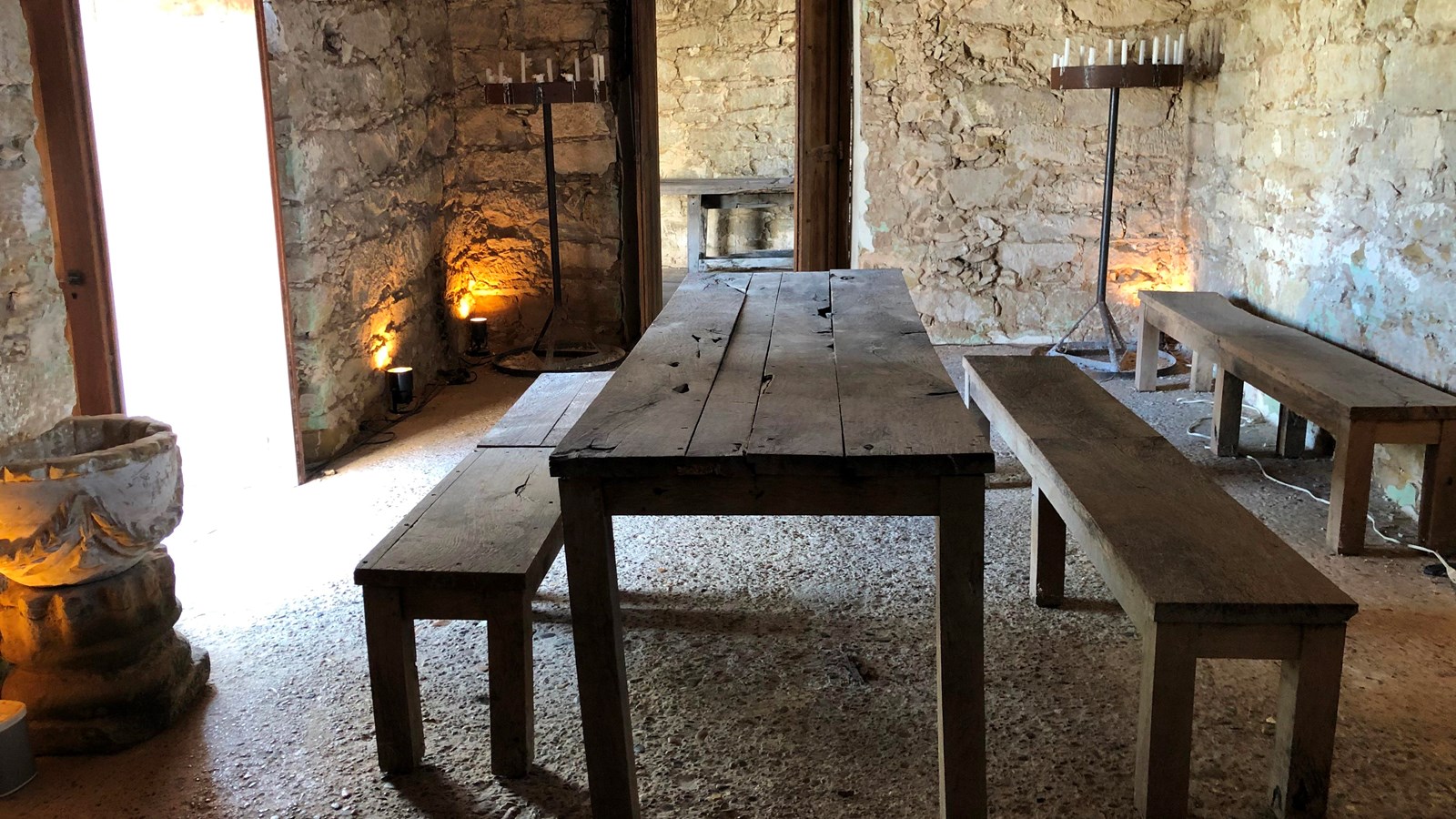
Photo/NPS
Quick Facts
Location:
300-398 Trevino St, at the corner of Treviño and Uribe streets, in the northwestern part of San Ygnacio, Texas
Significance:
The fort is one of the best remaining examples of a nineteenth-century fortified home along El Camino Real de los Tejas (many others were lost during the construction of the Falcon International Reservoir in the mid-twentieth century).
Designation:
Certified site; National Historic Landmark (contributing structure)
MANAGED BY:
Amenities
1 listed
Historical/Interpretive Information/Exhibits
The Treviño-Uribe Rancho in San Ygnacio, Texas, stands as one of the best-preserved colonial ranchos in the Rio Grande Valley. It was one of many such communities that dotted the region in the 17th and 18th centuries. The site’s origins date back to 1746 when Jose de Escandón, a militia officer based in the province of Querétaro (present-day central Mexico), received a royal appointment to establish a new colony. Named Nuevo Santander after Escandón’s hometown in Spain, this province spanned from the city of Tampico in Mexico to the river lands that comprise the modern Mexico-Texas border. After completing an initial survey of the land in 1747, colonists led by Escandón settled in the region the following year. This group of over 3,000 would eventually populate a chain of villas, or settlements, along the banks of the Rio Grande.[1]
All but one of these homesteads was built on the south bank of the river; the sole property to the north belonged to cattle rancher Jose Vasquez Borrego. In exchange for building a river ferry and protecting settlers from attacks by local Native American groups like the Carrizo and Comanche, Escandón granted Borrego 221,420 acres of land in August of 1750. He established the villa of Nuestra Señora de los Dolores (also known as Dolores) near the cattle grazing lands upon which Borrego had already erected a hacienda, or ranch house. The town thrived in its early years, reaching a population of 25 Spanish families and 27 Carrizo families by 1755. Census figures from 1758 indicate that the ranch included 3,000 cattle, 3,000 mares, 400 horses, 1,600 mules, and over 1,000 donkeys. Having proven that settlement on the north bank of the Rio Grande was not only possible but profitable, Escandón received an official land grant for the region in 1784.[2]
In the following years, however, Dolores struggled with the harsh realities of life at the edge of empire. With Mexico in open revolt against Spain in 1813, Spanish military forces that once protected the settlement moved southward, leaving settlers defenseless. Raids by local Native American groups quickly intensified, leading to the complete abandonment of Dolores by 1814. Still, the early example of success set by Borrego and hist heirs continued to entice settlers to the north bank of the Rio Grande.
Over the next decade, two enterprising families settled these recently abandoned lands—the Uribes, led by matriarch Doña Ygnacia Gutiérrez Uribe, founded the ranch of Uribeño near present-day Zapata in 1822; and the Treviños, the family of wealthy alderman Jesús Treviño, re-established the town of San Ygnacio after purchasing some 125,000 acres of the Borrego land grant in 1830. Treviño built a single-room rancho of thick sandstone on his plot that same year, what would become the heart of the modern Treviño-Uribe complex.[3] The building received its joint name as Blas María Uribe when Doña Uribe’s son, married Treviño’s daughter, Juliana, in 1831, eventually becoming the couple’s permanent home in 1848.[4] Uribe thrived as a rancher and merchant, transforming San Ygnacio into one of the principal border crossings for goods and cattle to enter the United States from Mexico and vice versa.[5]
As San Ygnacio evolved so too did the Treviño-Uribe home. Through a series of building campaigns in 1851, 1854, and 1871, the single-room building expanded into the multiroom L-shaped compound seen today. Defense was of clear importance to Uribe during the earlier of these expansions, as indicated by the numerous troneras, or gun ports, that line the buildings’ high walls. Other installations to the building, like the sundial placed atop the arched gateway, also remain intact today. Although constructed gradually over a period of 40 years, the rancho maintains an architectural style nearly identical to the 18th century villas of Escandón.[6]
Remarkably, nearly all the original architecture of the Treviño-Uribe Rancho remains intact today. Descendants of the Treviño and Uribe families still live in San Ygnacio, and the home has been preserved for public visitation as a National Historic Landmark.
Site Information
Location (300-398 Trevino St, at the corner of Treviño and Uribe streets, in the northwestern part of San Ygnacio, Texas)
More Site information
El Camino Real de los Tejas National Historic Trail
[1] National Park Service, “National Historic Landmark Nomination: Jesus Treviño Fort, Rancho San Ygnacio, San Ygnacio Ranch Buildings,” 19-20.
[2] Ibid., 21-22.
[3] Ibid., 23-24.
[4] Ibid., 25.
[5] Ibid., 27.
[6] “Treviño-Uribe Rancho San Ygnacio Texas,” Discover Our Shared Heritage Travel Itinerary: American Latino Heritage, https://web.archive.org/web/20170428152444/https://www.nps.gov/nr/travel/american_latino_heritage/Trevino_Uribe_Rancho.html