



Last updated: January 30, 2026
Place
Second Baptist Church, Hinton, WV
Mark Bollinger
Quick Facts
Location:
Hinton, WV
OPEN TO PUBLIC:
No
Amenities
1 listed
Historical/Interpretive Information/Exhibits
African American Heritage Driving Tour Stop 18: Segregation of African Americans
If using the NPS app, to listen to the audio narrative, press the green button below or read the audio narrative text below.
Audio Narrative
Written by: Michael Burk
Narrated by: Joshua Flynn
African Americans living in West Virginia after the Civil War experienced an unusual social and racial environment. From the 1870s through the 1950s, thousands of African Americans migrated to the state in search of jobs. Upon their arrival, they were met with segregation and discrimination, but also with economic, political, and educational opportunities that had been denied them in other southern states. Many preferred West Virginia because it provided them the right to vote and educate their children.
They came to live in communities which were not suppressed by racist politics and the constraints of Jim Crow laws. Just across the state line in Virginia, Jim Crow laws forced African Americans to use segregated transportation and granted them no voting rights. In West Virginia, African Americans were able to send their children to publicly-funded schools. They could ride on the same bus as white people. They were able to participate in local politics. Through their vote, they were able to elect black candidates to local school boards, law enforcement offices, city councils, and the state legislature.1
Segregation and racism was present in other ways. It existed in coal camps and railroad towns, in the mines, and on the railroad. Blacks and whites lived in different neighborhoods, worshiped in separate churches, and attended segregated schools. Many towns had a “white section” and a “black section” that separated where residents lived. Housing for African Americans was often inferior and located in the less desirable part of town. The “black section” was frequently on the far end of town away from the company store and other amenities. Helen Powell relates that in the Collins Hill area of Glen Jean, the “black section” did not have running water like the “white section” did.2
Black workers faced racism on the job as well. On the railroad, there were white-only jobs, the engineers, conductors, and supervisors. Black jobs included porters, baggage handlers, and track crews. In the mines, White employees were almost exclusively hired as supervisors, fire bosses, and motormen. Black jobs like coal loaders and mule handlers were more labor intensive positions. Even though segregation prevailed, black workers were offered the same type of housing, rental rates, and equal wages as white miners. Black and white miners typically intermingled while eating lunch, gathering their equipment, and riding shaft elevators and underground rail cars. However, they showered and changed in segregated bath houses and went home to separate neighborhoods.
African Americans were also subjected to segregation in seeing a movie, eating at a restaurant, attending school, or staying at a hotel. There were hotels for whites and hotels for blacks. At the theater, black movie goers had to sit in the balcony or in areas away from the white patrons. African Americans were provided separate company-owned recreation facilities. One gentleman recalls:
“Our communities were segregated and I lived in a small coal camp. We grew up basically playing ball together every day. We used to have segregated competitions a lot of times. The Blacks would play the Whites in a Sunday afternoon football game. All of us would meet down at the ball field at two o clock and the blacks would play the whites".3
African-American life was shaped by more than segregation and discrimination. Black citizens drew on their cultural traditions and their power at the ballot box to create strong communities. They invested in their churches, fraternal and professional organizations and communities. These provided a sense of belonging, opportunities for leadership, and means for spiritual and material improvement. Schools became vital institutions in the African-American community. They did more than educate and socialize black children. They provided leadership and social opportunities for both students and adults within the black community.4 Although blacks and whites lived in separate neighborhoods and patronized segregated restaurants and theaters, they did work closely in the mines and sat side-by-side on public transportation.5
1 Alice E. Carter. Segregation and Integration in the Appalachian Coalfields: McDowell County Responds to the Brown Decision. WV Division of Culture and History. Vol. 54 (1995), pp. 78-104.
2 Ibid
3 Ibid
4 Ibid
5 Ibid
Additional Information
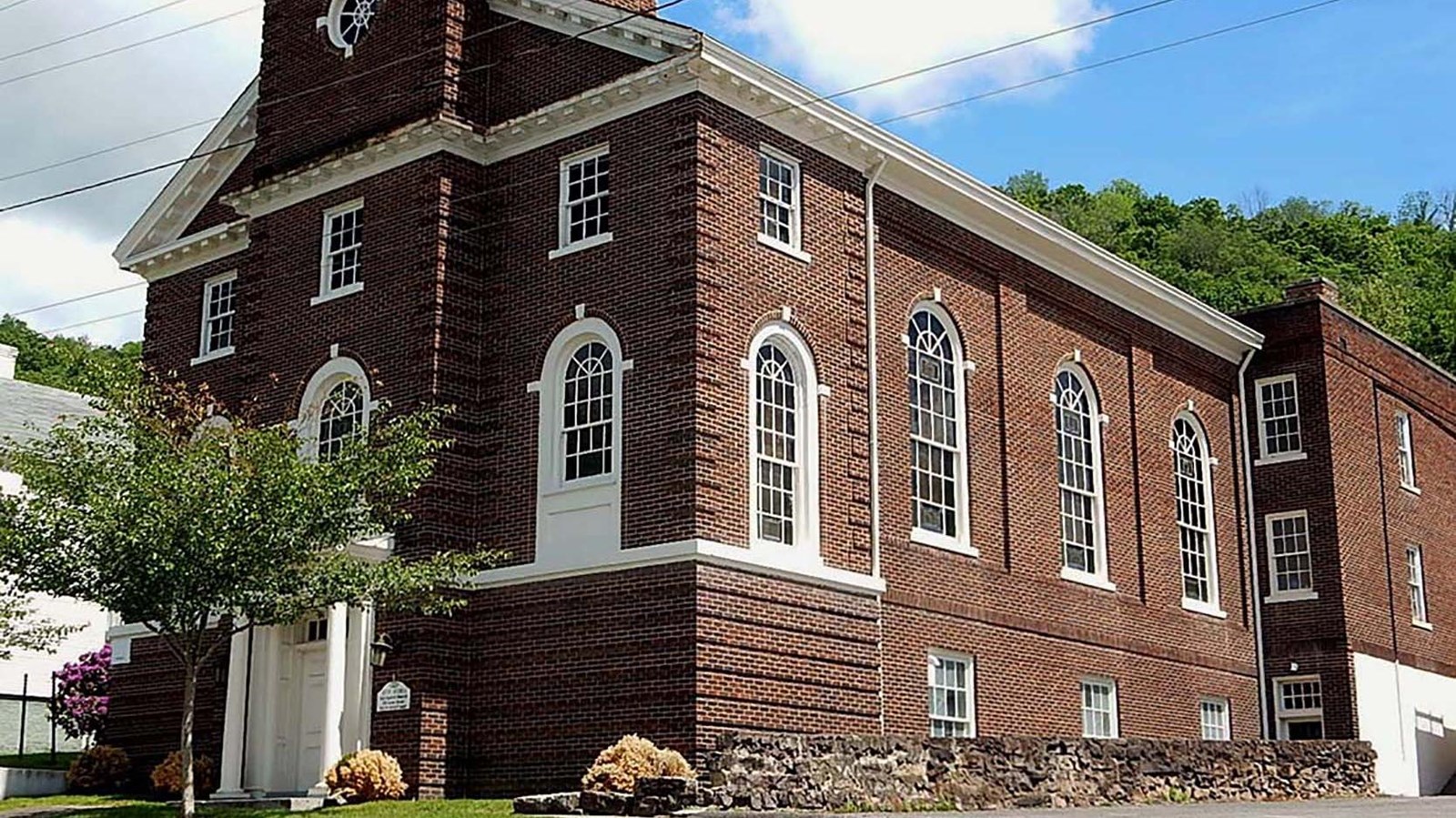
Second Baptist Church was organized in 1878 in the home of Mrs. Henrietta Hostler of Hinton, WV. The Rev. C. H. Payne was its first pastor. The congregation met in member’s homes for several years until they could purchase for thirty-five dollars the property where the church now stands. In 1881, a wood framed building was constructed on the property and the congregation grew rapidly under the leadership of Pastor R. J. Perkins.
Eventually, the original wooden structure was torn down and a larger church erected in its place. By 1925, the Church’s membership had grown so much that a larger church building was needed. In September of 1925, the corner stone was laid for the construction of a new brick sanctuary and education facility. During this time, the congregation held worship in the Odd Fellows Lodge with Rev. J. D. Woodfolk as pastor. At a cost of $45,000.00 the new facility was opened and dedicated for worship on February 13, 1927. This is the church building you see today at 212 James Street in Hinton.
For the full story go to: Segregaton: Hinton, WV
Other nearby places of interest:
Driving Directions
Physical Address: 210 James Street, Hinton, WV 25951
GPS Coordinates: N37.672028 -W80.889716
From Beckley, WV: Take I-64 east to Exit 139 (Hinton/Sandstone, WV). Turn left onto Highway 20 south and travel 10 miles to Hinton, WV. Route 20 will become Summers Street (one-way) through town. Turn left on 2nd Avenue. Go straight through the stop light and turn right on Ballengee Street. Drive around the Courthouse and Memorial Building and turn left on James Street (at the Civil War Monument). Travel one block on James Street. Tour Stop #18 and parking is in front of the red brick church on the right (Second Baptist Church).
Directions to the next Tour Stop
Hinton Depot
Physical Address: 100 2nd Avenue, Hinton, WV 25951
GPS Coordinates: N37.675011 -W80.892184
From Second Baptist Church, continue straight to Third Avenue and travel 3 blocks to Summers Street. Turn left onto Summers Street and travel to Second Avenue. Turn right onto Second Avenue and park along the curb. Tour Stop #19 is down the hill at the Hinton Railroad Depot on the left. There are exhibit panels on both sides of the Depot. STAY OFF THE TRACK.
The requested video is no longer available.