



Last updated: July 13, 2026
Place
Mudroom
NPS
Quick Facts
Amenities
1 listed
Historical/Interpretive Information/Exhibits
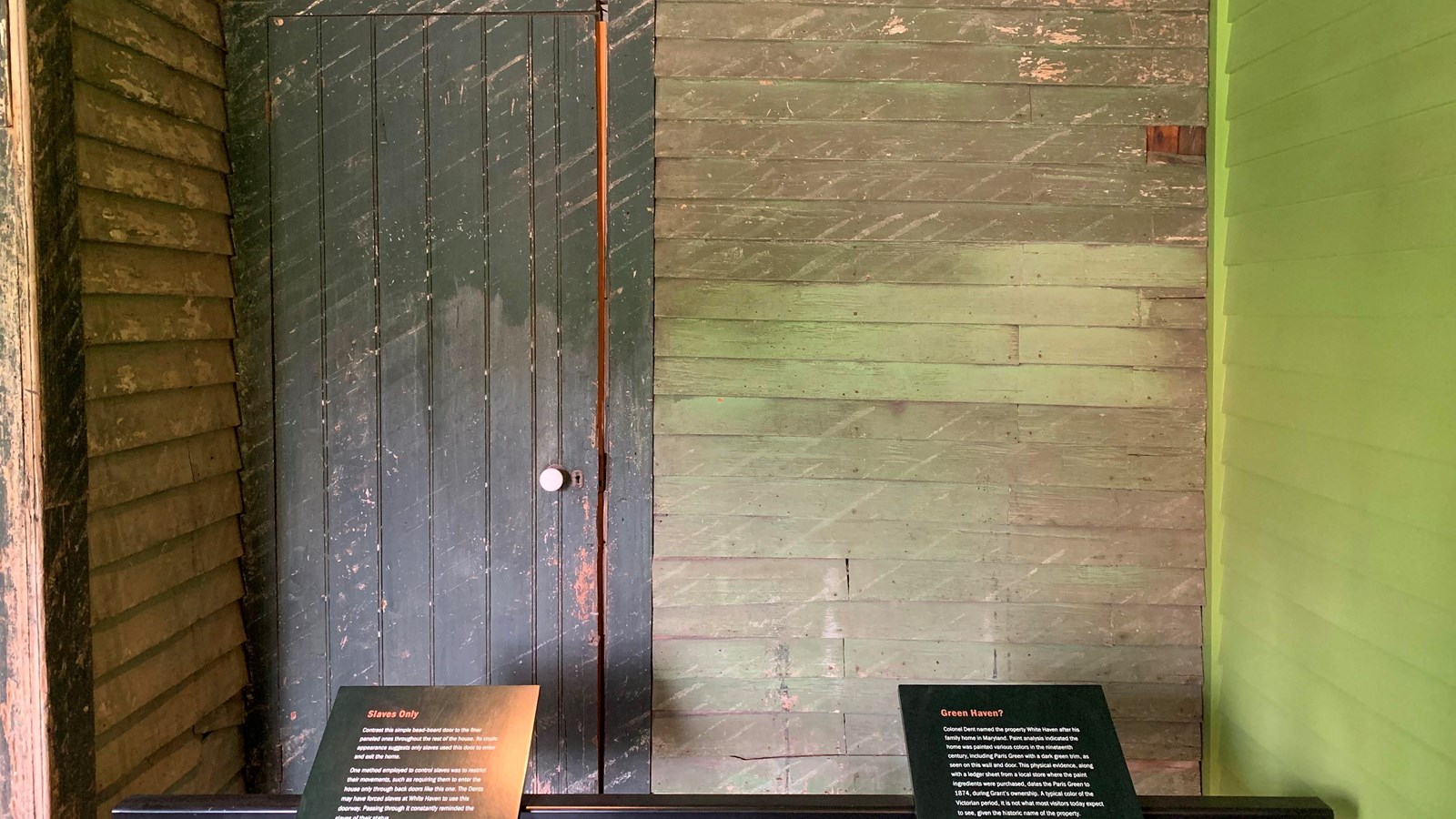
The paint you see on the wall in this room is original! It dates to the 1870s, when the color was in fashion. The specific shade of paint you’re looking at is called Paris Green, and the original paint contained arsenic. A popular rumor is that arsenic was used to kill rats in the sewers under Paris, thus giving the green paint its name. The reason why this paint was able to survive for so long is a coverup—literally! After Grant’s ownership, a family by the name of the Wenzlicks covered up the wall with plaster, and it stayed hidden until restoration efforts in the 1990’s uncovered a portion of the wall. The room you are currently in (which has been constructed and demolished several times before its current form) was rebuilt to preserve the paint.
In the center of this wall is a green door with a porcelain handle on it. Enslaved cooks used this door (in the back of the house) to deliver food to the dining room. This is just one example of how the lives of those enslaved at White Haven were different than the lives of the Dents.
In the center of this wall is a green door with a porcelain handle on it. Enslaved cooks used this door (in the back of the house) to deliver food to the dining room. This is just one example of how the lives of those enslaved at White Haven were different than the lives of the Dents.