


Last updated: August 14, 2026
Place
Harper's Ferry National Historical Park
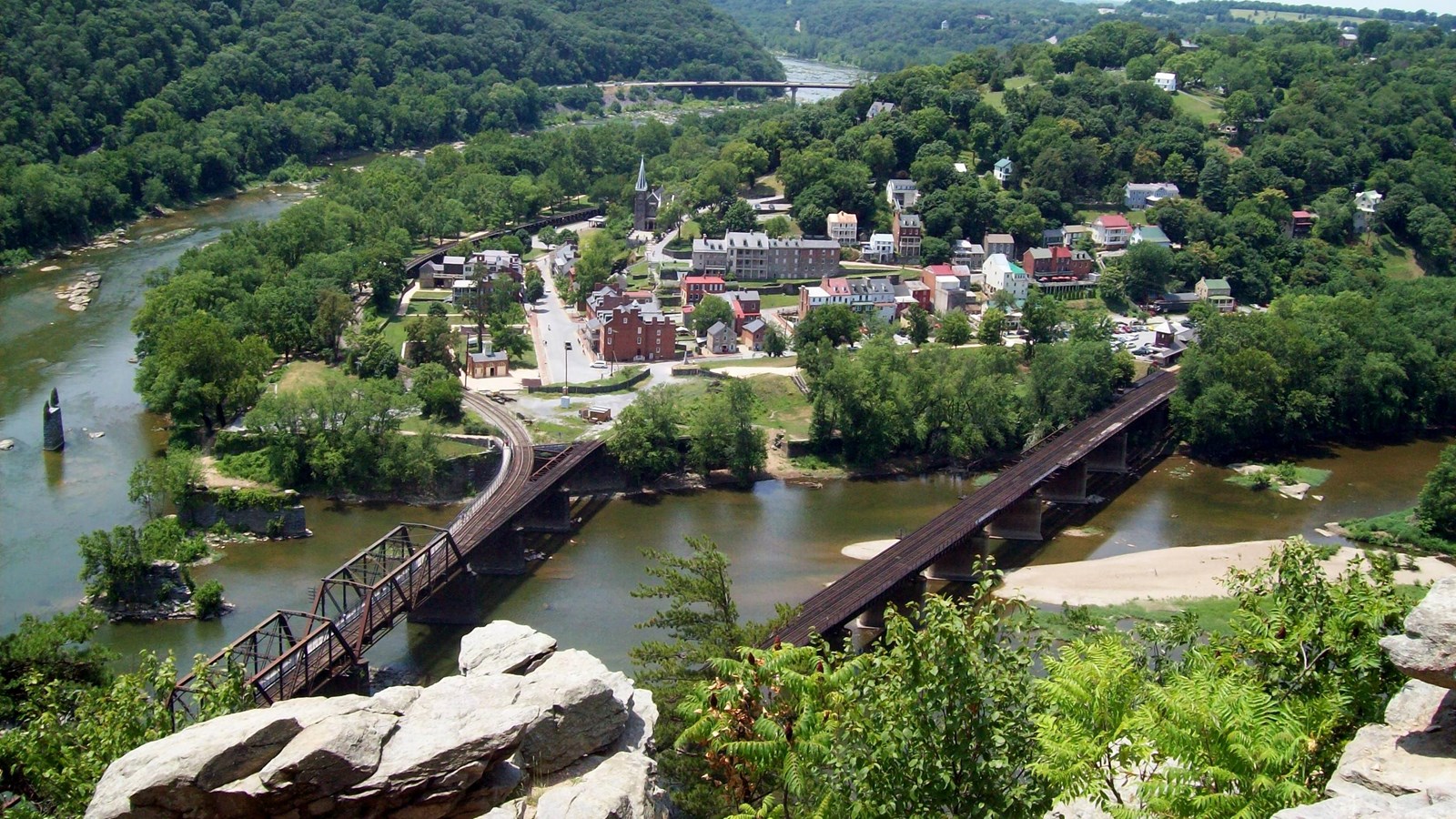
NPS B Guell
Quick Facts
Location:
171 Shoreline Dr, Harpers Ferry, WV
Significance:
Established in 1944, the history of Harpers Ferry is multi-layered, containing a diverse assemblage of cultural landscapes that represent the locations, people, and events associated with the park’s agricultural, military, social, and industrial history.
Amenities
7 listed
Benches/Seating, Historical/Interpretive Information/Exhibits, Information - Maps Available, Information Kiosk/Bulletin Board, Junior Ranger Activity, Junior Ranger Booklet Available, Restroom
Harper's Ferry is a historical community at the confluence of the Potomac and Shenandoah Rivers. Visitors can explore the town of Harper’s Ferry and stand on the Maryland side where four different National Park Unites intersect (Potomac Heritage National Scenic Trail, Harper’s Ferry National Historical Park, Appalachian National Scenic Trail, Chesapeake and Ohio Canal National Historical Park). Established in 1944, the history of Harpers Ferry is multi-layered, containing a diverse assemblage of cultural landscapes that represent the locations, people, and events associated with the park’s agricultural, military, social, and industrial history.
As an early manufacturing and commercial town sited near the Baltimore & Ohio (B&O) Railroad and Chesapeake and Ohio (C&O) Canal, Harpers Ferry grew from a small village to an industrial center shaped by the presence of the U.S. Armory and Arsenal, water-powered pulp mills, and numerous other private industries. In 1859, Harpers Ferry was the site of the raid on the U.S. Armory led by John Brown. During the Civil War Harpers Ferry changed hands eight times, leaving a path of destruction that impacted the town’s infrastructure and economy. After the war, Storer College was established in Harpers Ferry in 1867 to educate formerly enslaved people.
Visitors can stop by the Park Store in the historic town for passport stamps and orientation information. The Bookshop on Shenandoah Street in Harpers Ferry is maintained by the Harpers Ferry Park Association, which is an official National Park Service Cooperating Association. Proceeds from sales and fundraising activities directly benefit the interpretive programs of Harpers Ferry National Historical Park.
As an early manufacturing and commercial town sited near the Baltimore & Ohio (B&O) Railroad and Chesapeake and Ohio (C&O) Canal, Harpers Ferry grew from a small village to an industrial center shaped by the presence of the U.S. Armory and Arsenal, water-powered pulp mills, and numerous other private industries. In 1859, Harpers Ferry was the site of the raid on the U.S. Armory led by John Brown. During the Civil War Harpers Ferry changed hands eight times, leaving a path of destruction that impacted the town’s infrastructure and economy. After the war, Storer College was established in Harpers Ferry in 1867 to educate formerly enslaved people.
Visitors can stop by the Park Store in the historic town for passport stamps and orientation information. The Bookshop on Shenandoah Street in Harpers Ferry is maintained by the Harpers Ferry Park Association, which is an official National Park Service Cooperating Association. Proceeds from sales and fundraising activities directly benefit the interpretive programs of Harpers Ferry National Historical Park.