



NPS It is important to recognize that within wilderness, humans have existed for thousands of years. They inhabited, used, and shaped these lands. The NPS acknowledges that the park is located within the ancestral and traditional homeland of the Hopi Tribe of Arizona; Kaibab Band of Paiute Indians of the Kaibab Indian Reservation, Arizona; Navajo Nation, Arizona, New Mexico, & Utah; Ohkay Owingeh, New Mexico; Paiute Indian Tribe of Utah; Pueblo of Acoma, New Mexico; Pueblo of Isleta, New Mexico; Pueblo of Jemez, New Mexico; Pueblo of Laguna, New Mexico; Pueblo of Nambe, New Mexico; Pueblo of Picuris, New Mexico; Pueblo of Pojoaque, New Mexico; Pueblo of San Felipe, New Mexico; Pueblo of San Ildefonso, New Mexico; Pueblo of Sandia, New Mexico; Pueblo of Santa Ana, New Mexico; Pueblo of Santa Clara, New Mexico; Pueblo of Taos, New Mexico; Pueblo of Tesuque, New Mexico; Pueblo of Zia, New Mexico; San Juan Southern Paiute Tribe of Arizona; Santo Domingo Pueblo; Southern Ute Indian Tribe of the Southern Ute Reservation, Colorado; Ute Indian Tribe of the Uintah & Ouray Reservation, Utah; Ute Mountain Ute Tribe; White Mesa Ute; and Zuni Tribe of the Zuni Reservation, New Mexico. 
NPS Wilderness CharacterNatural Bridges National Monument eligible wilderness preserves wilderness character, a concept unique to federal wilderness. This includes the tangible qualities of natural, untrammeled, undeveloped, outstanding opportunities for solitude and primitive, unconfined recreation, and other features of value (like cultural, historic, geologic, paleontological, and scientific values). These qualities of wilderness character form the foundational setting from which a broad spectrum of wilderness values is derived. This eligible wilderness contains significant geological and ecological features, biological diversity, and outstanding opportunities for unconfined recreation in a unique desert landscape. Cultural resources in the park span at least 13,000 years of human occupation and activity. Historic resources include those left by explorers, ranchers, and the Civilian Conservation Corps. Wilderness BenefitsWilderness offers social, cultural, and ecological benefits rooted in wilderness character preservation. It protects vast ecosystems and habitats, the cultural values of place, opportunities for human-powered access, co-existence with the environment, and more. These benefits can be felt and experienced differently by people; wilderness has the potential to be of lasting benefit to everyone.
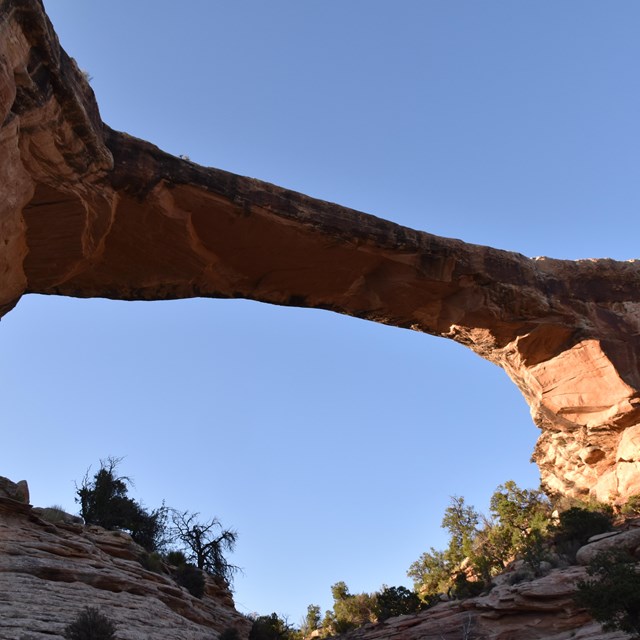
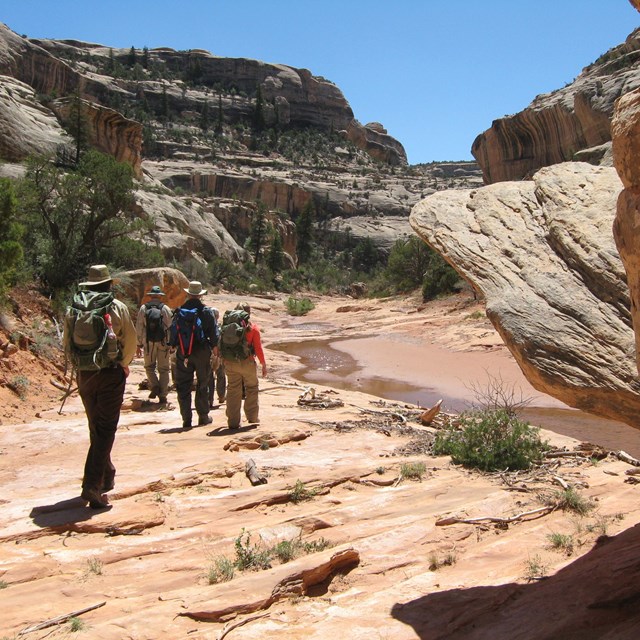
NPS Experiencing WildernessNatural Bridges National Monument is a small, remote park unit in southeast Utah. The closest town is 43 miles away. A dense pinyon-juniper forest covers the landscape of deep sandstone canyons. There are only a few routes in and out of these canyons, most notably the ones to the three natural bridges. Once visitors descend one of the three trails down into the canyon, they enter the eligible wilderness. Some may even hike the entire loop, crossing underneath each of the massive natural sandstone bridges. For those who do immerse themselves in this environment, the wilderness offers opportunities for solitude and self-discovery. For those who do not wish to venture as far, intangible qualities of wilderness—connection, inspiration, relaxation—can be felt gazing down at the bridges, or under impressive night skies at an International Dark Sky Park.
|
Last updated: March 11, 2026