



|
Kaloko-Honokōhau National Historical Park offers a rare opportunity to observe sea turtles resting and feeding along Hawaiʻi’s coastline. However, these animals are protected and should be respected. Stay at least 20 feet away from turtles at all times, and give them the space they need to rest and behave naturally.
Sea Turtles in HawaiʻiSea turtles are large marine reptiles that inhabit tropical and subtropical oceans around the world. They have streamlined shells and powerful flippers that allow them to travel long distances through the ocean. Five species of sea turtles occur in Hawaiʻi, but two are most likely to be seen in the Hawaiian Islands. 
NPS Photo Hawaiian Green Sea Turtle (Honu)The honu is by far the most commonly seen turtle in Hawaiʻi. These turtles are named for the greenish color of their body fat, which comes from their primarily plant-based diet of marine algae and seagrasses. In Kaloko-Honokōhau, honu are often seen grazing on algae in tide pools and reef areas. Many of the turtles seen in the main Hawaiian Islands are juveniles that spend years feeding and growing here before migrating to the Northwestern Hawaiian Islands to reproduce. Unlike many sea turtles elsewhere in the world, Hawaiian green sea turtles regularly bask on beaches, which is why they are sometimes seen resting on the sand or rocks. 
NPS Photo Hawksbill Sea Turtle (Honu ʻEa)The hawksbill sea turtle is much rarer. Hawksbills can be identified by their narrow head and a distinctive beak-like mouth that resembles a bird’s beak. Sightings in the park are uncommon but possible. Cultural SignificanceIn Hawaiian culture, honu are often regarded as ʻaumākua, or ancestral guardians that guide and protect families. The turtle is also a symbol of the deep relationship between people, the land, and the ocean. For generations, turtles were an important part of Hawaiian culture and were harvested under strict traditional regulations that helped maintain healthy populations. Conservation and ThreatsSea turtle populations declined dramatically in the past due to hunting for meat, shells, and eggs. Today they are protected, and conservation efforts have helped their numbers recover. However, sea turtles still face many challenges, including:
Protecting coastal habitats and reducing ocean pollution helps ensure that sea turtles continue to thrive in Hawaiʻi. Help Count Sea Turtles in HawaiʻiVisitors can help scientists track sea turtles by reporting sightings of turtles with numbered tags.You might spot a honu (green sea turtle) resting on the beach with a white number painted on its shell. These numbers are temporarily painted with non-toxic paint by scientists with the National Oceanic and Atmospheric Administration (NOAA). By matching photos of numbered turtles, researchers can learn where they travel, how often they return to certain beaches, and how best to protect them. 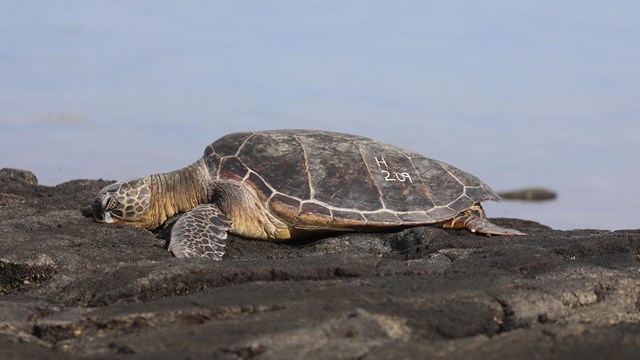
Learn more about Honu Count
Get more information on NOAA's Honu Count, including tips for spotting turtles and what we've learned from the science. 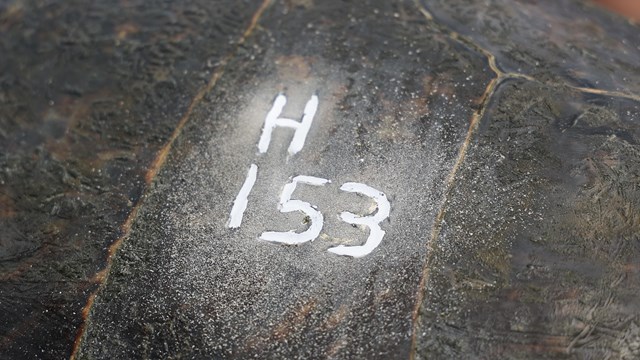
Submit a Sighting
If you've spotted a honu, fill out NOAA's survey here. 
Frequently Asked Questions
NOAA answers some frequently asked questions about green sea turtles in Hawaiʻi. 
NPS Photo Where to See Turtles in the ParkSea turtles are often seen along the coastline near Honokōhau Beach. From the Visitor Center Visitors can walk to the beach from the park Visitor Center. The hike takes about 20 minutes along the coastal trail and passes through lava fields, wetlands, and anchialine pools before reaching the shoreline. From Honokōhau Harbor Another easy and recommendable option is to park at Honokōhau Harbor (one turn south of the park along Queen Kaʻahumanu Highway) and walk a short distance to Honokōhau Beach from the harbor parking area. This route provides quick access to the beach where turtles are frequently seen resting on the sand or swimming nearshore. Turtles may be visible at any time of day, but sightings vary and are never guaranteed. 
NPS Photo Giving Turtles SpaceSea turtles sometimes rest on the beach or rocks. This behavior is called basking. If you see a turtle on the sand, it is usually not injured or stranded. Don't worry! It is simply resting. Disturbing a turtle can cause it to return to the water before it has finished resting. Please help protect these animals:
Sea turtles in Hawaiʻi are protected under the Endangered Species Act, and it is illegal to harm or harass them. |
Last updated: March 12, 2026