



NPS Photo by Houston Invasive SpeciesLearn how non-native plants and animals affect Everglades National Park and what you can do to help protect native ecosystems. Invasive species pose a serious threat to South Florida’s native ecosystems. In the Everglades, invasive fish prey on native species, while invasive plants like melaleuca outcompete and overshadow native vegetation. Far from their original habitats, these invaders often thrive in disturbed areas, where they have a competitive edge. Without natural predators to keep them in check, invasive species spread rapidly—consuming sunlight, water, and nutrients that native plants and animals need to survive. The result is intense competition that weakens the health and diversity of the Everglades ecosystem. To address the issue of invasive plant and animal species, the South Florida Natural Resources Center of Everglades National Park created the following resource management programs and uses them for guidance: Why it matters in the EvergladesInvasive species can have serious and lasting impacts on the park’s natural and cultural resources.  Compete with native plants and animalsThey can outcompete native species for food, space, and resources.  Alter habitatsThey can change natural communities and ecosystem processes.  Reduce biodiversityThey can displace native species and reduce the diversity of life in the Everglades.  Impact restorationThey can hinder restoration efforts and the recovery of native ecosystems.  Costly to manageThey can be expensive and difficult to control once established. Explore invasive species in the parkLearn about some of the non-native plants and animals that threaten the Everglades. 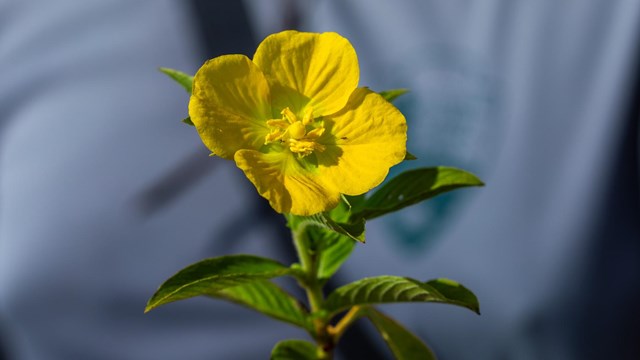
Invasive PlantsNon-native plants can form dense infestations, displace native vegetation, and alter ecosystems. 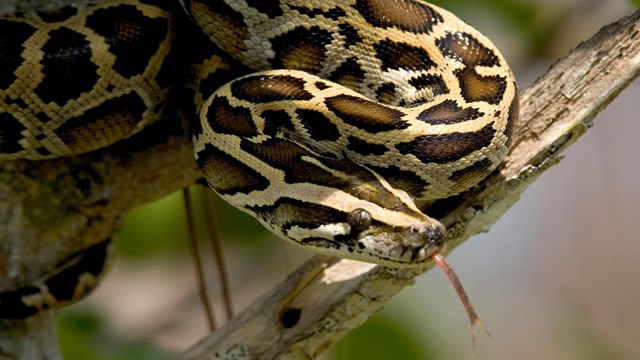
Burmese PythonThese large constrictors prey on native wildlife and can disrupt the natural balance of the Everglades ecosystem. 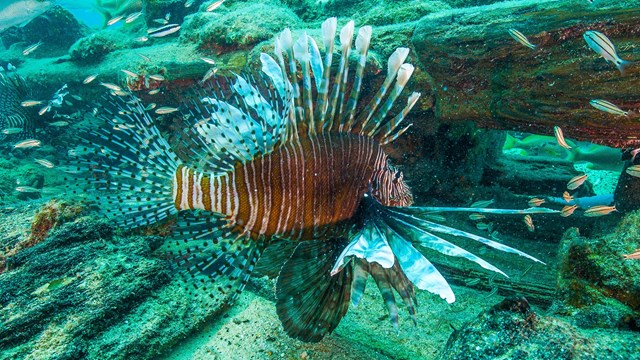
LionfishThis invasive marine fish competes with native species and can impact the health of coral reef communities. 
Invasive InsectsNon-native insects can damage native plants, spread disease, and impact ecosystems. How the park manages invasive speciesEverglades National Park works year-round to prevent, detect, and control invasive species through science, monitoring, partnerships, and targeted management programs.  Invasive Plants ProgramManaging invasive plants protects native habitats, supports restoration, and helps maintain the ecological integrity of the Everglades.  Invasive Animal ProgramManaging invasive animals helps protect native wildlife populations and supports the long-term health of the Everglades. How you can helpYou can play a role in protecting Everglades National Park from invasive species. ✓ Do not release ✓ Clean your gear ✓ Learn and share ✓ Report sightings ✓ Support the mission  Working together for a healthy EvergladesEverglades National Park partners with many organizations to combat invasive species across South Florida. |
 |
|
|
|
|
Last updated: May 20, 2026