Kentucky
Parks
-
National Historical Park
Abraham Lincoln Birthplace
Hodgenville, KY
For over a century people from around the world have come to rural Central Kentucky to honor the humble beginnings of our 16th president, Abraham Lincoln. His early life on Kentucky's frontier shaped his character and prepared him to lead the nation through Civil War. Visit our country's first memorial to Lincoln, built with donations from young and old, and the site of his childhood home.
-
National River & Recreation Area
Big South Fork
Oneida, KY,TN
Encompassing 125,000 acres of the Cumberland Plateau, Big South Fork National River and Recreation Area protects the free-flowing Big South Fork of the Cumberland River and its tributaries. The area boasts miles of scenic gorges and sandstone bluffs, is rich with natural and historic features and has been developed to provide visitors with a wide range of outdoor recreational activities.
-
National Monument
Camp Nelson
KY
The US Army established Camp Nelson as a fortified supply depot in April 1863. Over the next 3 years, the site evolved into a massive recruitment and training center for United States Colored Troops and a refugee camp for their families. It served as a shelter for civilians fleeing war and for enslaved people hoping to secure their freedom and aid in the destruction of slavery.
-
National Historical Park
Cumberland Gap
Middlesboro, KY,TN,VA
Cumberland Gap was the first great gateway to the west. Come follow the path of bison, Native Americans, longhunters, and pioneers. Walk where 300,000 people crossed the Appalachians to settle America. Explore 85 miles of trails and 14,000 acres of wilderness. Stand in 3 states at once. Explore a cave, see Hensley Settlement, or camp under the stars. Come find your connection to Cumberland Gap.
-
National Battlefield
Fort Donelson
Dover, KY,TN
Brigadier General Ulysses S. Grant was becoming quite famous as he wrote these words following the surrender of Confederate Fort Donelson on Sunday, February 16, 1862. The Union victory at Fort Donelson elated the North, and stunned the South. Within days of the surrender, Clarksville and Nashville would fall into Union hands. Grant and his troops had created a pathway to victory for the Union.
-
National Historic Trail
Lewis & Clark
Sixteen States: IA,ID,IL,IN,KS,KY,MO,MT,NE,ND,OH,OR,PA,SD,WA,WV
The Lewis and Clark National Historic Trail winds nearly 4,900 miles through the homelands of more than 60 Tribal nations. It follows the historic outbound and inbound routes of the Lewis and Clark Expedition of 1803-1806 from Pittsburgh, Pennsylvania to the Pacific Ocean. Follow the trail to find the people, places, and stories that make up the complex legacy of the expedition.
-
National Park
Mammoth Cave
Mammoth Cave, KY
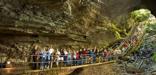
Rolling hills, deep river valleys, and the world's longest known cave system. Mammoth Cave National Park is home to thousands of years of human history and a rich diversity of plant and animal life, earning it the title of UNESCO World Heritage Site and International Biosphere Region.
-
National Monument
Mill Springs Battlefield
KY
The US won a significant victory early in the Civil War at the Battle of Mill Springs. Explore the rolling fields of Kentucky where the battle took place and learn about that state's strategic importance to both sides of the fight.
-
National Historic Trail
Trail Of Tears
AL,AR,GA,IL,KY,MO,NC,OK,TN
Remember and commemorate the survival of the Cherokee people, forcefully removed from their homelands in Georgia, Alabama, and Tennessee to live in Indian Territory, now Oklahoma. They traveled by foot, horse, wagon, or steamboat in 1838-1839.




By The Numbers
- 7 National Parks
- 2,037,341 Visitors to National Parks
- $173,000,000 Economic Benefit from National Park Tourism »
- $74,036,256 of Land & Water Conservation Fund Appropriated for Projects (since 1965) »
- 23 Certified Local Governments »
- 62 Community Conservation & Recreation Projects (since 1987) »
- 2 National Trails Administered by NPS »
- 3,488 National Register of Historic Places Listings »
- 32 National Historic Landmarks »
- 7 National Natural Landmarks »
- 1 World Heritage Site »
- 426 Places Recorded by Heritage Documentation Programs »
- 1,998,747 Objects in National Park Museum Collections »
- 1,641 Archeological Sites in National Parks »
- 5 Teaching with Historic Places Lesson Plans »
- 11 Discover Our Shared Heritage Travel Itineraries »
 Print the summary »
These numbers are just a sample of the National Park Service's work. Figures are for the fiscal year that ended 9/30/2020.