The bald eagle status was downsized June 2007. They are no longer federally threatened. California status changed from endangered to threatened.
Threatened and Endangered Species
The Endangered Species Act of 1973 deems that all federally listed endangered and threatened species be restored to the point where they are again viable, self-sustaining members of their ecological communities.
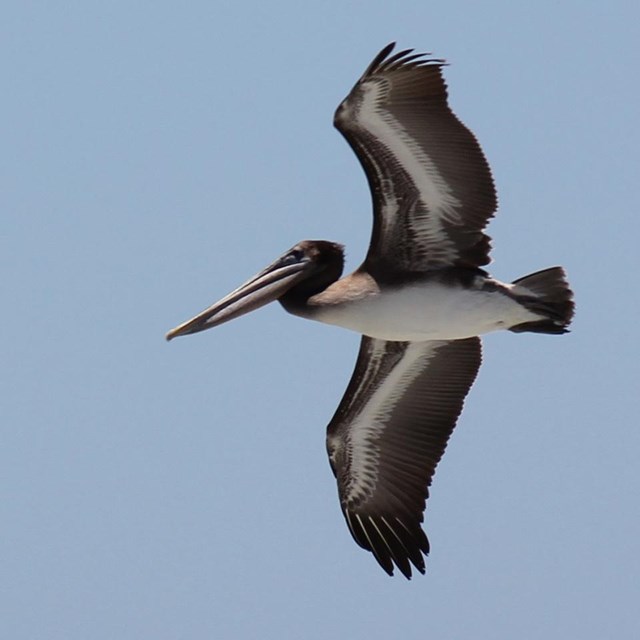
RNSP protect threatened and endangered (T&E) species by minimizing potential disturbance to T&E species caused by visitor use and park management activities. Hunting is not allowed at any time within RNSP. Fishing is allowed in certain designated watercourses within the parks. In 2000, the park closed beaches to off-road vehicle traffic, with the exception of commercial fisherman holding permits, and they are required to drive only on the wave slope. This action helps ensure that habitat for the federally-listed western snowy plover is not degraded and reduces disturbance to the brown pelican and other seabirds and marine mammals. Remote areas of the park, including old-growth forest habitat, are off-limits to motorized vehicles and have controlled visitor use. Park management activities are designed to minimize noise and other forms of disturbance to breeding T&E species by implementing limited operating periods, using hand-tools instead of machinery to conduct park maintenance, and consulting with the US Fish and Wildlife Service and National Marine Fisheries Service on all projects that have the potential to affect federally threatened or endangered wildlife, fish, or plants.
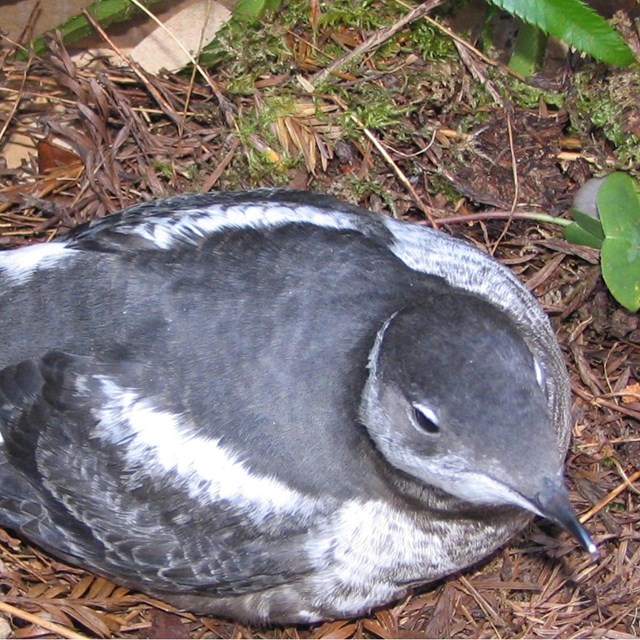
Restoration efforts in the parks have helped T&E fish and wildlife primarily by reducing sedimentation from logging roads through road decommissioning and rehabilitation. Reducing sediment runoff from hillslopes creates better stream substrate for anadromous fish redds (gravel bed for eggs) and fry (young fish). It also helps stabilize streambanks, which allows old-growth redwood trees to remain upright and keeps old-growth habitat intact for species such as the northern spotted owl and marbled murrelet. Exotic plant management (for example, of European beachgrass, yellow bush lupine, and pampas grass) along beaches enhances habitat for wildlife such as the western snowy plover, that nests and roosts in back dunes, and plants such as the endangered beach layia that requires shifting sand dunes to grow.
The parks' fishery and wildlife biologists conduct annual surveys to assess the status and distribution of T&E species in RNSP. Specifically, fishery biologists conduct stream inventories including snorkel surveys, electro-fishing, seining for anadromous fish, and spawning/carcass surveys in Redwood Creek and its tributaries. Wildlife biologists monitor known northern spotted owl territories, bald eagle nests, and peregrine falcon eyries (nesting sites), and conduct monthly western snowy plover surveys on all accessible beaches.
Listed below are some T&E species found at RNSP:
- Bald Eagle (Haliaeetus leucocephalus), threatened-state
- Brown Pelican (Pelecanus occidentalis), endangered-federal & state
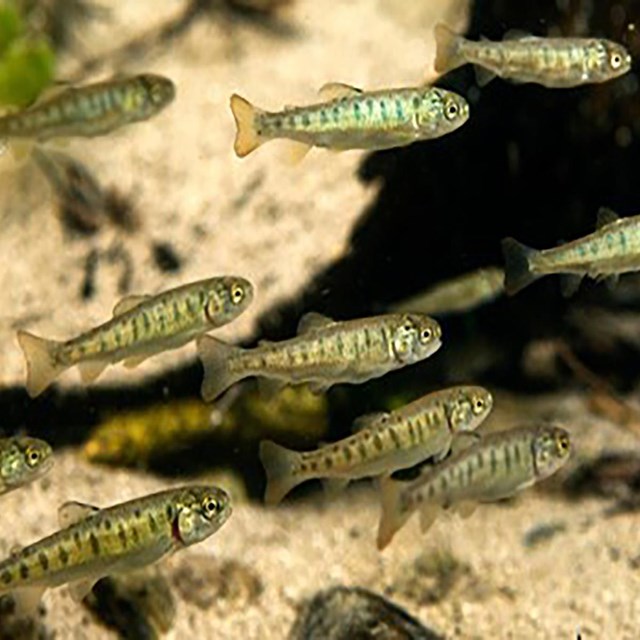
- Chinook Salmon (Oncorhynchus tshawytscha), threatened-federal
- Coho Salmon (Oncorhynchus kisutch), threatened-federal
- Marbled Murrelet (Brachyramphus marmoratus marmoratus), threatened-federal; endangered-state
- Northern Spotted Owl (strix occidentalis caurina), threatened-federal
- Steelhead Trout (Oncorhynchus mykiss), threatened-federal
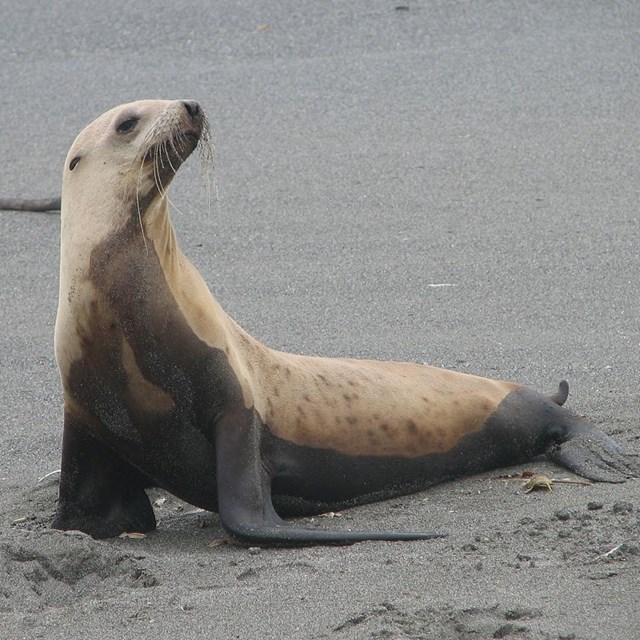
- Steller's Sea Lion (Eumatopias jubatus), threatened-federal
- Tidewater Goby (Eucyclogobius newberryi), endangered-federal
- Western Snowy Plover (Charadrius alexandrinus nivosus), threatened-federal
For information on California T&E species go to
Top of Page