



Last updated: June 18, 2026
Place
Village and River Linked Panel
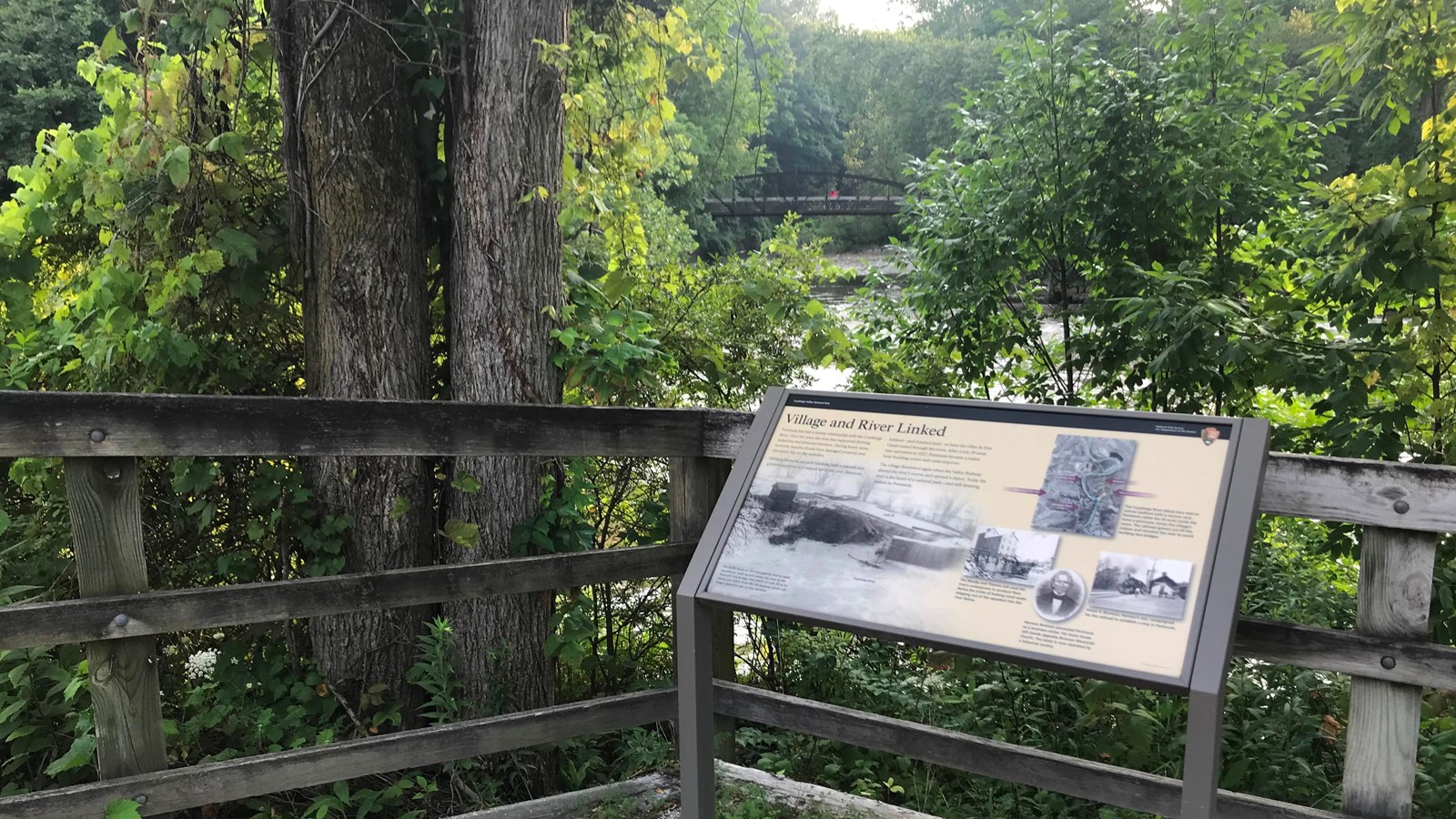
NPS/Arrye Rosser
Quick Facts
Location:
Park at Lock 29 Trailhead, 1648 Mill Street, Peninsula, Ohio 44264. Walk past the the restrooms to the overlook.
Significance:
This sharp bend in the Cuyahoga River is where industrial, transportation, and recreational history come together to weave the story of Peninsula, Ohio.
Designation:
Peninsula Village Historic District; Ohio to Erie Trail; Ohio & Erie Canalway National Heritage Area; Ohio and Erie Canal District; National American Heritage River, Valley Railway Historic District
Amenities
12 listed
Audio Description, Baby Changing Station, Benches/Seating, Historical/Interpretive Information/Exhibits, Information Kiosk/Bulletin Board, Restroom, Restroom - Accessible, Scenic View/Photo Spot, Toilet - Flush, Water - Bottle-Filling Station, Water - Drinking/Potable, Wheelchair Accessible
The story of Peninsula is written by water—water which has been both friend and foe. An early settler, Hermon Bronson, used the natural fall of the river at this sharp bend to power a grist and sawmill. When the Ohio & Erie Canal was planned, Bronson offered land to the state for free to have the waterway come through the village. At the time, the river formed a nearby oxbow that had a narrow neck, giving Peninsula its name. After the Ohio & Erie opened in 1827, Peninsula became a booming canal town.
The arrival of Valley Railway brought changes. The company didn’t want to build multiple bridges in the village. They closed off the oxbow, giving the river a shorter course.
But the river can be a challenge, especially during periods of high rain. The most dramatic was the Great Flood of 1913 which effectively ended the Canal Era.
Today the river is the heart of a national park—and still drawing visitors to Peninsula. No longer passing through on canal boats, people come to explore the historic village, hike or bike the Towpath Trail, and paddle the Cuyahoga River Water Trail. Cuyahoga Valley Scenic Railroad provides excursion service to Rockside or Akron Northside stations.
The arrival of Valley Railway brought changes. The company didn’t want to build multiple bridges in the village. They closed off the oxbow, giving the river a shorter course.
But the river can be a challenge, especially during periods of high rain. The most dramatic was the Great Flood of 1913 which effectively ended the Canal Era.
Today the river is the heart of a national park—and still drawing visitors to Peninsula. No longer passing through on canal boats, people come to explore the historic village, hike or bike the Towpath Trail, and paddle the Cuyahoga River Water Trail. Cuyahoga Valley Scenic Railroad provides excursion service to Rockside or Akron Northside stations.