Skip to SearchSkip to NavigationSkip to BodySkip to Footer
National Park Service LogoU.S. Department of the InteriorNational Park ServiceNational Park Service
National Park Service:  U.S. Department of the InteriorNational Park Service Arrowhead
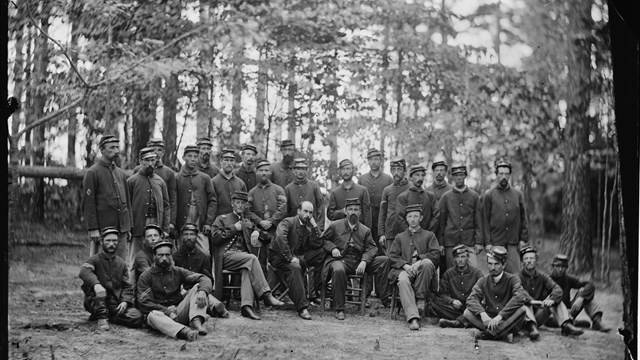
Petersburg National BattlefieldUnion soldiers sitting in camp
view map
text size:largestlargernormal
printer friendly

A Mere Question of Time

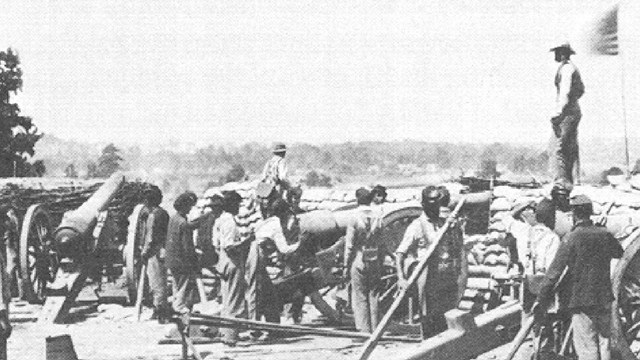
“Dear Mother, we remained in the broiling sun in little pits the size of a common grave though not half so well furnished. There we lay and everytime a man Show his head Zip would come a minnie.” This pressure was central to a soldier's experience in a 292 day siege. Here, Union forces slowly cut off Petersburg from the world and brought the fall of the Confederacy.
 
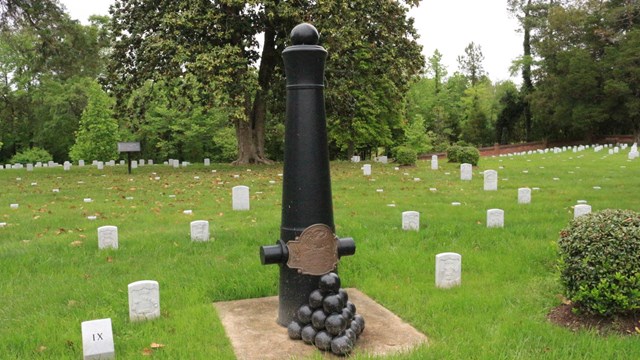
Seacoast mortar known as the Dictator.

History

Explore the people and events that shaped the siege which led to the fall of the capital of the Confederacy and the surrender of Gen. Robert E. Lee's army.

more . .

 
Park ranger talking to a group of children.

Educators

Petersburg National Battlefield provides curriculum-based programming that gives students an on-hands opportunity to learn, among other topics, about life in the trenches, Civil War medicine, and civilians on the battlefields. All of this with a unique Siege of Petersburg perspective.

more . .

 
Civil War Coehorn mortar

Kids' Pages

Do you have what it takes to be a web ranger? Do you know what a mortar is or what it looks like? What would it be like to a soldier here at the siege? Find out here!

more . .


Write to

Petersburg National Battlefield
5001 Siege Road
Petersburg, Virginia 23803

Phone

Visitor Information
(804) 732-3531 ext. 200

Fax

(804) 732-0835

Climate

Summer: humid and hot. Highs in the mid 90s. Winter: mild and cool. Highs in mid 40s. Occasional snow.
Skip to SearchSkip to NavigationSkip to BodySkip to Footer
Richard Eppes, 1890s  

Did You Know?
Richard Eppes, owner of Appomattox Plantation, which is currently part of the Grant's HQ Unit of Petersburg National Battlefield, noted that it took 8,320 pounds of bacon each year to feed his 127 enslaved people in 1860.

Last Updated: September 03, 2009 at 12:58 EST