National Park Service LogoU.S. Department of the InteriorNational Park ServiceNational Park Service
National Park Service:  U.S. Department of the InteriorNational Park Service Arrowhead
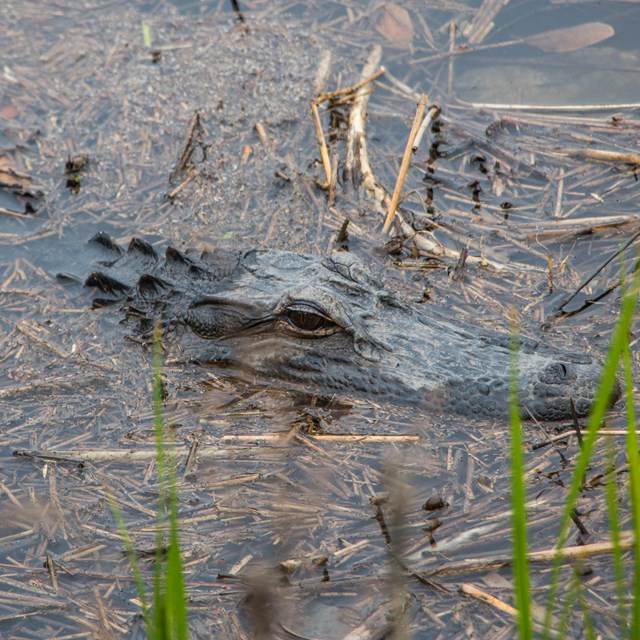
Gulf Islands National SeashoreThe eyes of a red-eared slider peer out.
view map
text size:largestlargernormal
printer friendly
Gulf Islands National Seashore
Reptiles
 
 
Gopher tortoise walking through sand and vegetation at Naval Live Oaks, Florida District

Gopher tortoise at Naval Live Oaks, Florida District.

Reptiles mainly live in the tropics and subtropics although they inhabit every continent except Antarctica. Reptiles are referred to as “cold-blooded” because they do not generate enough heat within their bodies to maintain a constant body temperature (one exception is the Leatherback Sea Turtle). They rely on gathering and losing heat from the environment to regulate their internal temperature.

 
Orange, yellow, and brown corn snake curled up and resting on a dock

Corn snake resting on a dock, Mississippi District.

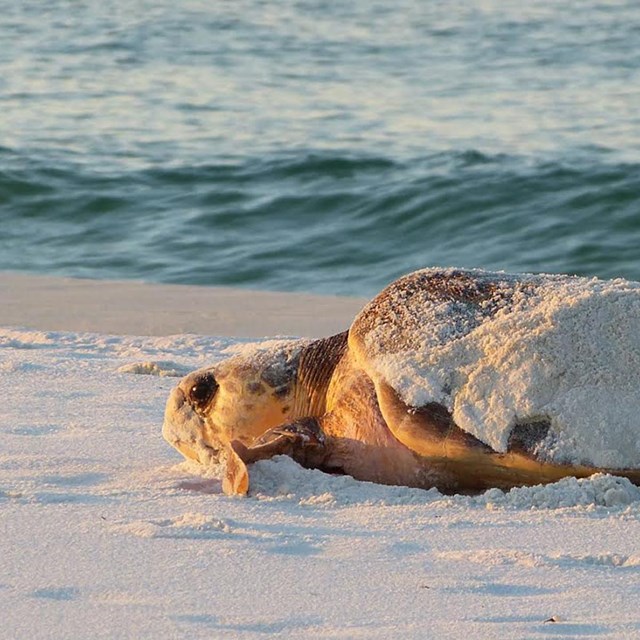
Forty-seven species of reptiles have been identified at Gulf Islands National Seashore, including several state and federally listed species like the gopher tortoise and loggerhead sea turtle.

 
Gulf Coast Salt Marsh Snake curled up in vegetation.

Gulf Coast Salt Marsh snake, Mississippi District.

The highest species richness of reptiles can be found in the Naval Live Oaks area of Gulf Islands National Seashore but different species of snakes, turtles, and lizards are found in every area of the park.
 
Biologist holding a tiny black mud turtle
Learn about Mississippi's reptiles
and print out a reptile checklist
more...
Six lined racerunner with a bright blue head and stomach
Learn about Florida's fabulous reptiles
and print out a guide to Florida's snakes
more...
Two Atlantic Bottlenose Dolphins ride the bow wave of the wooden passenger ferry.  

Did You Know?
Did you know that two thirds of Gulf Islands National Seashore is under water? The largest, most common, mammal in this underwater realm is the Atlantic bottlenose dolphin.

Last Updated: September 24, 2007 at 17:49 EST