



A May 25-29 Climb of Ham and Eggs
After nearly 8 weeks of low pressure, the Denali Climbing Rangers had a successful climbing patrol from the Root Canal Glacier on the Moose’s Tooth. Each year, we try to insert rangers into popular areas around the Alaska Range for climbing, skiing & packrafting patrols. This allows us the opportunity for visitor contacts, terrain familiarity and a general assessment of both route conditions and high use camping areas. For this patrol, VIP Lexie Hunsaker and I hoped to climb Ham & Eggs (V, 5.9, AI 4). Lexie is a fellow climbing ranger from Grand Teton National Park.
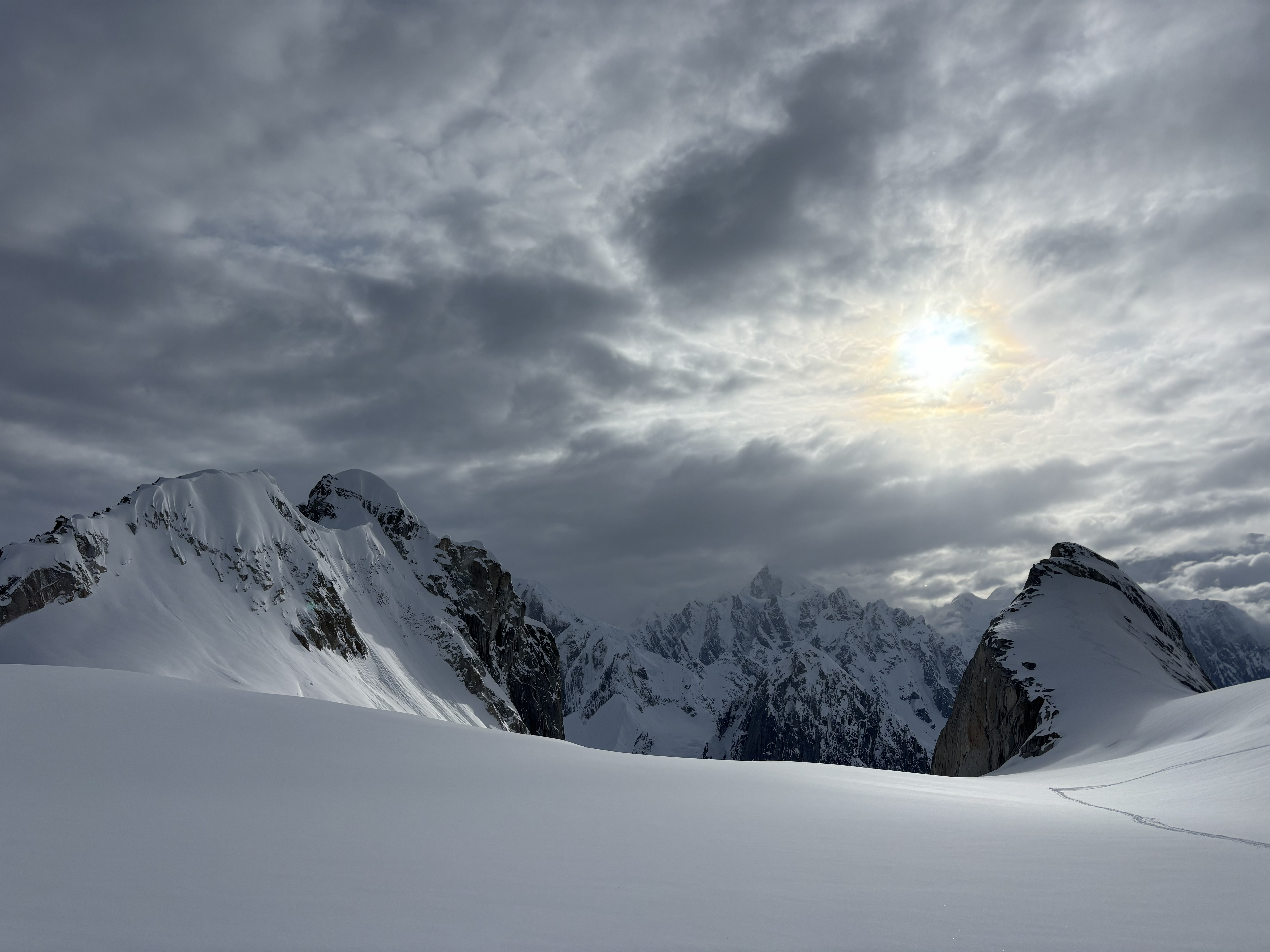
Evening light over the Wisdom Tooth and Mount Huntington. Photo: S. Barrier
With such high precipitation totals and cooler than average May temperatures, there was a bit of uncertainty about which area or routes might provide both safe and favorable climbing conditions. Although the routes above the Root Canal Glacier are more commonly climbed in April and early May, we hoped stormy weather might have kept things in condition. Since the late ‘90’s, when air taxis began inserting climbers near the base of the route, Ham and Eggs has been considered a “trade route.” Traffic on the route seems to have continuously increased over the past decade.
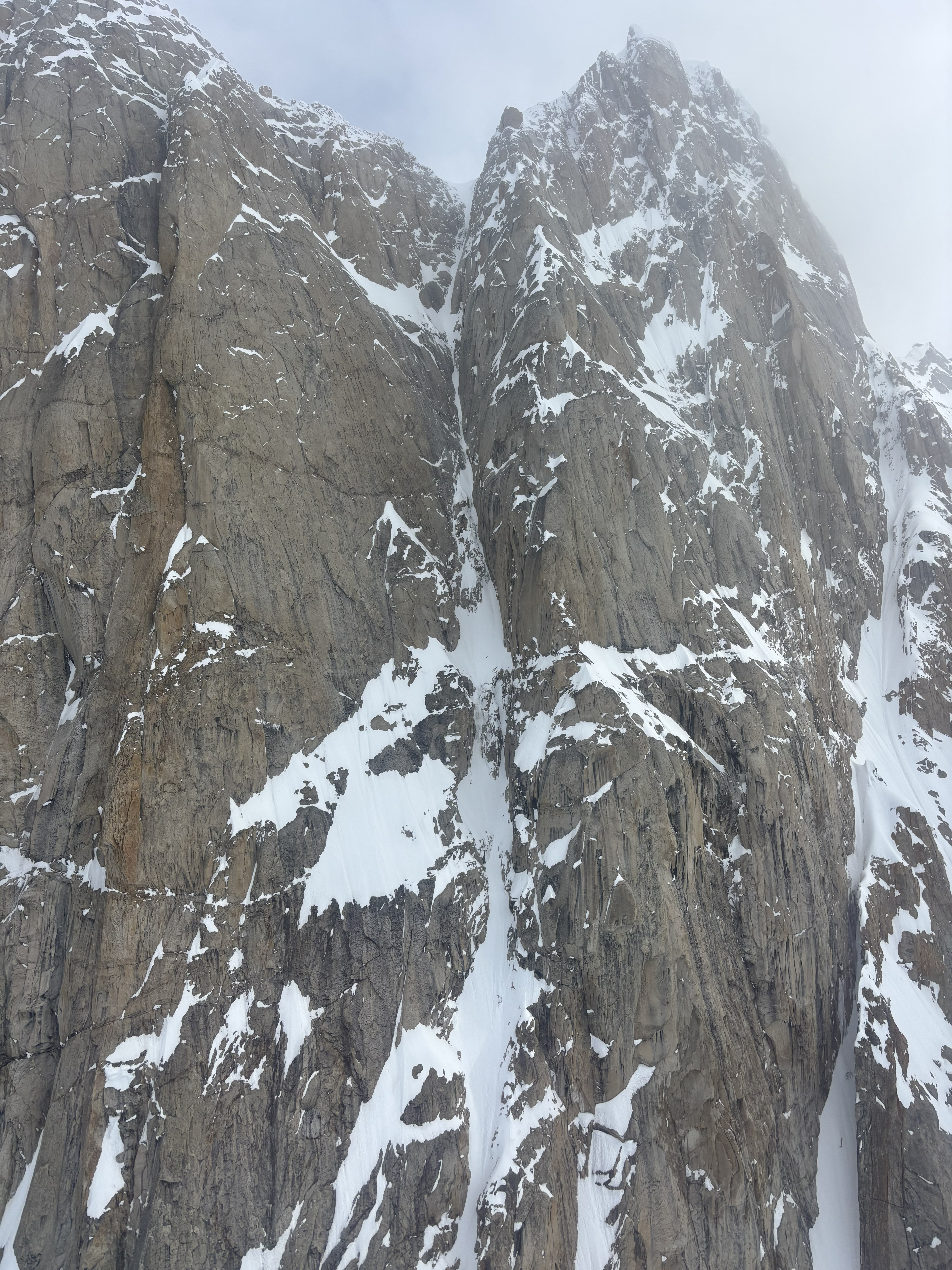
Conditions of the upper pitches of Ham & Eggs. Photo: S. Barrier
After assisting with base camp helicopter operations on the 25th, we were inserted late in the afternoon, about 20 minutes before incoming low pressure whited out the glacier. Over the next 16 hours, 10 to 20 centimeters of snow fell with whiteout conditions and moderate wind. As the storm cleared, it was obvious that the slopes were going to need 24 to 48 hours of time to settle out. With high uncertainty around the weather forecast and the possibility of additional new snow, we explored the mellower areas of the Root Canal and watched as the mountains shed the recent snowfall. Late in the evening on the 27th, after the slopes had begun to cool off and refreeze, Lexie and I set a boot pack up the apron and onto the start of the pitched climbing.
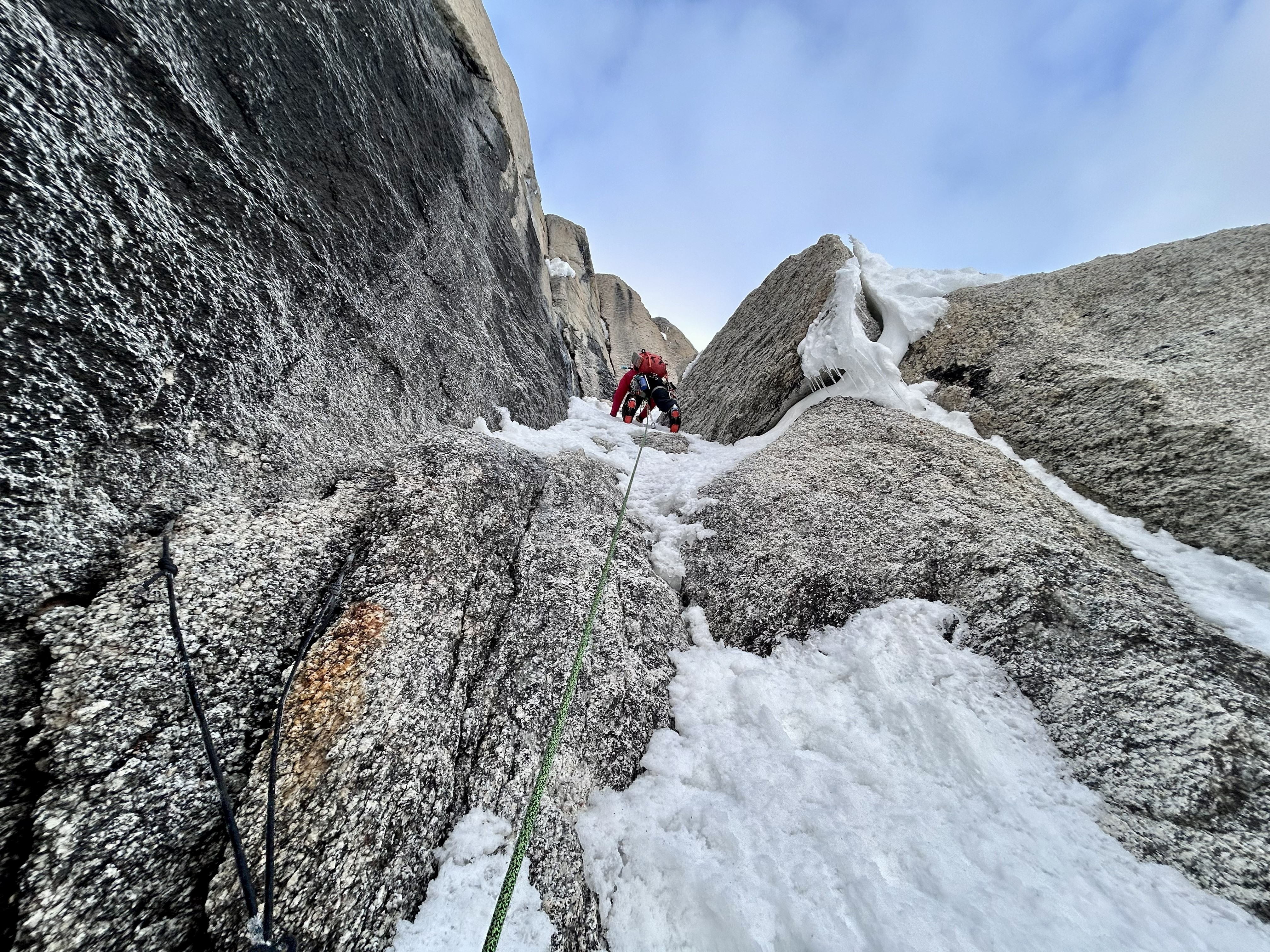
Mixed terrain at the start of the 1st pitch. Photo: L. Hunsaker
Surprisingly, two days of relatively clear weather, high solar input and strong diurnal patterns helped to stabilize and consolidate conditions on the route. At 0400, we departed camp and headed up the apron to the start of the route. For much of the climb, boot packing was quite manageable, with only 10 to 15 centimeters of boot penetration and supportable solar crusts underneath. Although sections of ice were thin and or rotten at times, most of the technical terrain consisted of “hero” snice or quality water ice that was protectable but needed to be initially cleared of snow plastered to the surface.
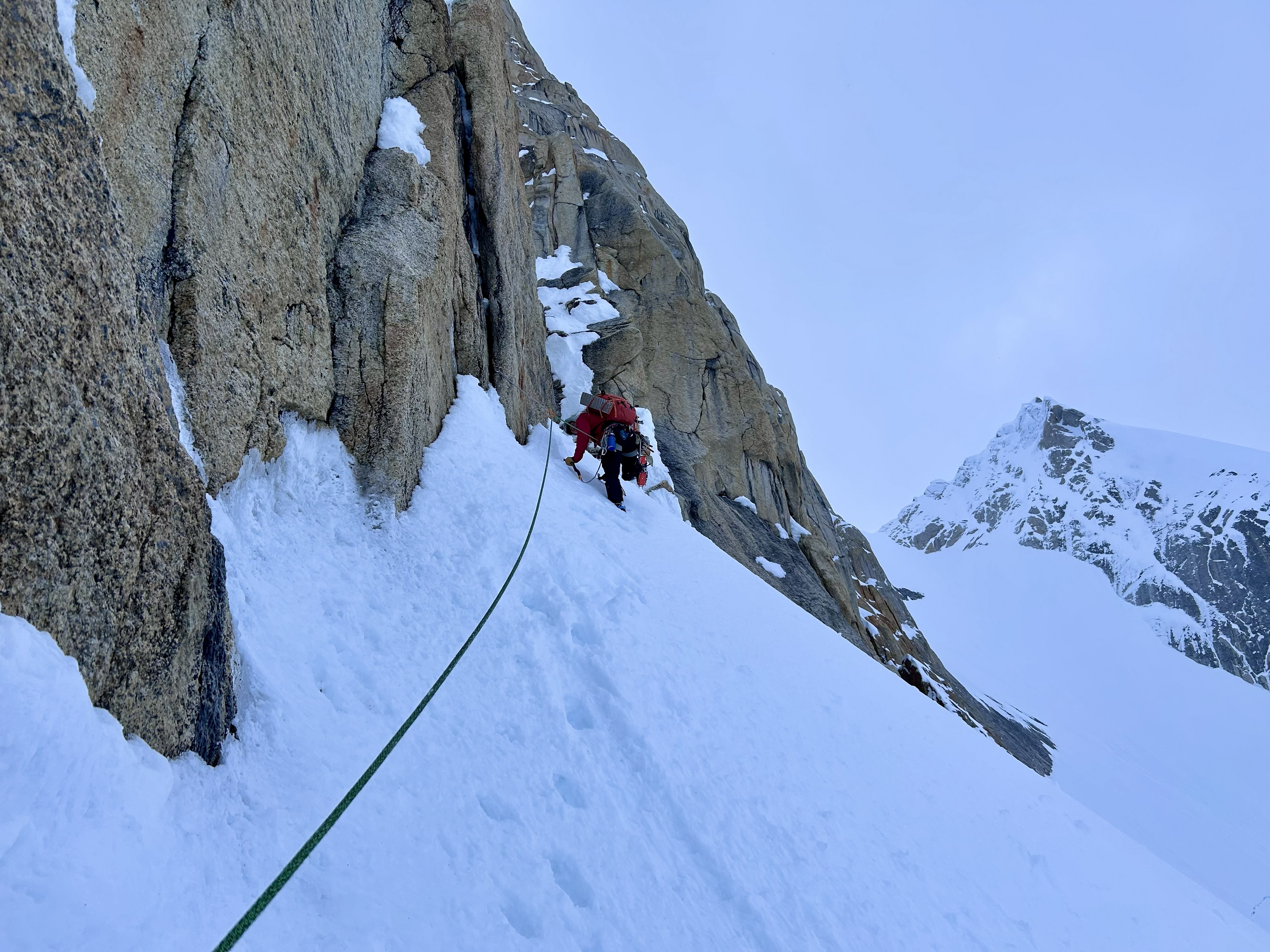
The snow traverse at the start of the 2nd pitch. Well protected by a #2, the first WI pitch is just around the corner. Photo: L. Hunsaker
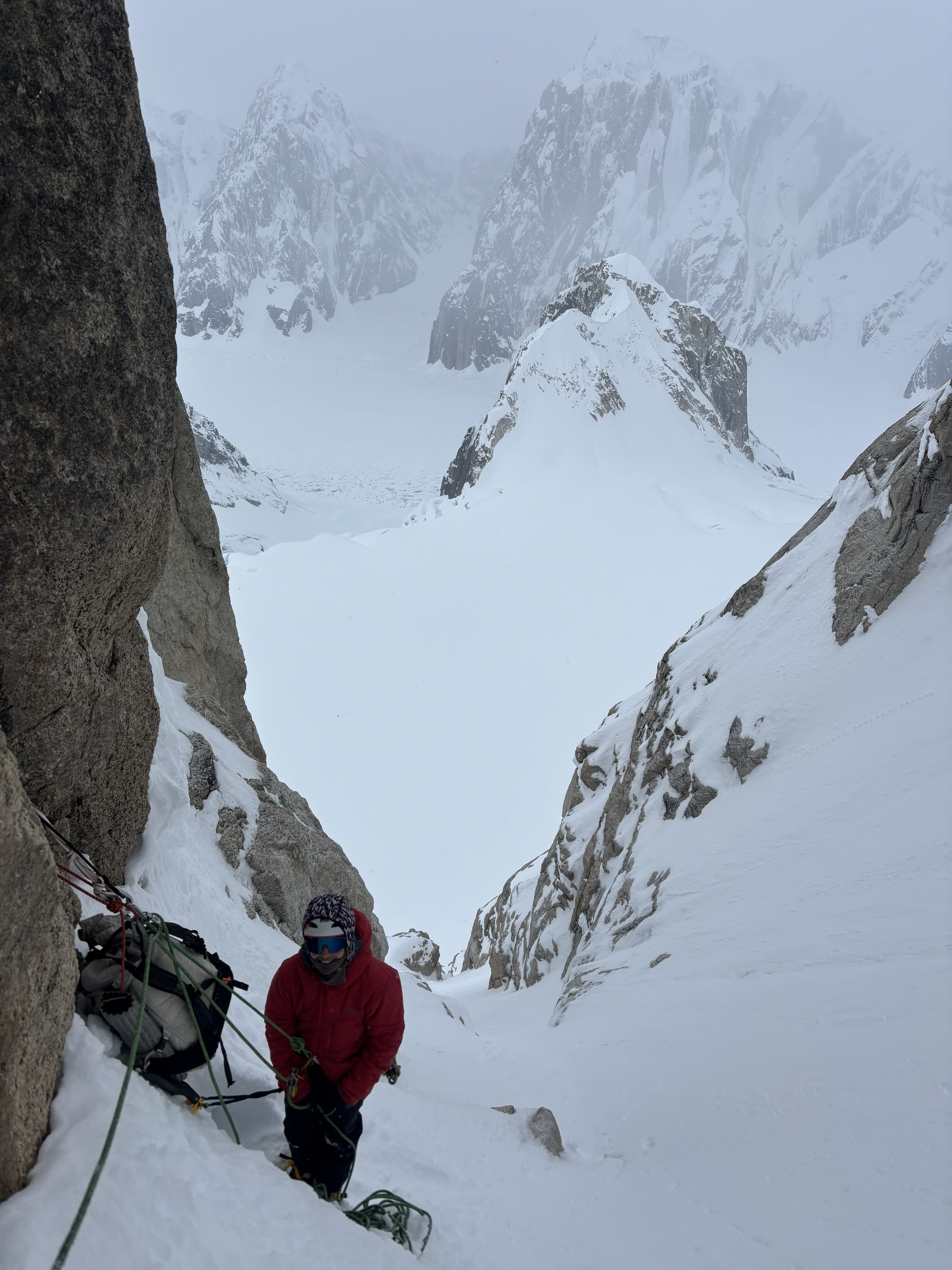
One of the many fixed belay/rappel anchors along the route. This anchor was at the fork for the WI4 or 5.9 rock pitches. Photo: S. Barrier
Although the WI4 crux pitch appeared to be fat, it was covered in a fair bit of snow and the idea of climbing some mixed rock was enticing. The 5.9 pitch is relatively short but took some tenuous leading as the majority of rock was also covered in snow and all the cracks and features were filled with ice. Hindsight being 20:20, the WI4 likely would have been a much simpler alternative.
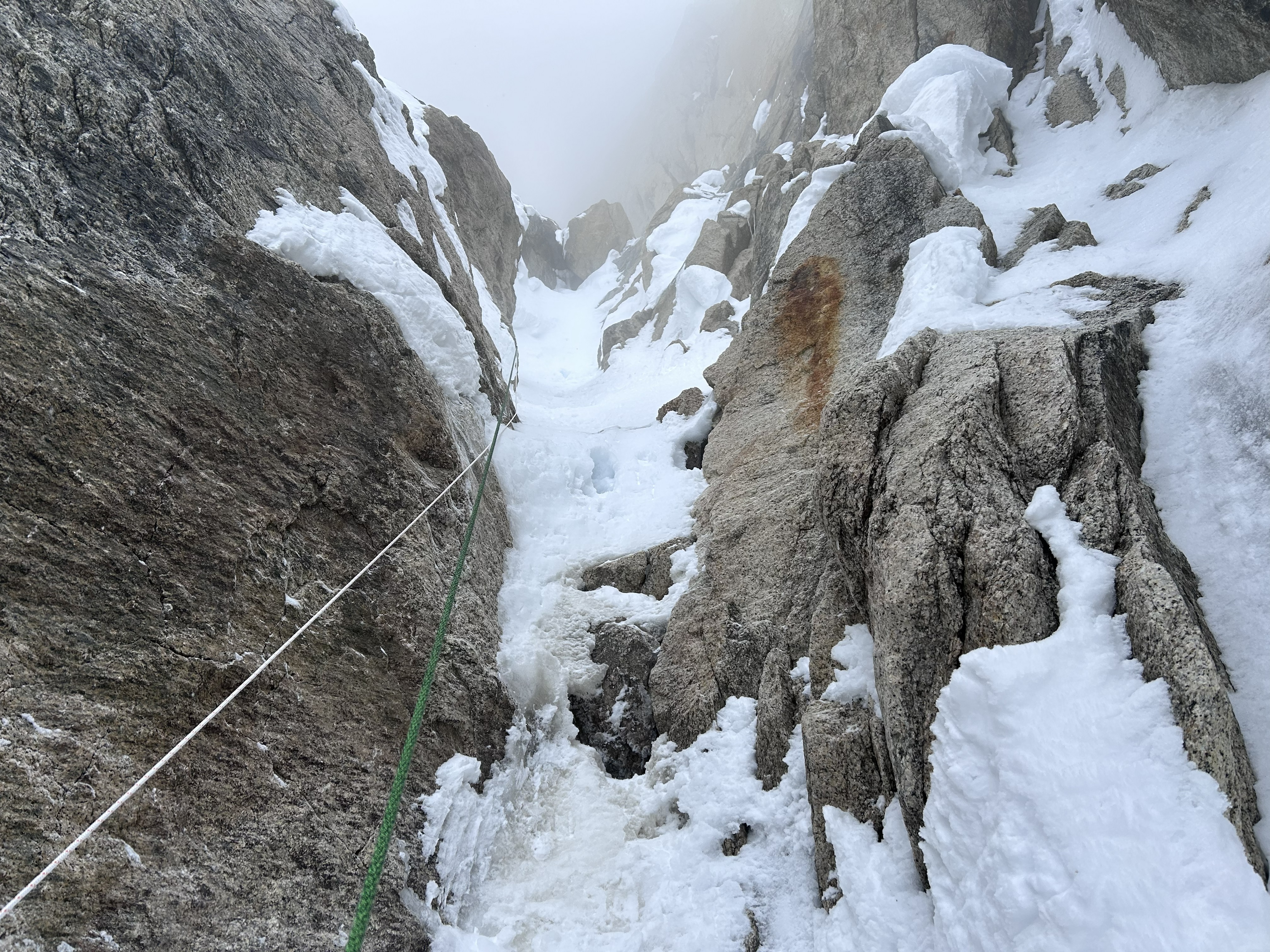
A shot of the start to the 5.9 rock pitch. The pitch works up the short ice step, up the snow and heads to the right, through mixed terrain. Photo: S. Barrier
Past the crux, a long snow ramp leads into the upper choke and eventually 4 pitches of super fun ice, snice and snow. Each ice step was a mix of thin but quality ice down low with thinning ice towards the top of each flow and secure snice above. This section of the route was easily the highlight with fun movement, secure pick swings and a unique feel climbing the thin seem between the tight walls. On the flip side, you really feel the exposure of the terrain as all of the climbing and belaying is directly in the firing line of any debris or falling ice from the leader.
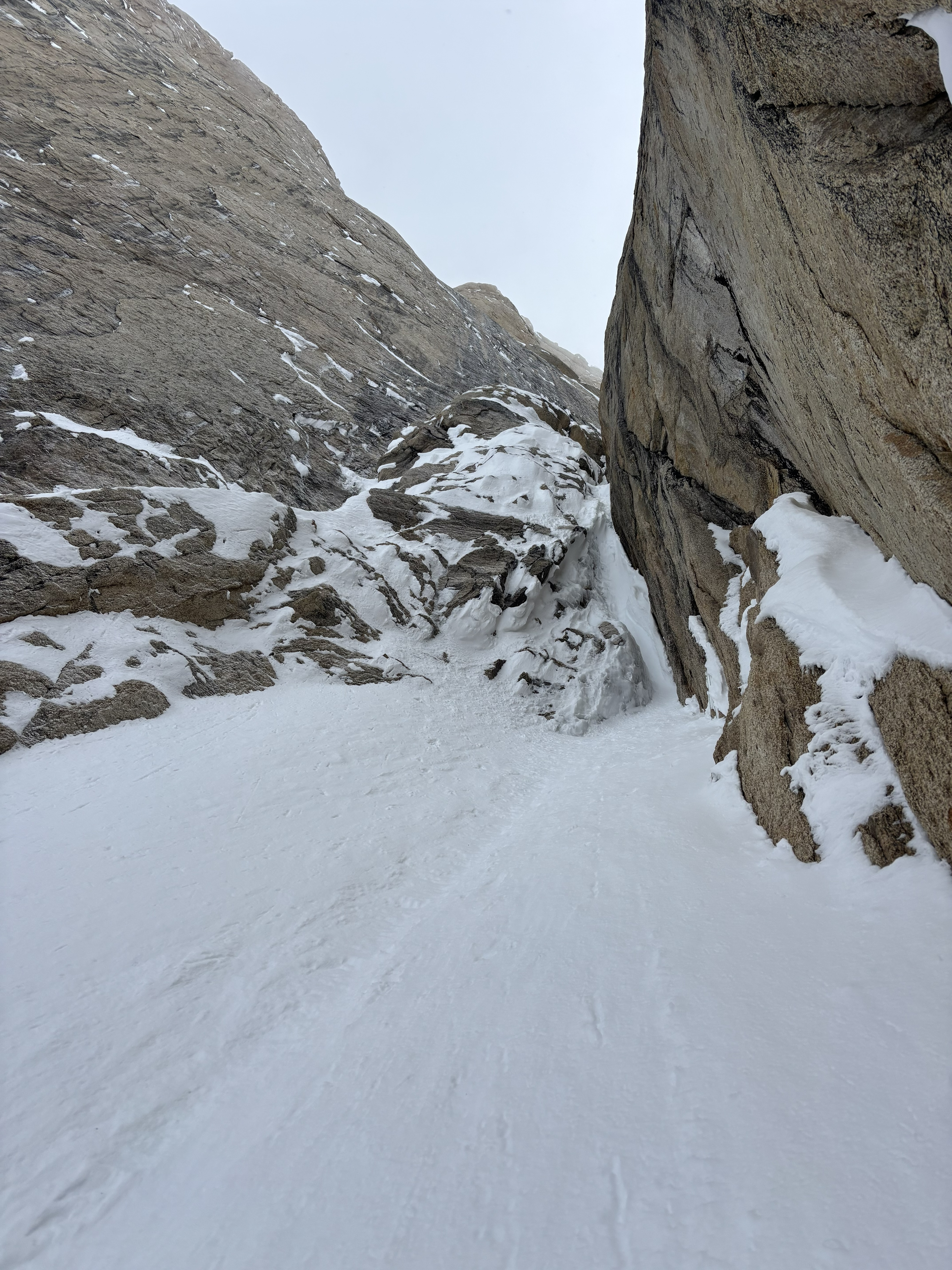
Looking up at the 1st pitch of the upper choke. This was the tallest of the ice steps and had some really fun movement through the chimney and a step-across, around a bulge. Photo: S. Barrier
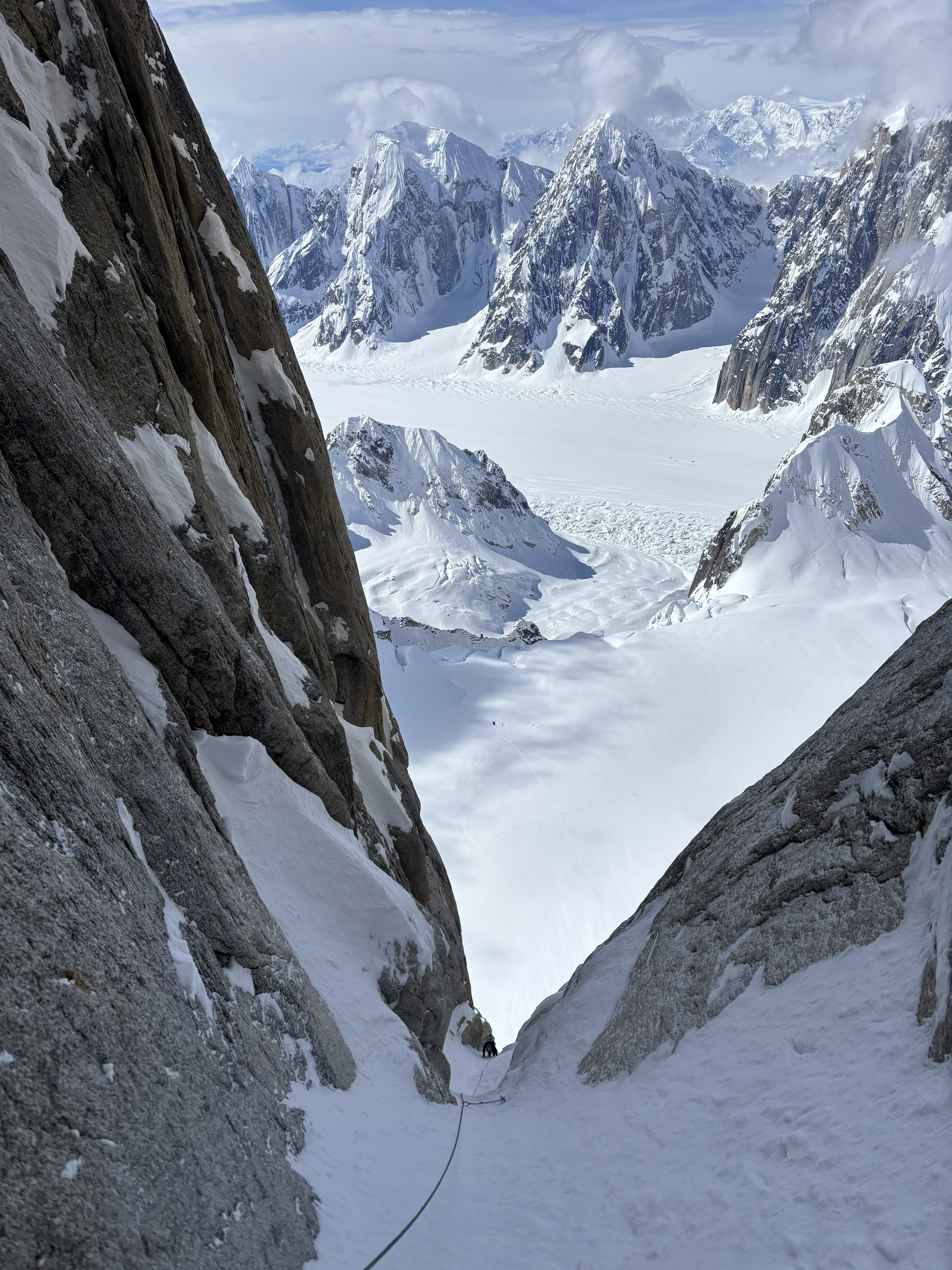
Looking down the choke from the top of the 9th pitch. Photo: S. Barrier
Although the day was quite cold and clear up to this point, afternoon warming, diminished visibility and deep, cold snow on the final moderate snow pitches led the team to spin and they began rappelling from the top of the technical climbing (pitch 12). It took 8.5 hours to get to this point.
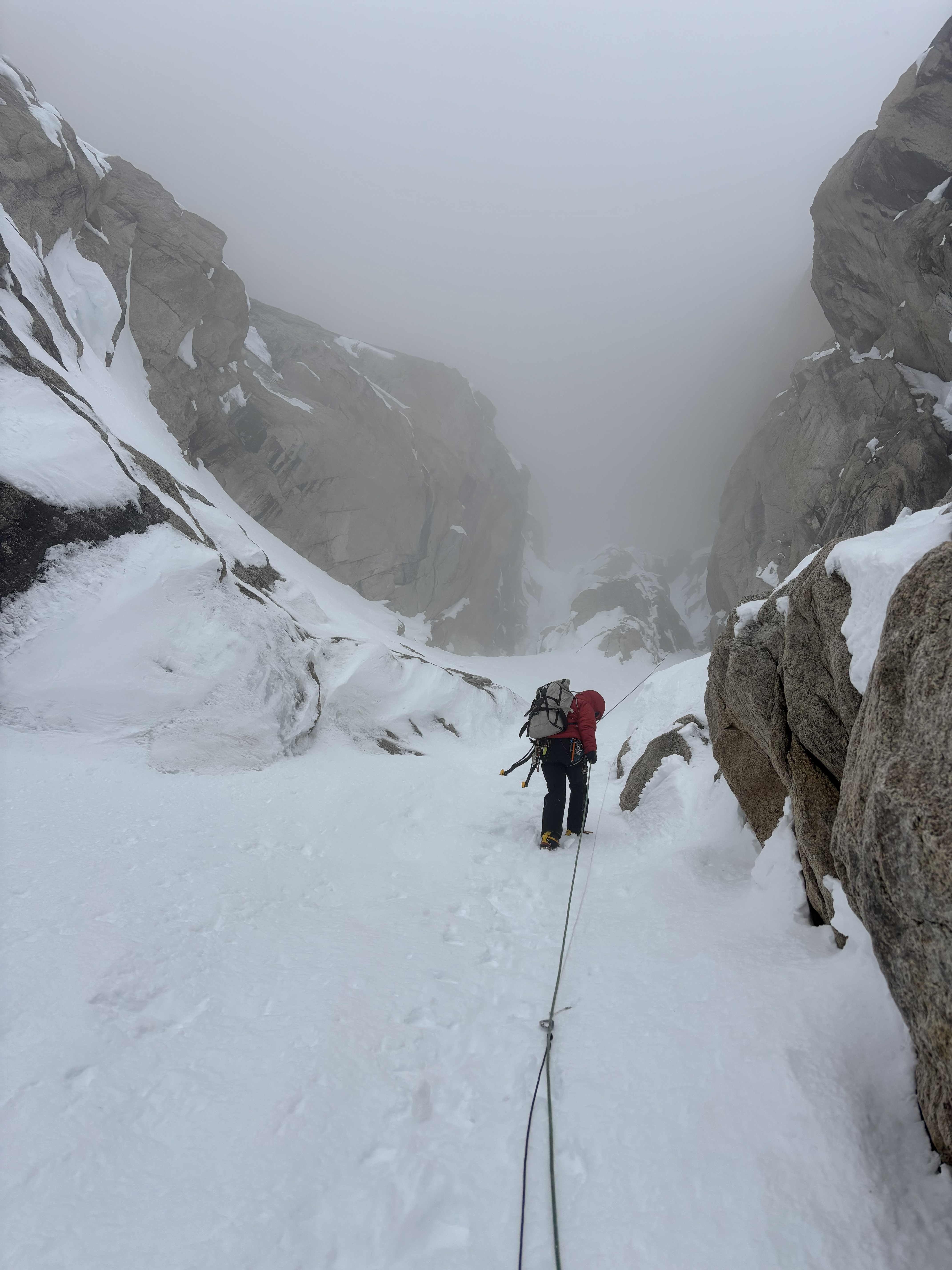
Looking back uphill, during the rappels, at the WI4 on the right and the 5.9 rock on the right. Photo: S. Barrier
Throughout the climb, the route is relatively sewn up with fixed anchors. Climbing with a single 70m rope, we easily found fixed gear to belay off of. Only in 2 locations were the fixed anchors buried in snow and not seen on the way up. However, while rappelling, buried anchors were discovered in the snow on the top of the crux rock pitch as well as the top of the 1st pitch. A 65m tagline was utilized for the rappels and only needed to be extended with a cord for the rappel from the top of pitch 8. Many additional fixed anchors existed along the route, but the pieces were frozen into ice and snow and were unable to be thoroughly assessed.
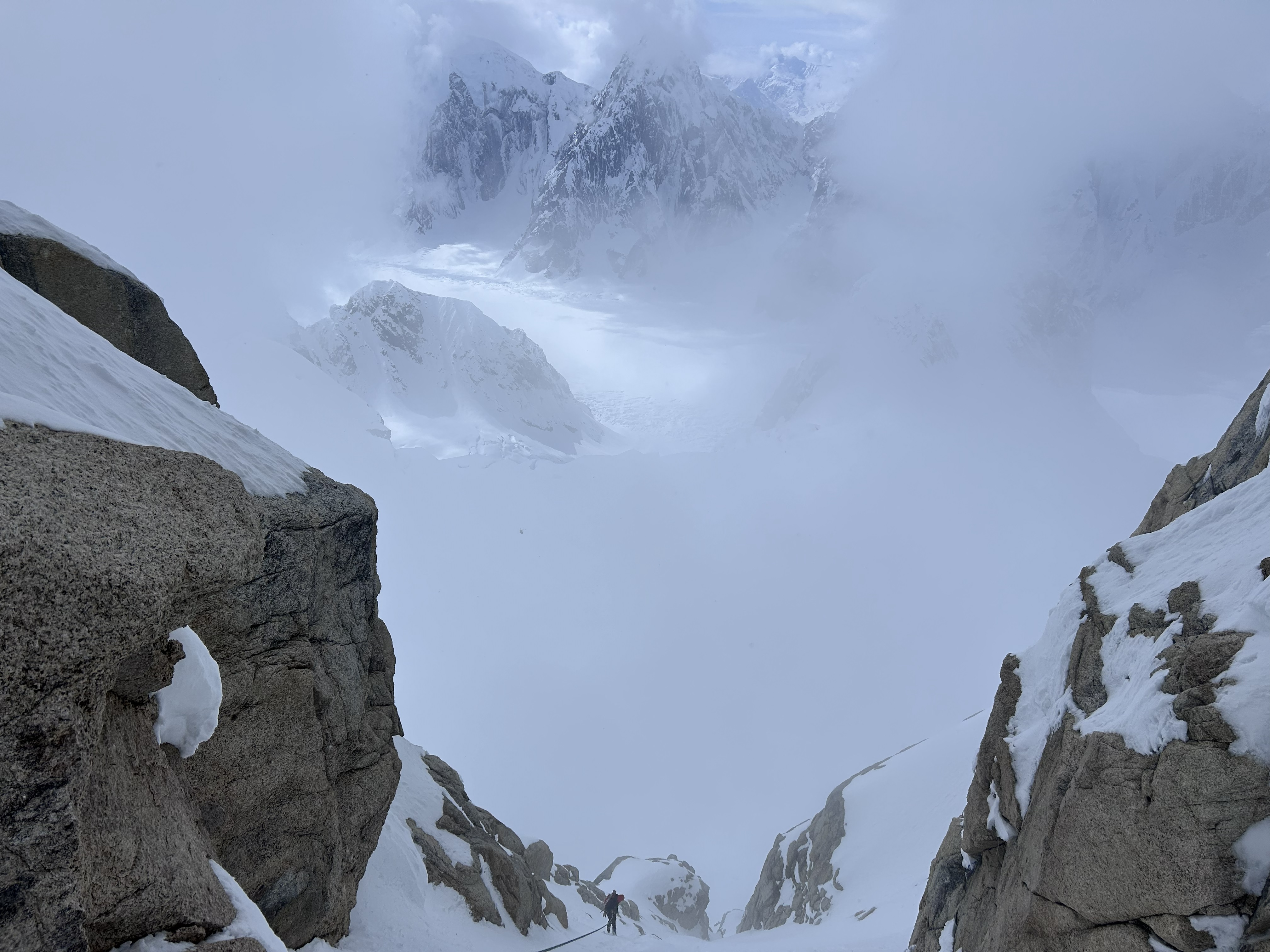
One of the many rappels off of fixed anchors, looking down from the top of pitch 7/8. Photo: L. Hunsaker
13 rappels and 11 hours after departing camp, we reached the base of the route. Cool temperatures and cloud on the upper route kept things very cool until the final rappels. The last 2 rappels descend a rockface that is threatened by snow and ice from above. In late May, it’s critical to move efficiently through this terrain and to get off the lower route before the heat of the afternoon. During the descent, a very large serac avalanche was witness across the Great Gorge, off the North Face of Mount Wake.
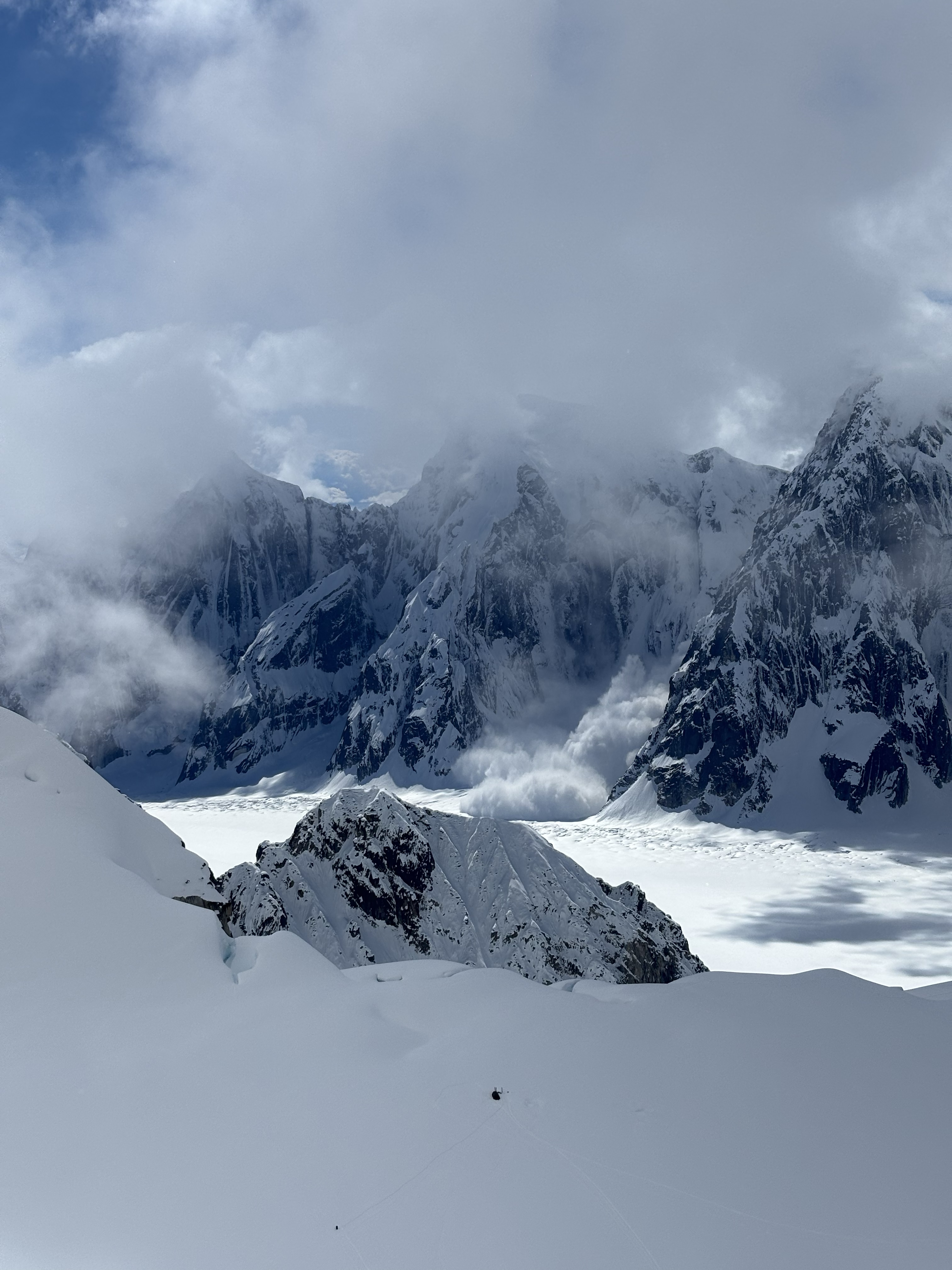
A large serac/icefall avalanche off of the North Face of Mount Wake. Photo: S. Barrier
Despite an unusually late-season ascent, the route proved to be in great condition, and it was a unique opportunity to be alone on both the route and the glacier itself. Given the challenges with weather in the Alaska Range this season, perhaps no one was more surprised to have pulled off a successful, technical climb than we were. 6 ice screws and a single set of cams and runners for pro, as well as a 70m single rope and a 65m tagline, seemed appropriate for the route in its current condition.
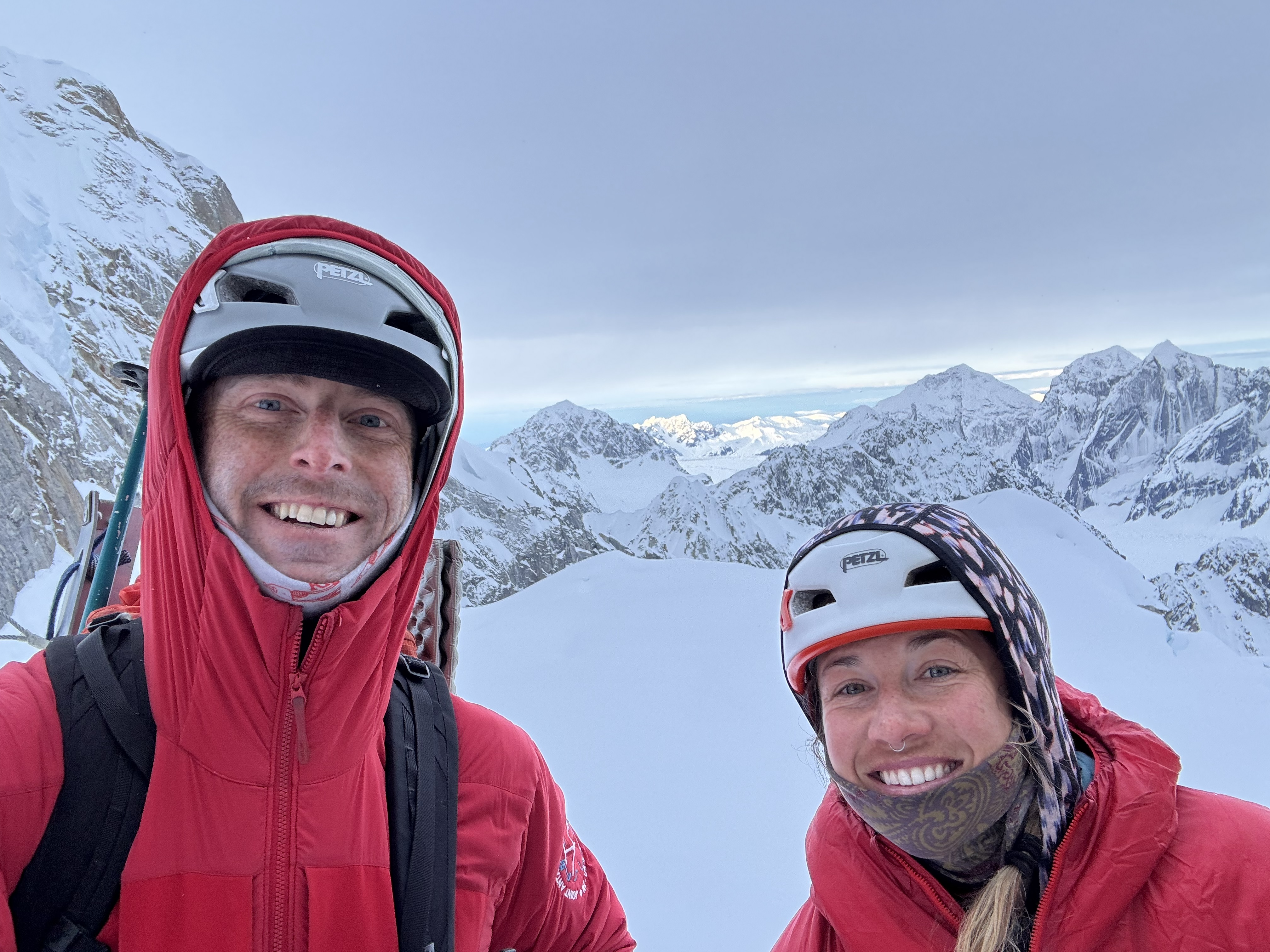
Happy climbing rangers. Photo: S. Barrier